Quote · Added 19 February 2026
It was the experience of mystery - even if mixed with fear - that engendered religion.
No ratings yet
Quote · Added 19 February 2026
We often think of religion starting with answers — grand explanations about why we're here or what happens after death. But Einstein points to something rawer: the actual feeling of standing in front of something you don't understand and can't control. That vertigo when you realize how much is beyond your grasp. That's where it begins.
The insight cuts against how we usually talk about faith today. We frame it as belief versus non-belief, as if the core question is whether certain doctrines are true. But Einstein reminds us that something more primal comes first — the human need to respond to mystery itself, whether through religion, science, philosophy, or even art. We're uncomfortable with not knowing, so we build frameworks to hold that discomfort.
What's striking is that he doesn't dismiss this as primitive or something we've outgrown. Mystery is still there. Modern life has answers for more things than ever, but we live with profound unknowns — about consciousness, meaning, mortality, love. The question isn't whether mystery has vanished. It's what we do with it: whether we reach for wonder, fear, certainty, or something more honest that holds all three at once.
1879–1955·lived 76 years
Albert Einstein was a renowned theoretical physicist known for developing the theory of relativity, one of the two pillars of modern physics. He is best known for his mass-energy equivalence formula E=mc^2 and was awarded the Nobel Prize in Physics in 1921 for his explanation of the photoelectric effect.
Also by Albert Einstein
God does not play dice with the universe.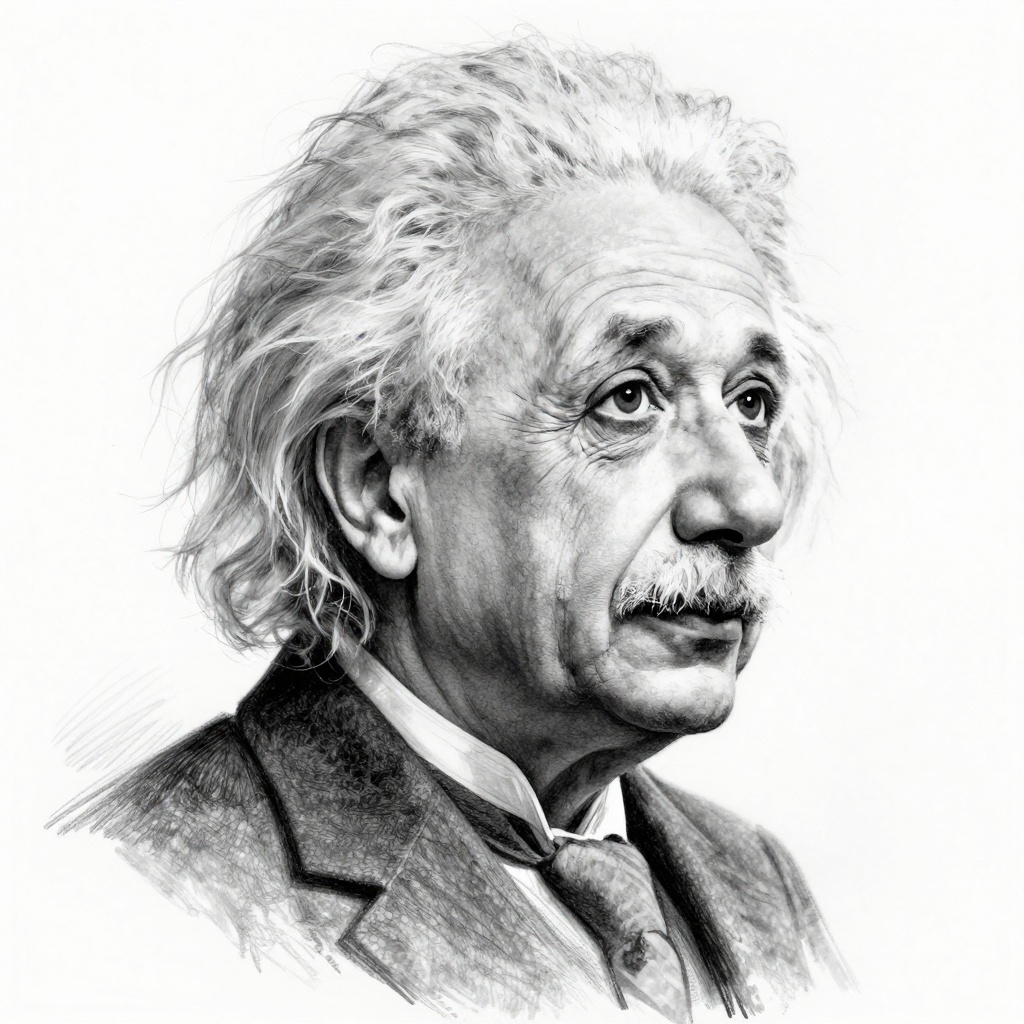
Comments