Quote · Added 14 February 2026
If the facts don't fit the theory, change the facts.
Albert EinsteinEinstein's famous change the facts quote is an insidious lie, Big Think, 2023
No ratings yet
Quote · Added 14 February 2026
We like to think of science as the pursuit of truth, but this quote captures something much messier—how easily we can slip into defending what we already believe. Einstein wasn't endorsing this approach; he was describing a very human temptation that even brilliant minds face. When the evidence doesn't cooperate with our neat theory, we get creative. We rationalize away the awkward data point, redefine terms to make them fit, or quietly forget about the contradictory study we read last month.
The tricky part is that this happens everywhere, not just in laboratories. You see it when someone doubles down on a political belief despite new information. You see it in relationships, where you rewrite the story of what your partner actually said to match what you wanted them to mean. You see it at work, where a failed project gets reframed as a "learning experience" rather than confronted honestly. The path of least resistance is almost always to protect the story we're already invested in.
What makes this quote valuable is the jolt of self-recognition it offers. The real work isn't changing facts—it's training yourself to notice the exact moment when you're tempted to. That pause, that willingness to say "the evidence suggests I might be wrong here," is harder than any calculation Einstein ever did. It's also rarer.
1879–1955·lived 76 years
Albert Einstein was a renowned theoretical physicist known for developing the theory of relativity, one of the two pillars of modern physics. He is best known for his mass-energy equivalence formula E=mc^2 and was awarded the Nobel Prize in Physics in 1921 for his explanation of the photoelectric effect.
Also by Albert Einstein
God does not play dice with the universe.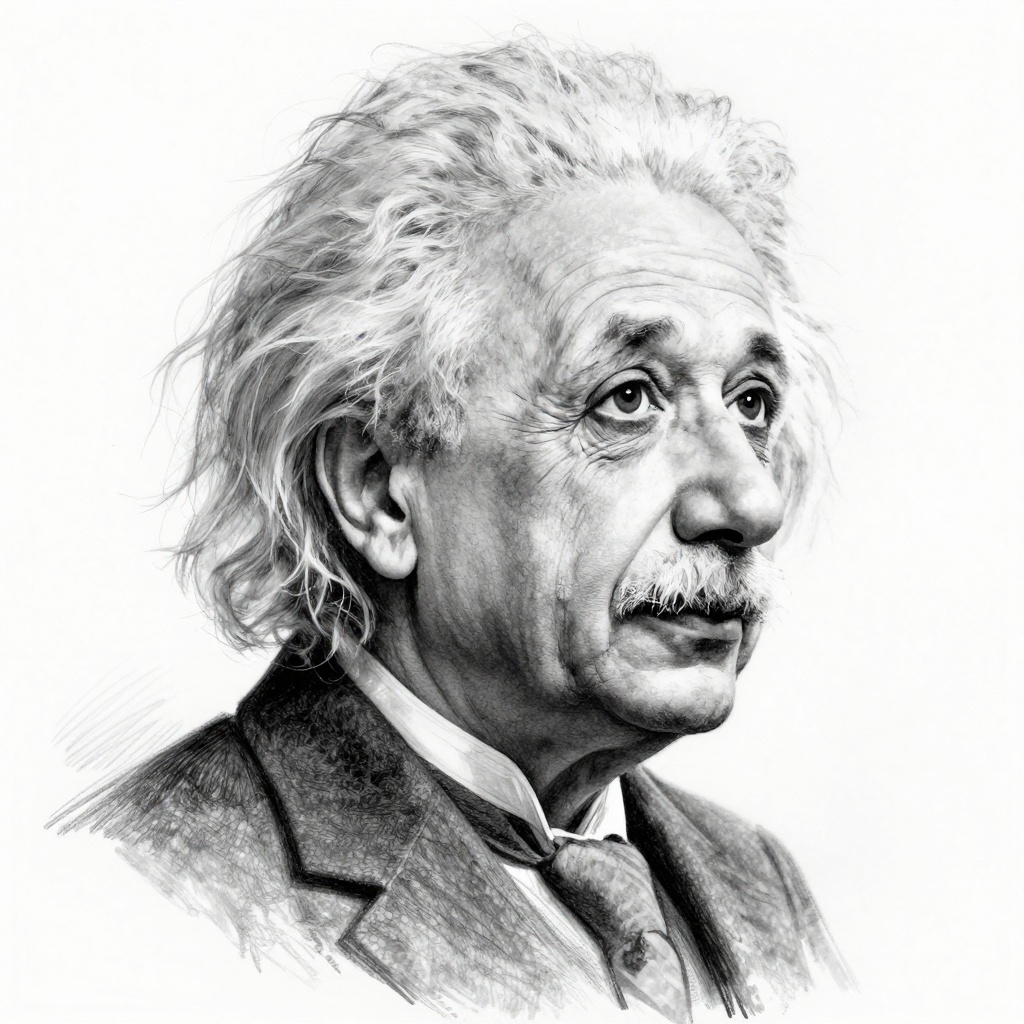
Comments