Quote · Added 17 February 2026
I am thankful to all who said no to me. It is because of them that I’m doing it myself.
No ratings yet
Filed underthankfulness·perseverance·empowerment
Quote · Added 17 February 2026
Filed underthankfulness·perseverance·empowerment
We usually treat rejection like a wound to nurse, but Einstein points to something we skip over: rejection can be fuel. When someone says no—whether it's an investor, a publisher, a school, or just the people around you—you get two choices. You can accept their verdict as final, or you can treat it as information that redirects you toward self-reliance. The second choice is where things actually change.
The tricky part is that this only works if you genuinely want to do something, not just prove someone wrong. Revenge-driven energy fades. But real curiosity, real need, real conviction? Those can survive a thousand nos and actually get sharper through the process. When you can't rely on permission or support, you start asking different questions. You stop optimizing for what others want and start building what actually matters to you. You get resourceful in ways the approved path never would have required.
Most of us have experienced this in small ways—a hobby that started because something didn't work out, a skill we developed because we couldn't afford to pay someone else. What's interesting is that Einstein's point suggests we could be more intentional about this, more grateful for the friction instead of just resentful. The nos aren't detours from your real path. Sometimes they're exactly what creates it.
1879–1955·lived 76 years
Albert Einstein was a renowned theoretical physicist known for developing the theory of relativity, one of the two pillars of modern physics. He is best known for his mass-energy equivalence formula E=mc^2 and was awarded the Nobel Prize in Physics in 1921 for his explanation of the photoelectric effect.
Also by Albert Einstein
God does not play dice with the universe.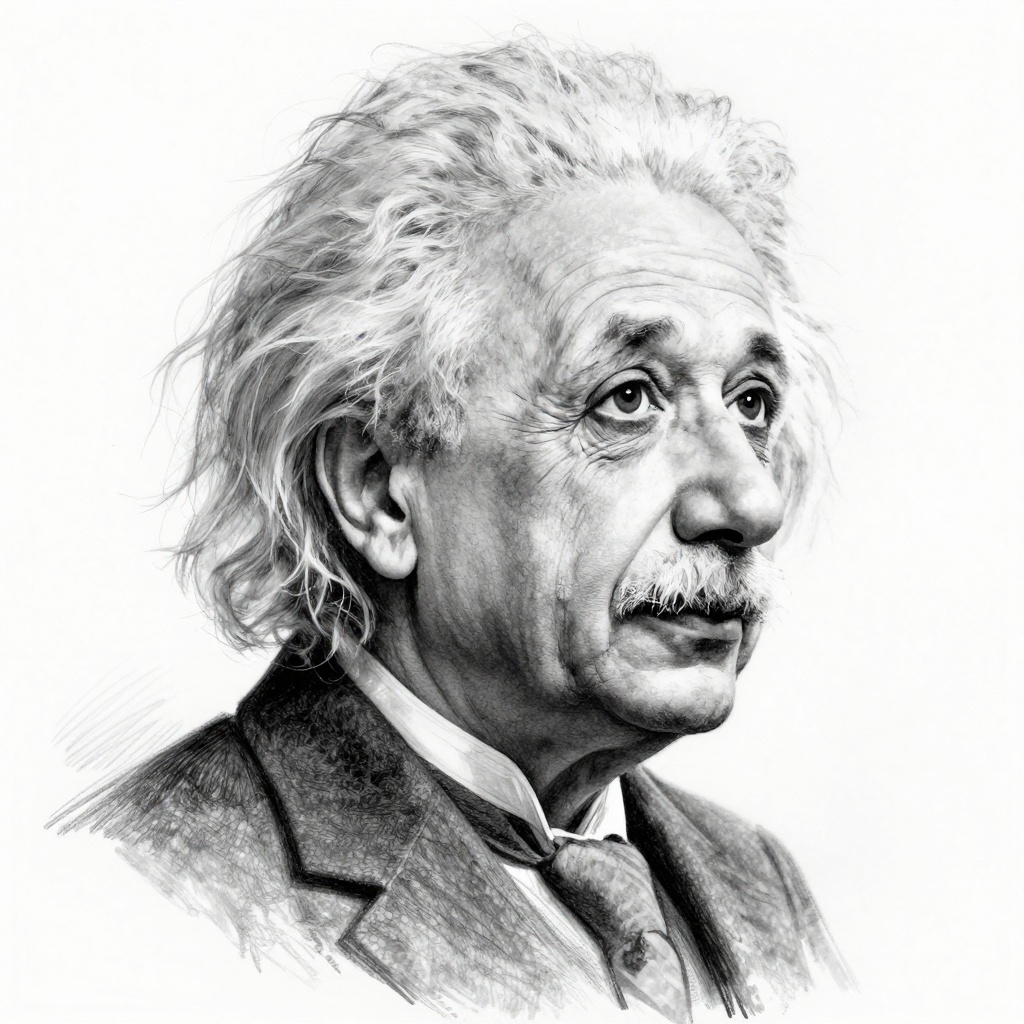
Comments