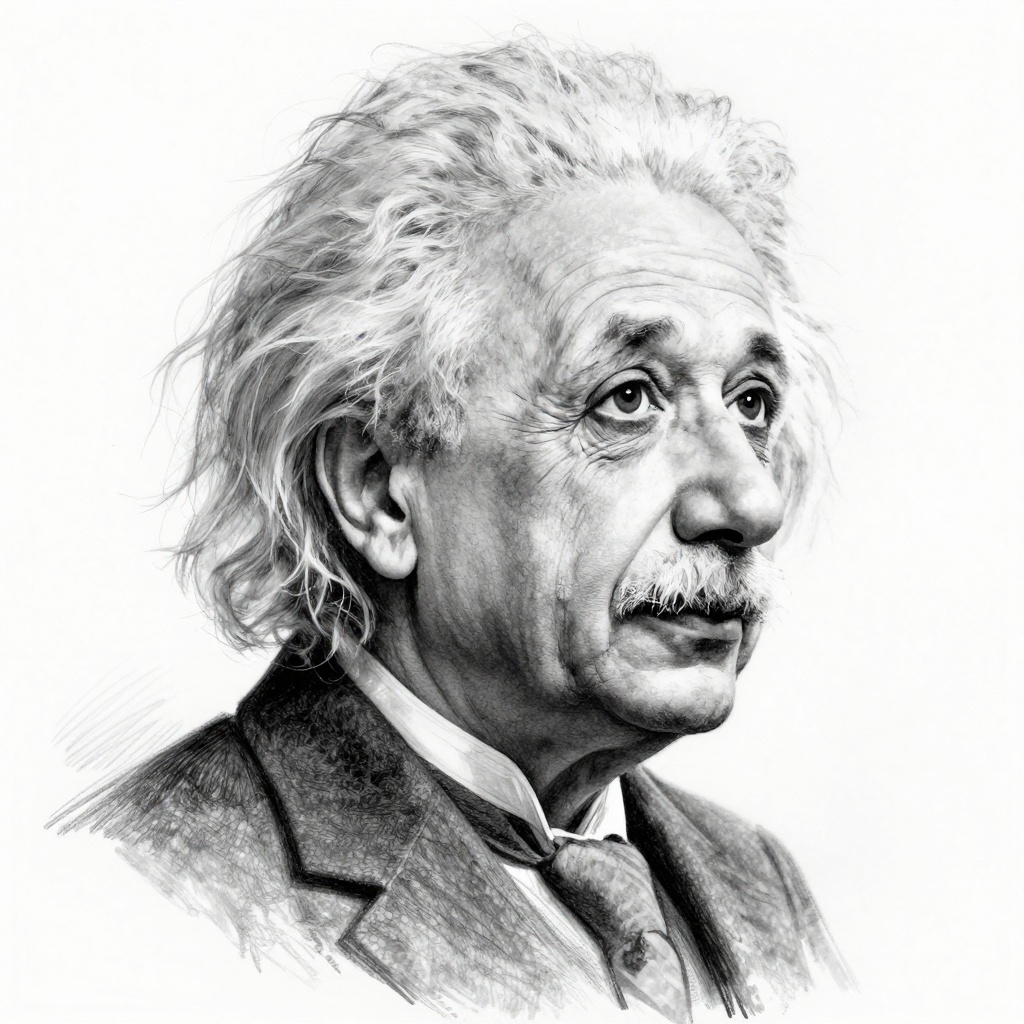
I am enough of an artist to draw freely upon my imagination. Imagination is more important than knowledge. Kno... — Albert Einstein

I am enough of an artist to draw freely upon my imagination. Imagination is more important than knowledge. Knowledge is limited. Imagination encircles the world.

Author: Albert Einstein

Insight: We live in a world obsessed with facts. Google gives us instant answers, credentials demand proof, and expertise seems to require filling your head with everything already known. But Einstein's point cuts right through that: the person who simply memorizes what exists will always be trapped by what already exists. The person who imagines what could exist? That person changes everything. Here's what makes this sting a little: we often treat imagination as a luxury item, something for artists or daydreamers, not for "serious" work. Yet every single innovation started as someone imagining something that didn't fit neatly into existing knowledge. The spreadsheet, the smartphone, the vaccine—none of these were in the instruction manual. They required someone to look at what was known and think sideways. The subtly radical part is that imagination isn't about being unrealistic. It's about connecting dots in new ways, asking "what if" instead of just accepting "that's how it is." You don't need to be a genius to do this. You just need to occasionally choose curiosity and possibility over the comfort of what you already know. In a world drowning in information, that willingness might actually be your rarest skill.

Source: What Life Means to Einstein: An Interview by George Sylvester Viereck, The Saturday Evening Post, 1929

I am enough of an artist to draw freely upon my imagination. Imagination is more important than knowledge. Knowledge is limited. Imagination encircles the world.

Albert EinsteinWhat Life Means to Einstein: An Interview by George Sylvester Viereck, The Saturday Evening Post, 1929

Imagination rewires what's possible

We live in a world obsessed with facts. Google gives us instant answers, credentials demand proof, and expertise seems to require filling your head with everything already known. But Einstein's point cuts right through that: the person who simply memorizes what exists will always be trapped by what already exists. The person who imagines what could exist? That person changes everything.

Here's what makes this sting a little: we often treat imagination as a luxury item, something for artists or daydreamers, not for "serious" work. Yet every single innovation started as someone imagining something that didn't fit neatly into existing knowledge. The spreadsheet, the smartphone, the vaccine—none of these were in the instruction manual. They required someone to look at what was known and think sideways.

The subtly radical part is that imagination isn't about being unrealistic. It's about connecting dots in new ways, asking "what if" instead of just accepting "that's how it is." You don't need to be a genius to do this. You just need to occasionally choose curiosity and possibility over the comfort of what you already know. In a world drowning in information, that willingness might actually be your rarest skill.

Comments

Sign in to leave a comment or reply to one.

Sign in

Albert Einstein

Albert Einstein was a renowned theoretical physicist known for developing the theory of relativity, one of the two pillars of modern physics. He is best known for his mass-energy equivalence formula E=mc^2 and was awarded the Nobel Prize in Physics in 1921 for his explanation of the photoelectric effect.

Graph

Related