Quote · Added 16 March 2026
A good book is an event in my life.
Filed underbook·experience·importance
Quote · Added 16 March 2026
Filed underbook·experience·importance
There's something we've mostly forgotten in our era of infinite content: the idea that a book can happen to you. Not occupy some polite corner of your evening, but genuinely alter something. Stendhal understood that reading isn't consumption—it's an encounter. A good book doesn't sit passively on the page waiting for your glance. It reaches in, rearranges your thinking, maybe even changes what you believe you're capable of understanding.
We feel this sometimes, usually by accident. You open something and lose four hours. A character says something that makes you reconsider a choice you're facing. A sentence about loneliness or hope lands so precisely that you read it three times. That's the "event" he meant—not novelty for its own sake, but genuine disruption of your inner life.
The quiet rebellion here is that in a world optimized for distraction and quick hits, insisting a book matters enough to be an event is almost radical. It means being selective. It means sometimes closing your phone and sitting still. It means trusting that depth and attention might offer something no algorithm can—the chance to be genuinely changed by what someone else thought and felt.
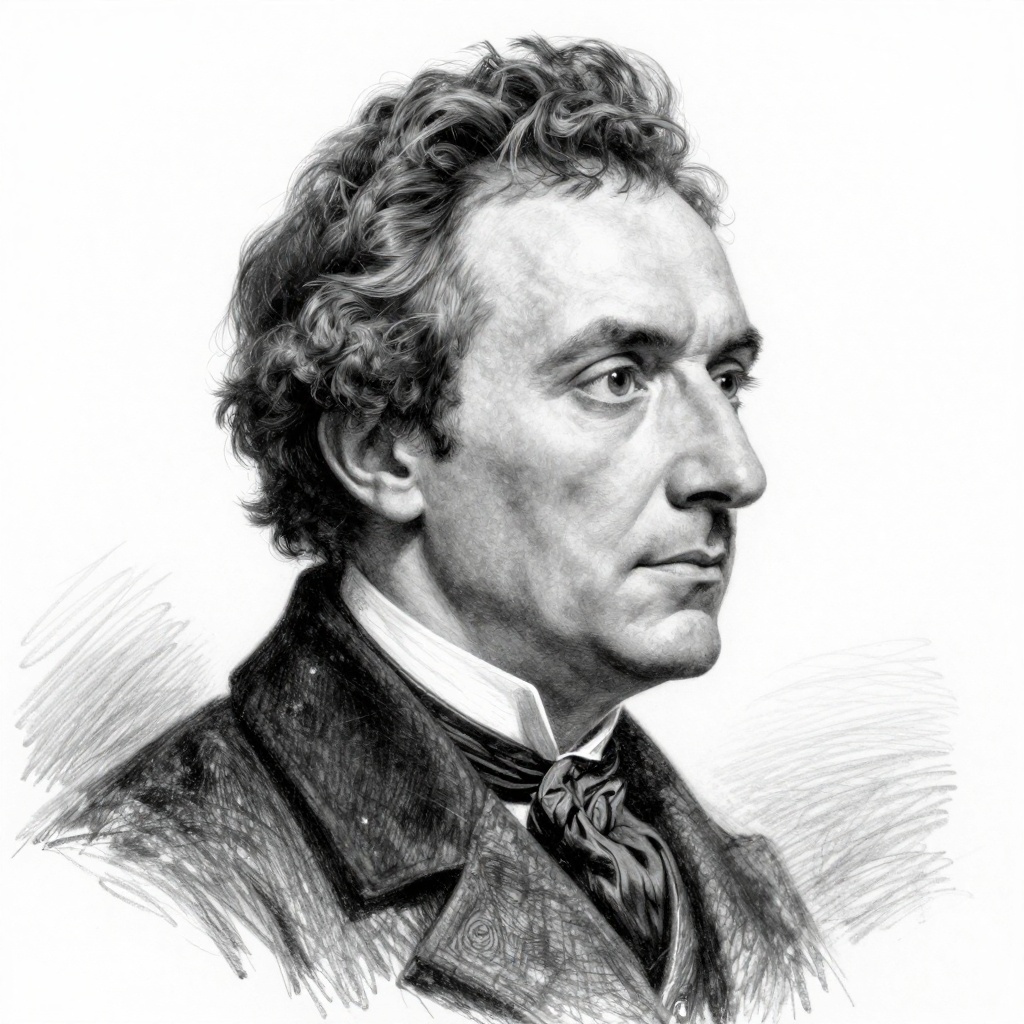
1783–1842·lived 59 years
Stendhal was the pen name of Marie-Henri Beyle, a French writer born on January 23, 1783. He is best known for his novels "The Red and the Black" and "The Charterhouse of Parma," which explore themes of love, ambition, and social class in post-Napoleonic France. Stendhal is considered a precursor to psychological realism in literature and has had a lasting influence on writers and critics.
Comments