Quote · Added 14 February 2026
Work, apart from devotion or love of God, is helpless and cannot stand alone.
RamakrishnaSri Ramakrishna on Karma Yoga: Devotion as a Safeguard, Hridaya, 2018
Quote · Added 14 February 2026
Most of us treat work like a standalone project—something to be optimized, conquered, completed. We measure it in hours logged, tasks checked off, money earned. But this quote suggests that approach leaves something crucial missing: a sense of purpose that actually sustains you beyond the paycheck.
The non-obvious part isn't that you need spirituality, exactly. It's that without some larger meaning attached to what you do—whether that's service, love for the craft, contribution to something bigger than yourself, or just genuine care for the people affected by your work—the work itself becomes hollow. You can succeed on paper and still feel empty. You can climb the ladder and discover it was leaning against the wrong wall the whole time.
When you work purely for external validation or survival, you're always one bad day, one missed promotion, one economic downturn away from despair. But when your work connects to something you genuinely believe matters, it becomes resilient. Difficult days don't feel meaningless. The work can sustain you through setbacks because it's anchored to something deeper than the work itself. That's what "cannot stand alone" really means: stripped of purpose, even impressive accomplishments feel fragile.
d. 1886
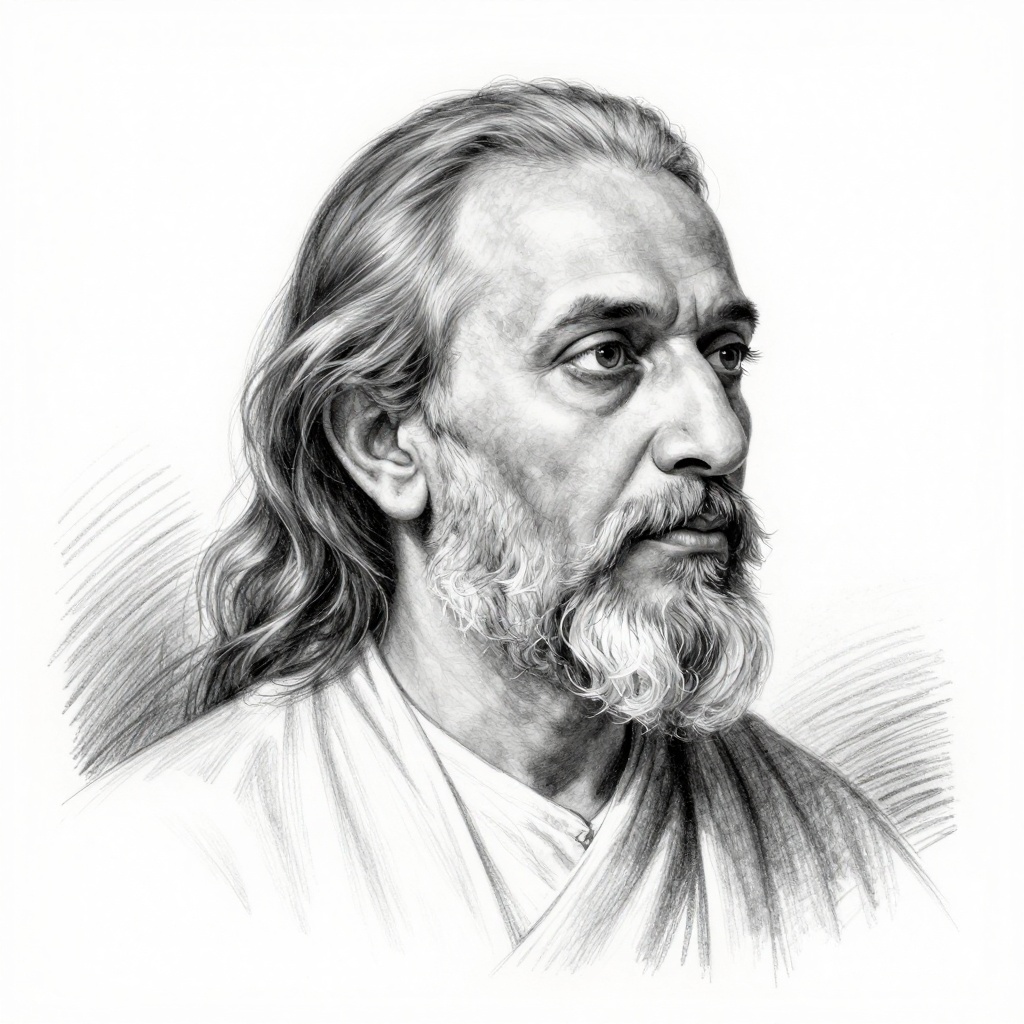
Ramakrishna was a 19th-century Indian mystic and saint, known for his profound spiritual teachings and the emphasis on the unity of all religions. Born in 1836 in the village of Kamarpukur, he became a key figure in the development of modern Hinduism and was instrumental in the establishment of the Ramakrishna Order by his disciple Swami Vivekananda. His teachings focused on experiencing God through various paths and the importance of devotion, leading to a lasting influence on spiritual thought in India and beyond.
Comments