Quote · Added 17 February 2026
Tomorrow is a new day. You shall begin it serenely and with too high a spirit to be encumbered with your old nonsense.
Filed undertomorrow·renewal·positivity
Quote · Added 17 February 2026
Filed undertomorrow·renewal·positivity
There's something quietly radical about Emerson's insistence that tomorrow isn't just another rotation of the earth—it's an actual reset button. We hear "new day, fresh start" so often it becomes meaningless, but he's pushing back against something we all feel: the weight of yesterday's mistakes, anxieties, and failures clinging to us like a heavy coat we can't shrug off. His point isn't that your problems vanish at midnight. It's that you have permission to show up differently, to refuse the gravity of old patterns.
The tricky part is that "serenely and with too high a spirit" isn't about forcing positivity. It's about a kind of dignified refusal—deciding your worth isn't determined by what went wrong before. When you catch yourself rehearsing an embarrassment from three days ago, or carrying someone's criticism like evidence against yourself, Emerson's saying: that's the "nonsense" he means. Not your actual problems, but the mental loops that feed on them.
The non-obvious angle here is that this requires practice, almost like training. You can't just think your way into serenity. You have to actually choose, each morning, whether you're bringing yesterday's heaviness forward or whether you're going to be stubborn enough to begin again.
1803–1882·lived 78 years
Ralph Waldo Emerson (1803–1882) was an American essayist, lecturer, and poet who led the Transcendentalist movement of the mid-19th century. He is known for his philosophical essays, particularly "Nature" and "Self-Reliance," which emphasize individualism, self-reliance, and the importance of nature as a spiritual force.
Also by Ralph Waldo Emerson
Be silly, be honest, be kind.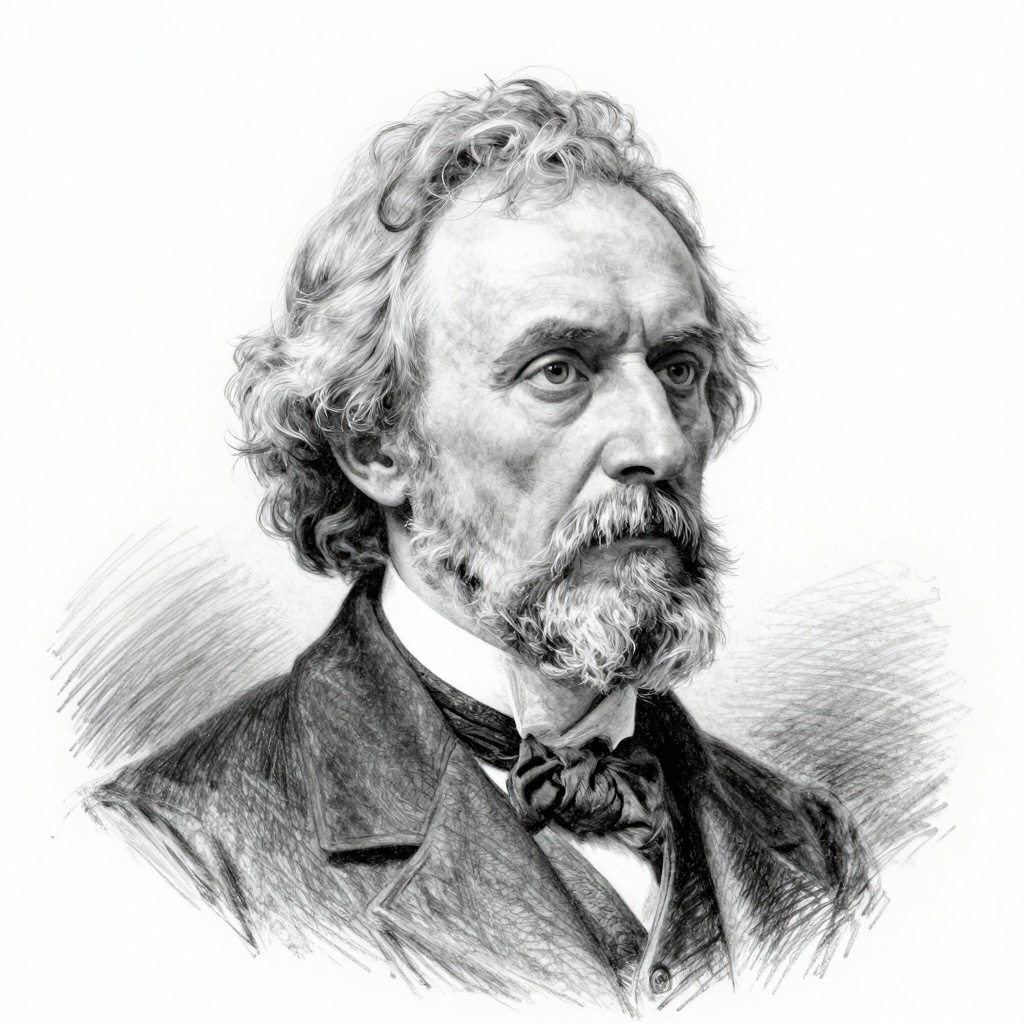
Comments