Quote · Added 7 April 2024
The Spartans do not ask how many are the enemy but where are they.
PlutarchApophthegmata Laconica, Of Agis the Son of Archidamus
No ratings yet
Filed undersparta·courage·resilience
Quote · Added 7 April 2024
Filed undersparta·courage·resilience
This ancient observation about Spartan courage reveals something true about how we actually make decisions under pressure. When we're facing something difficult—a health diagnosis, a failing relationship, a career crisis—we tend to get stuck asking the wrong questions. We want reassurance, want to know if we're strong enough or if the odds are in our favor. But that inventory of our resources rarely changes what we need to do next.
The Spartan mindset reframes the problem entirely. Instead of measuring yourself against the obstacle, you simply locate it and move toward it. It's not bravado exactly; it's a kind of practical clarity that cuts through the paralysis of comparison. You don't need to feel ready. You don't need to calculate whether victory is likely. You need to know where the actual problem is and engage with it directly.
What makes this relevant now is how often we use uncertainty about magnitude as an excuse for inaction. We ask "Is this as bad as it seems?" when the real question is "What exactly am I dealing with, and what's my first move?" That shift—from measuring threat to locating it—is surprisingly liberating. It turns worry into strategy.
d. 120
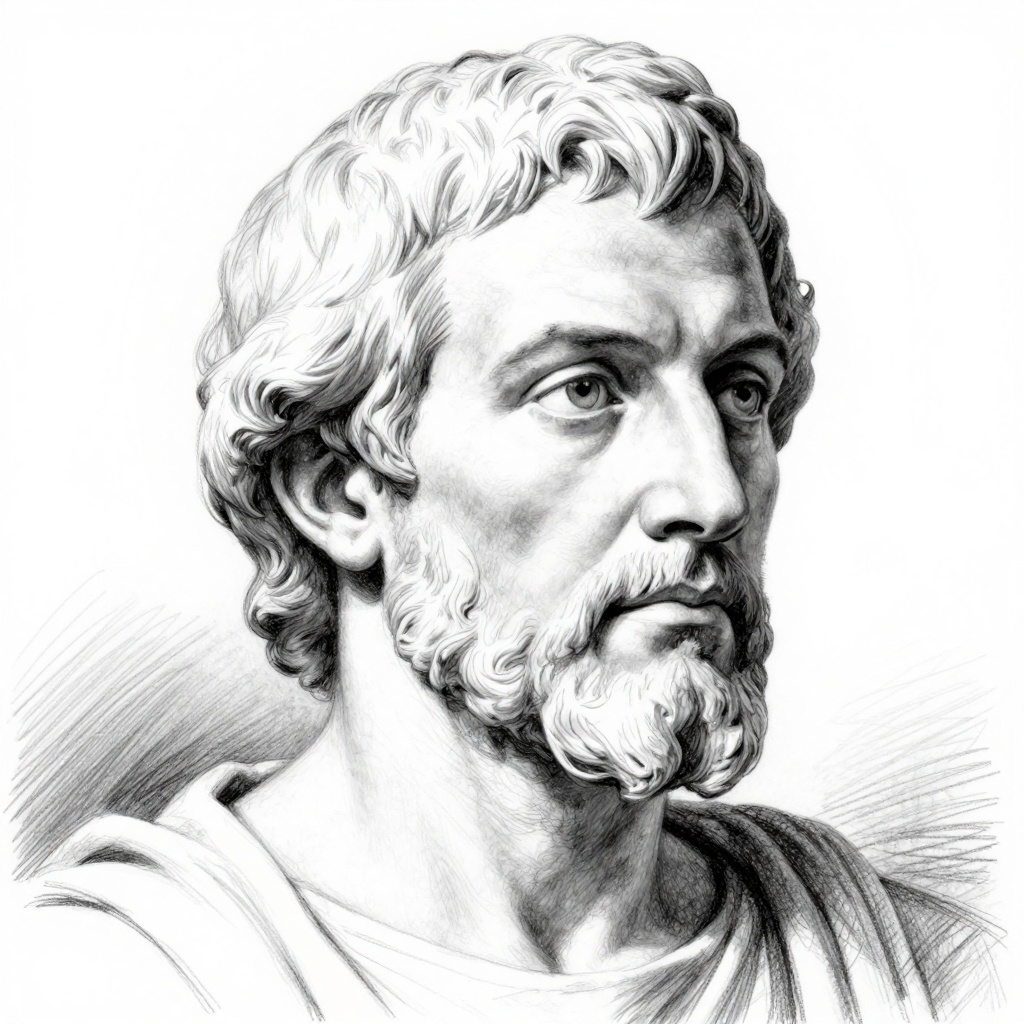
Plutarch was a Greek biographer and essayist who lived during the 1st and 2nd centuries AD. He is best known for his work "Parallel Lives," a series of biographies comparing notable figures from Greek and Roman history. Plutarch's writings have had a lasting impact on Western literature and are considered valuable sources for understanding ancient history.
Comments