Quote · Added 14 February 2026
Painting is silent poetry, and poetry is painting that speaks.
PlutarchMoralia, On the Education of Children, 2004
No ratings yet
Filed underpainting·poetry·expression
Quote · Added 14 February 2026
Filed underpainting·poetry·expression
We usually think of art and words as living in separate worlds—one visual, one verbal. But this old observation cuts right through that divide. When you stand in front of a painting that moves you, there's often no narration happening, yet somehow it's telling you something profound. A single brushstroke or the way light falls across a face can communicate loneliness, joy, or confusion more directly than any sentence could manage.
The flip side is equally true. Good writing doesn't just describe things; it paints them. When a poet writes about rain or heartbreak or a childhood kitchen, you don't just understand the concept—you almost see it, feel it in your body. The best poetry has visual weight. It's precise about color and texture and movement in ways that rival any canvas.
What's worth noticing is how both forms rely on leaving some things out. A painting doesn't explain itself, and the best poems rarely do either. They trust that if you get the essential details right—the exact right word, the exact right shadow—the reader or viewer will complete the picture themselves. That's where the real power lives, in that collaboration between creator and audience.
d. 120
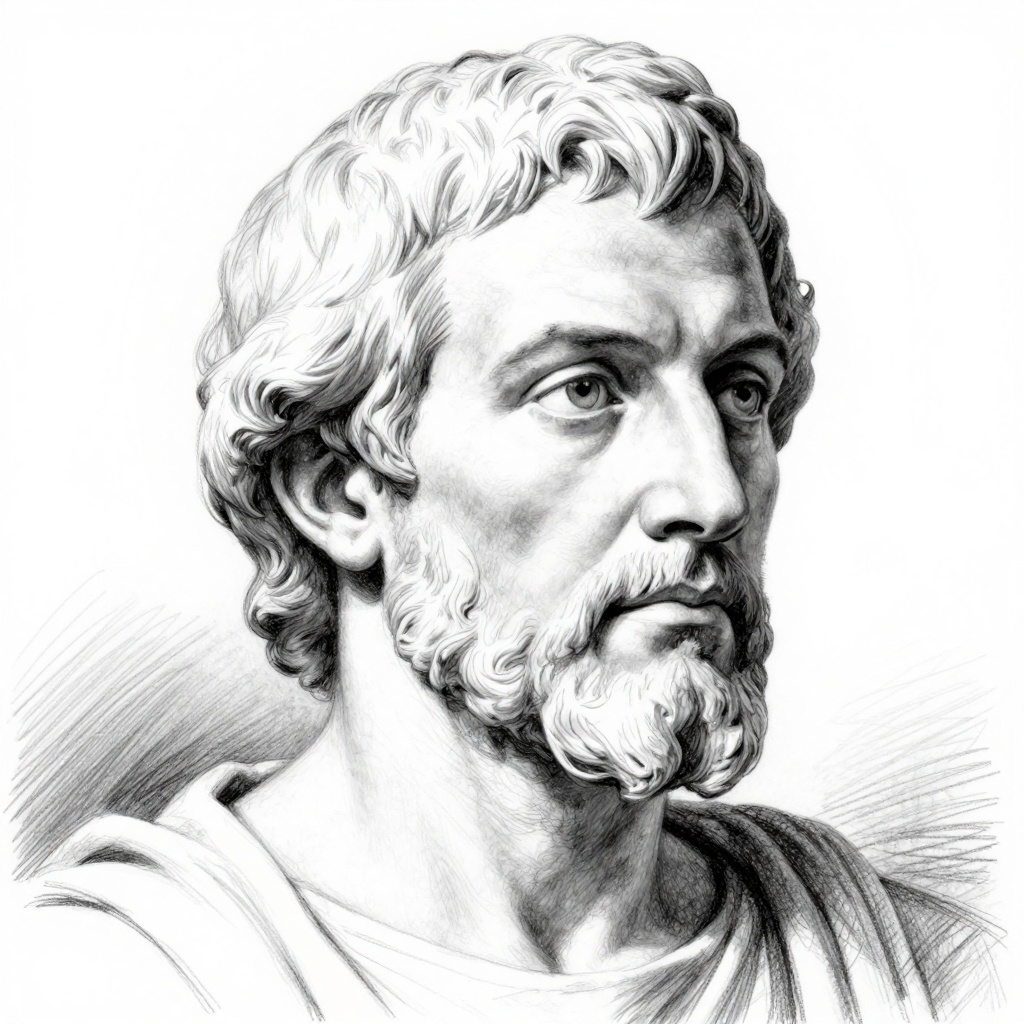
Plutarch was a Greek biographer and essayist who lived during the 1st and 2nd centuries AD. He is best known for his work "Parallel Lives," a series of biographies comparing notable figures from Greek and Roman history. Plutarch's writings have had a lasting impact on Western literature and are considered valuable sources for understanding ancient history.
Comments