Quote · Added 9 February 2026
For in the true nature of things, if we rightly consider, every green tree is far more glorious than if it were made of gold and silver.
Martin LutherThe Table Talk of Martin Luther, p. 123, 1569
Quote · Added 9 February 2026
There's something almost radical about stopping to actually look at a tree—really look at it—instead of rushing past. Luther is pointing at something we've mostly forgotten: that the real thing, in all its messy, changing, imperfect aliveness, is infinitely more valuable than any artificial substitute. A tree in spring isn't trying to impress you. It's just being what it is, and that's where the glory lives.
We live in a time obsessed with the polished, the permanent, the engineered. We're told that value comes from rarity and cost, that something real only matters if it's expensive or difficult to obtain. But a tree does something no precious metal can: it grows, adapts, feeds other creatures, changes with the seasons. It has a kind of integrity that gold simply doesn't have. When you notice this—really notice it—something shifts. The ordinary becomes extraordinary not because we've decorated it or made it scarce, but because we've finally paid attention to what's actually there.
The irony is that this reorientation costs nothing and changes everything. It's available to anyone with eyes willing to see.
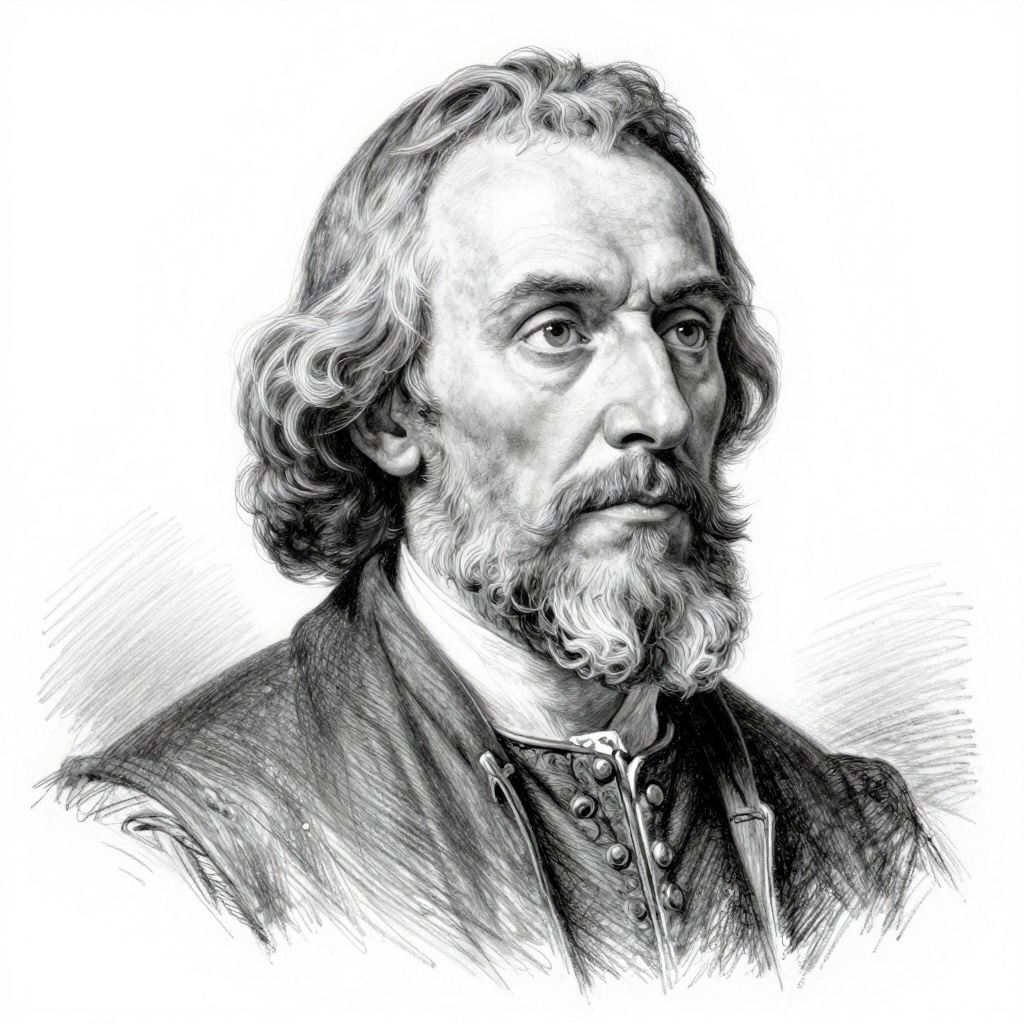
1483–1546·lived 62 years
Martin Luther was a German theologian, professor, and prominent figure of the Protestant Reformation in the 16th century. He is best known for challenging the teachings of the Roman Catholic Church, particularly the sale of indulgences, and for his Ninety-Five Theses which sparked a wave of religious reform across Europe.
Comments