Quote · Added 28 February 2026
The difference between the right word and the almost right word is the difference between lightning and a lightning bug.
Filed underword·clarity·expression
Quote · Added 28 February 2026
Filed underword·clarity·expression
We live in an age where "close enough" has become the default. Most of us aren't writers chasing the perfect word—we're texting, emailing, speaking in meetings—and somewhere along the way we decided approximate communication was fine. But Twain's point cuts deeper than just vocabulary. He's describing the gap between something that actually illuminates and something that merely looks similar in the dark.
Think about the last time someone used the word "stressed" when they meant "anxious," or called themselves a "perfectionist" when they meant "controlling." The difference feels small, almost invisible. Yet that small gap changes everything about how we're understood, how we understand ourselves, and what actually gets fixed. The right word doesn't just sound better—it reveals something true. The almost-right word obscures it, lets us stay comfortable in our misunderstanding.
This matters even more now because we're drowning in words. More communication, more content, more noise. The precision Twain admired has become rarer and therefore more valuable. When you slow down to find the word that actually fits—not just the one that's close enough—you're not being pedantic. You're choosing clarity over comfort, real connection over the illusion of it.
1835–1910·lived 74 years
Mark Twain was an American writer and humorist known for his classic novels "Adventures of Huckleberry Finn" and "The Adventures of Tom Sawyer." His works often reflected his wit, satire, and keen observations on American society, solidifying his place as one of the greatest American authors of all time.
Also by Mark Twain
There are no laughs in life unless you take them yourself.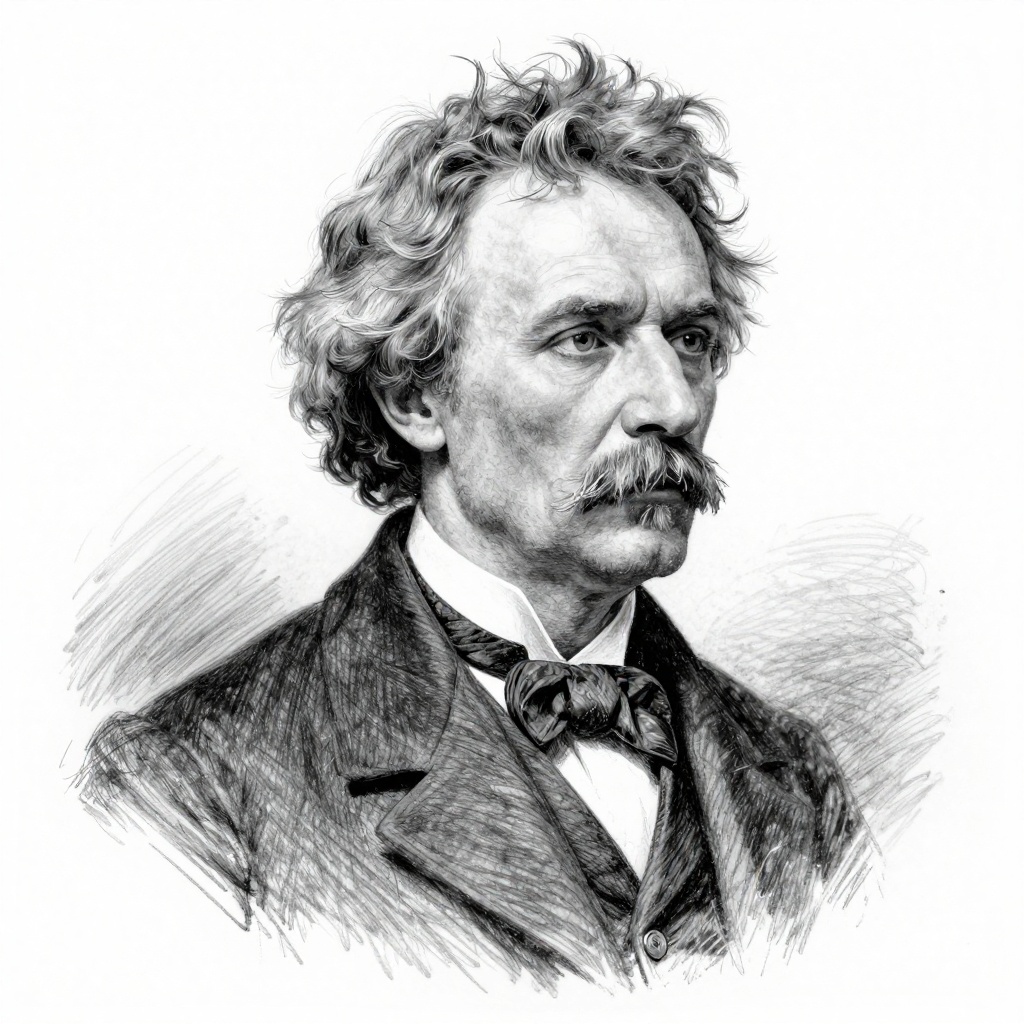
Comments