Quote · Added 20 June 2026
You don’t need to have an opinion about everything. Don’t get worked up about things you can’t control. These things didn’t ask for your attention. Leave them alone.
No ratings yet
Filed underopinion·control·simplicity
Quote · Added 20 June 2026
Filed underopinion·control·simplicity
We live in a world that seems designed to pull opinions out of us constantly. Someone posts something online, a news story breaks, a celebrity does something questionable—and suddenly there's this invisible pressure to have taken a position, to have thoughts ready. But here's what's quietly exhausting about that: most of these things don't actually affect your life, and caring about them doesn't make you more informed or virtuous. It just makes you tired.
The non-obvious part is that choosing not to have an opinion isn't laziness or apathy—it's actually a form of clarity. When you stop feeling obligated to react to everything, you free up mental space for the things that actually matter to you, the people you love, the work you do. You also become less brittle. People who feel compelled to defend opinions about things outside their control end up stressed and defensive. Those who can simply say "that's not really my area" or "I'm not going to think about that" seem oddly at peace.
This doesn't mean being uninformed about things that genuinely touch your life. It means recognizing the difference between what deserves your energy and what's just noise designed to keep you spinning.
d. 180
Marcus Aurelius was a Roman emperor and Stoic philosopher who reigned from 161 to 180 AD. He is known for his philosophical work "Meditations," which reflects his thoughts on Stoicism and personal introspection amidst the challenges of governing the Roman Empire.
Also by Marcus Aurelius
It is not what happens that destroys you, but the story you build in your mind about it.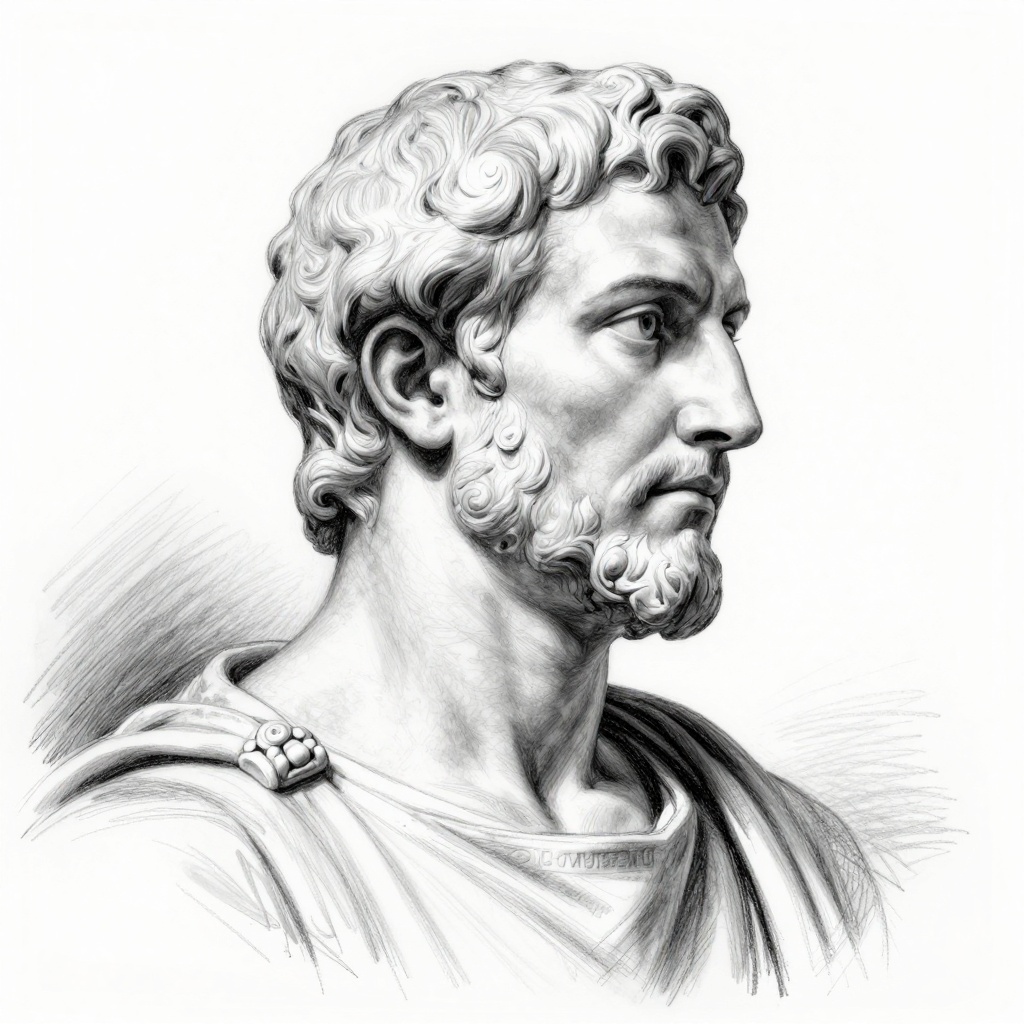
Comments