Quote · Added 28 February 2026
There would be nothing to frighten you if you refused to be afraid.
No ratings yet
Quote · Added 28 February 2026
Most of what we're actually afraid of isn't the thing itself—it's the story we tell about it. You're not really scared of the conversation with your boss; you're scared of rejection, judgment, or failure. You're not afraid of the blank page; you're afraid of being exposed as not good enough. Once you notice this gap between the real situation and the phantom threat you've constructed, something shifts. The fear loses its grip because it's built on anticipation, not reality.
This doesn't mean fear disappears through willpower alone. But Gandhi's point cuts deeper than that: fear thrives on our agreement to be afraid. The moment you stop recruiting yourself into panic—stop rehearsing worst-case scenarios, stop treating anxiety like prophecy—you strip away its power. Your boss is just a person. The blank page is just paper. What remains is actually manageable.
The tricky part is that refusing fear isn't passive. It takes real attention to catch yourself mid-catastrophe and ask: what am I actually experiencing right now, versus what am I imagining? That small shift from future-anxiety to present-reality is where freedom actually lives.
1869–1948·lived 78 years
Mahatma Gandhi (1869–1948) was an Indian lawyer, anti-colonial nationalist, and political ethicist who employed nonviolent resistance to lead the successful campaign for India's independence from British rule. Known for his principle of nonviolent protest, he inspired movements for civil rights and freedom across the world.
Also by Mahatma Gandhi
Be the change you want to see in the world.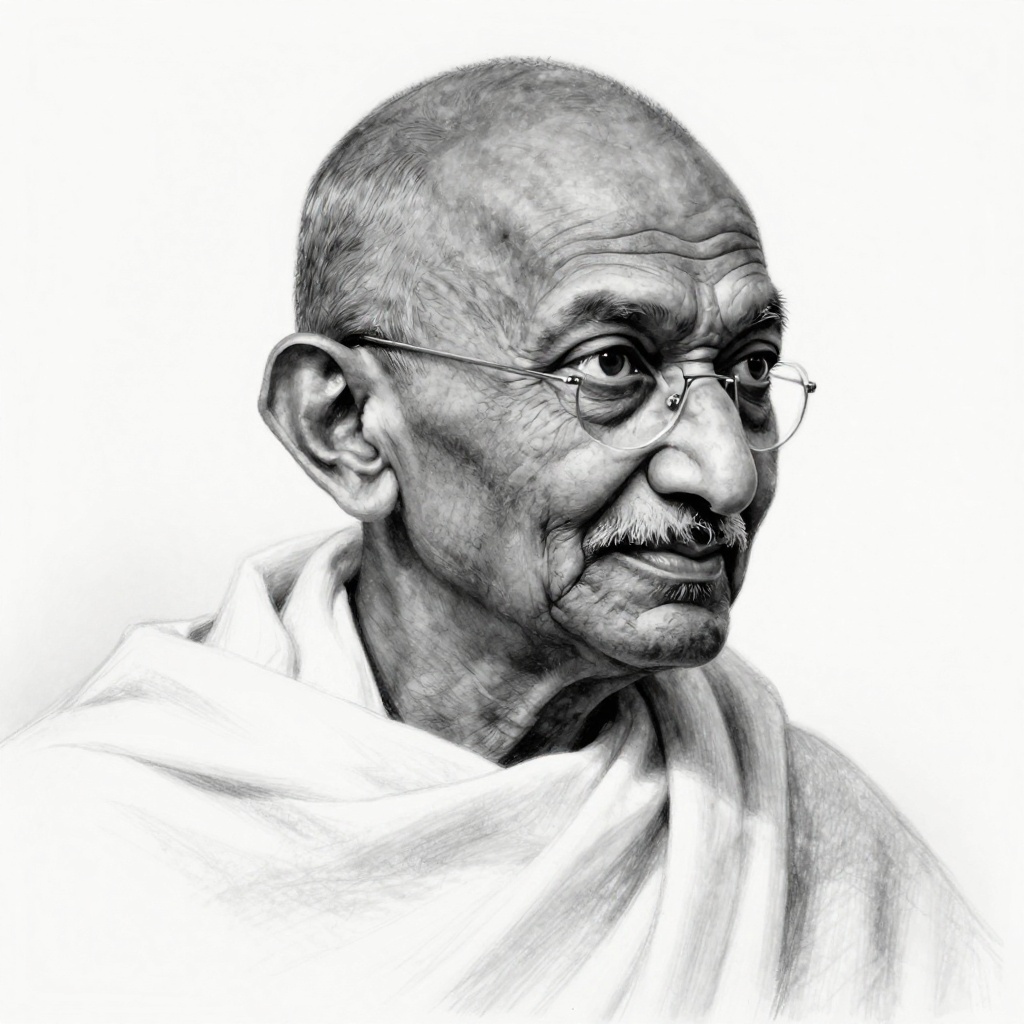
Comments