Quote · Added 14 February 2026
Recommend virtue to your children; it alone, not money, can make them happy. I speak from experience.
Ludwig van BeethovenLast Will of Beethoven
No ratings yet
Quote · Added 14 February 2026
There's something disarming about Beethoven offering this advice—a man who struggled financially his whole life, who never married, who couldn't even hear the symphonies that would make him immortal. He's not speaking from a position of comfortable wealth dispensing wisdom from on high. He's speaking from genuine scarcity, which makes the claim harder to dismiss as naive idealism.
We live in a world that constantly whispers the opposite message to our kids. Get the grades, land the salary, buy the things that prove you've made it. Yet Beethoven's observation—developed through a life of actual hardship—points at something we quietly know: money solves specific problems, but it doesn't solve the problem of being a person. Happiness, he's saying, comes from how you show up, what you stand for, how you treat difficulty. That's the stuff that actually gets you through a bad day or a bad decade.
The non-obvious part is that virtue isn't boring or restrictive in Beethoven's vision. It's what gave his life meaning despite everything working against him. It's what made his suffering purposeful instead of just destructive. That's worth thinking about when we're deciding what we really want to pass on.
1770–1827·lived 56 years
Ludwig van Beethoven was a renowned German composer and pianist of the Classical and Romantic eras. He is widely regarded as one of the greatest composers in the history of Western music and is known for his innovative compositions like the Moonlight Sonata, Symphony No. 9 (Choral), and Für Elise. Beethoven's work bridged the Classical and Romantic periods, leaving an enduring legacy that continues to inspire musicians and audiences around the world.
Also by Ludwig van Beethoven
I know no other sign of superiority than goodness.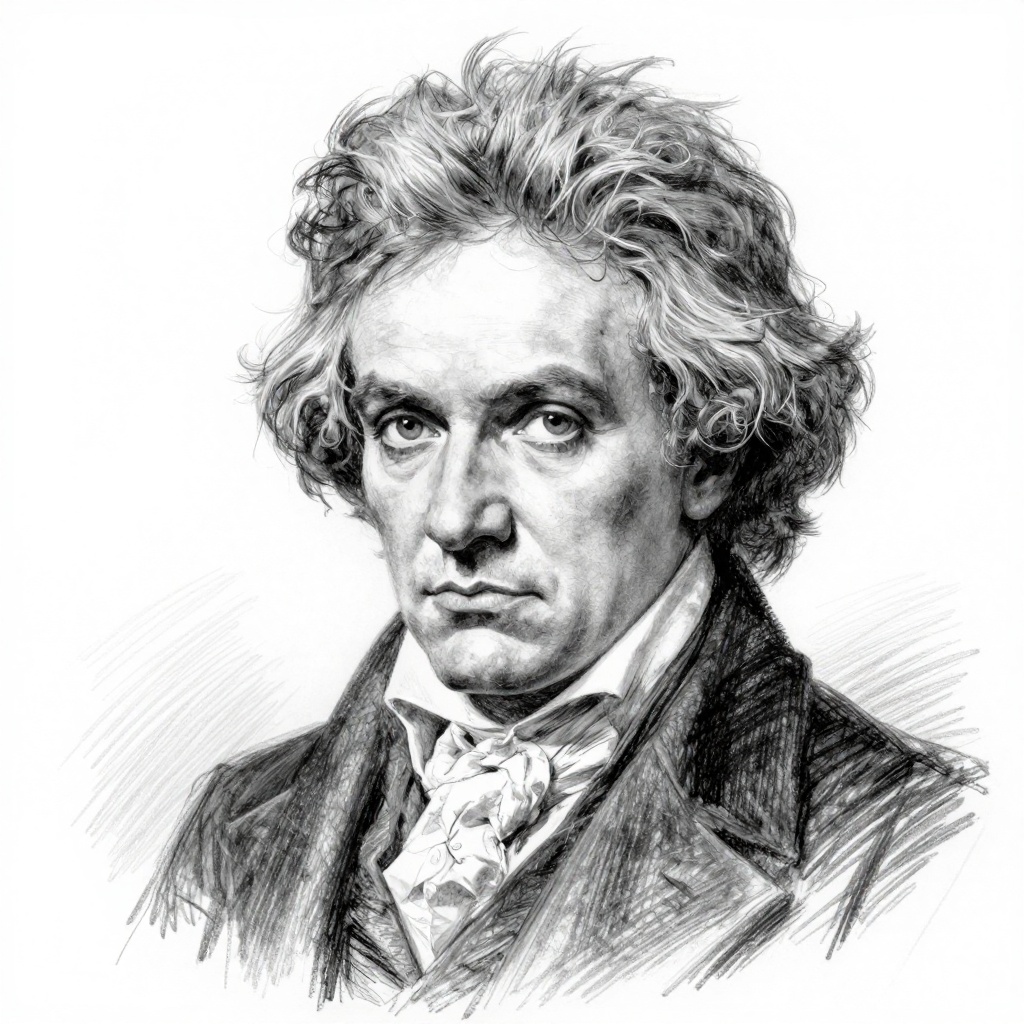
Comments