Quote · Added 24 October 2023
All happy families resemble one another, but each unhappy family is unhappy in its own way.
Leo TolstoyAnna Karenina, Part One, Chapter 1
No ratings yet
Filed underfamily·happiness·individuality
Quote · Added 24 October 2023
Filed underfamily·happiness·individuality
There's something almost comforting about this observation, even though it sounds bleak at first. When things are working in a family—people feel safe, heard, roughly on the same page—the recipe is pretty universal. Show up, listen, keep your promises, accept each other's quirks. But the moment something breaks, the ways it breaks are wildly different. One family fractures over money they can't discuss. Another drowns in unspoken resentment. A third tears itself apart through betrayal or addiction or simple neglect. Each unhappiness has its own particular shape.
The practical insight here matters more now than ever. It means you can't just apply someone else's family fix to yours. Your cousin's therapy approach, your friend's boundaries, your therapist's suggested conversation style—none of it is plug-and-play. You have to understand the specific gravity of your own unhappiness first. That requires actually looking at it instead of comparing yourself to the highlight reel of "functional" families around you.
There's also an unexpected permission in this. If you're struggling in ways that don't match anyone else's struggle, that's not weakness or failure—it's just specificity. Your family's problem is uniquely yours to solve, which means you need uniquely tailored thinking, not generic advice.
1828–1910·lived 82 years
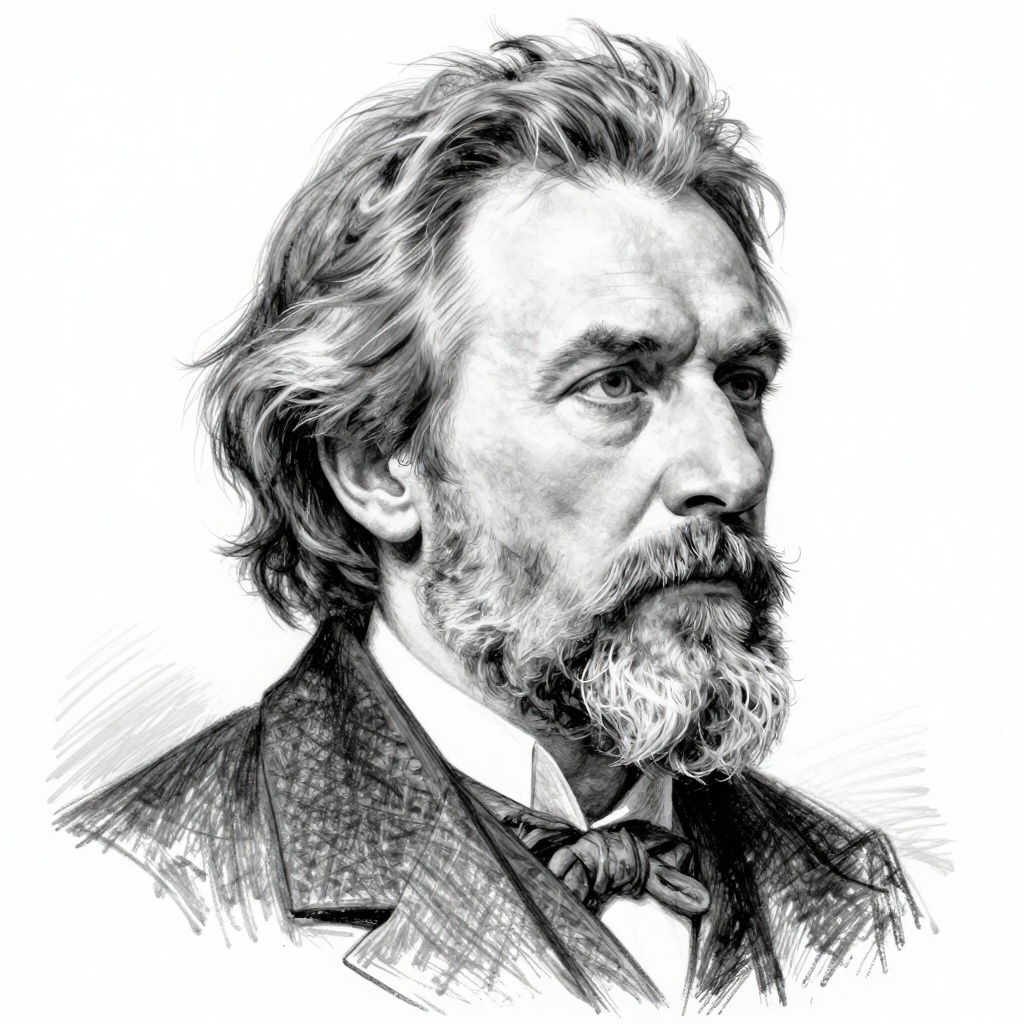
Leo Tolstoy was a renowned Russian writer and philosopher, known for his epic novels "War and Peace" and "Anna Karenina." He is widely regarded as one of the greatest authors in world literature, his works exploring themes of morality, society, and the human experience.
Comments