Quote · Added 14 February 2026
To me there has never been a higher source of earthly honor or distinction than that connected with advances in science.
No ratings yet
Filed underscience·honor·advancement
Quote · Added 14 February 2026
Filed underscience·honor·advancement
Most of us chase recognition through more visible channels: promotions, social media, accumulating things we can show off. Newton's pointing at something different—the quiet power of actually moving human understanding forward. When you solve a real problem or discover something true about how the world works, you've done something no amount of status-seeking can replicate. There's a permanence to it.
What's interesting is how this cuts against the grain of modern achievement culture. We're trained to want immediate validation and audience. But Newton's suggesting the deepest form of respect comes from knowing you've genuinely expanded what's possible or knowable. A scientist might work in obscurity for years on something almost nobody follows, yet that work quietly becomes the foundation for everything that comes after. That's distinct from being famous—it's about leaving the world actually different.
This matters beyond labs too. It's really about the difference between wanting to be seen as important versus doing something that actually matters. A teacher who develops a method that helps struggling readers. An engineer who makes a system work better. Someone who untangles a problem everyone else thought was unsolvable. That's the kind of honor Newton means—the kind that doesn't fade when attention moves elsewhere.
1643–1727·lived 84 years
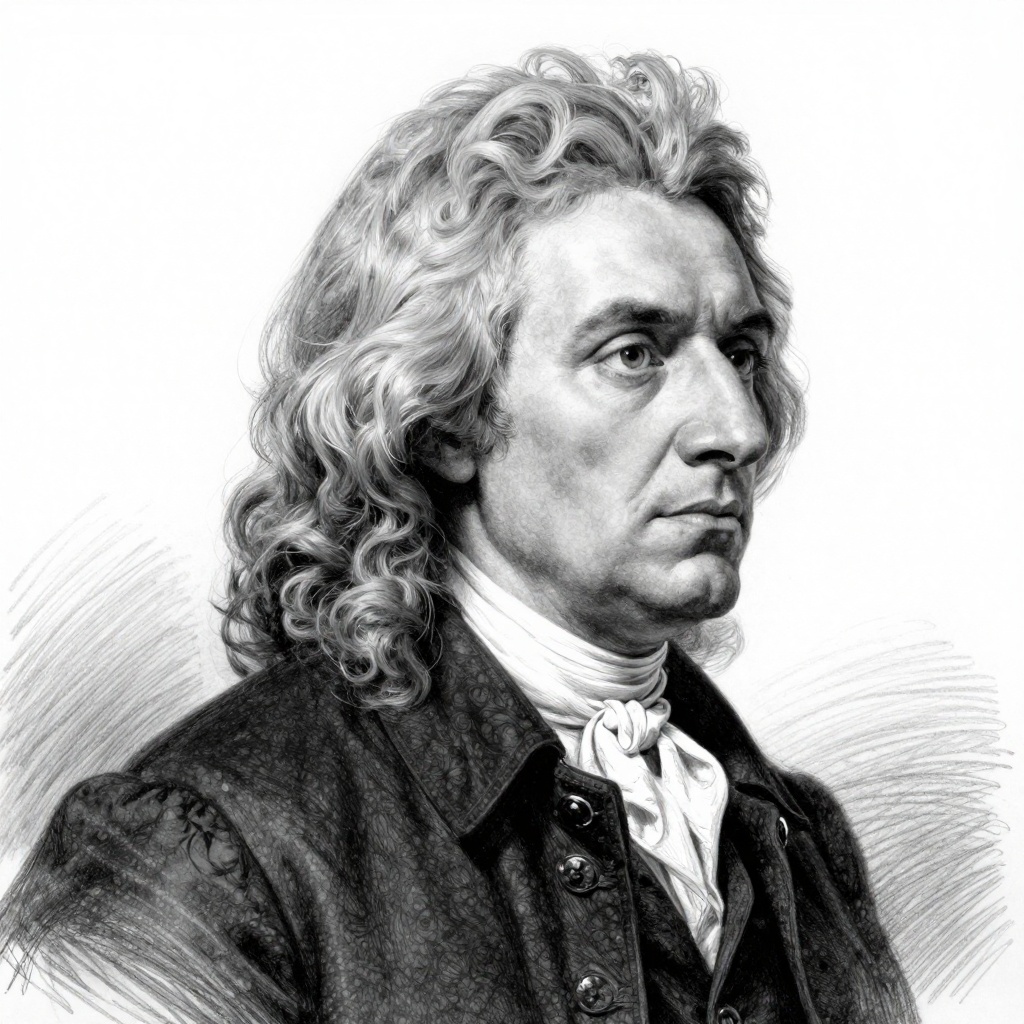
Isaac Newton (1643–1727) was an English mathematician, physicist, and astronomer, widely recognized for formulating the laws of motion and universal gravitation. His work laid the foundation for classical mechanics and greatly advanced our understanding of the natural world.
Comments