Quote · Added 5 October 2023
If I have seen further it is by standing on the shoulders of Giants.
Isaac NewtonLetter to Robert Hooke, 1675
No ratings yet
Quote · Added 5 October 2023
We live in an age that celebrates the self-made person—the solo founder, the lone genius, the overnight success story. But Newton's image cuts against that grain. He's acknowledging something we often forget: almost everything we know or accomplish builds on what came before. You're not starting from scratch, no matter how original your idea feels.
The everyday version of this shows up everywhere. A parent learns patience from their own parent, even if they're trying to do it differently. A musician steals a chord progression they heard as a kid. An entrepreneur solves a problem by combining two existing solutions in a new way. We're all standing on shoulders—some visible, some so old we don't even notice them anymore. The "giants" aren't just famous historical figures; they're every person, every failure, every experiment that came before you.
What's quietly radical about this idea is that it gives permission to be inspired by others without feeling like a fraud. You're not less creative for building on what's already there; that's literally how progress works. The trick is actually seeing the giants you're standing on, giving them credit, and then adding your own weight to the stack for whoever comes next.
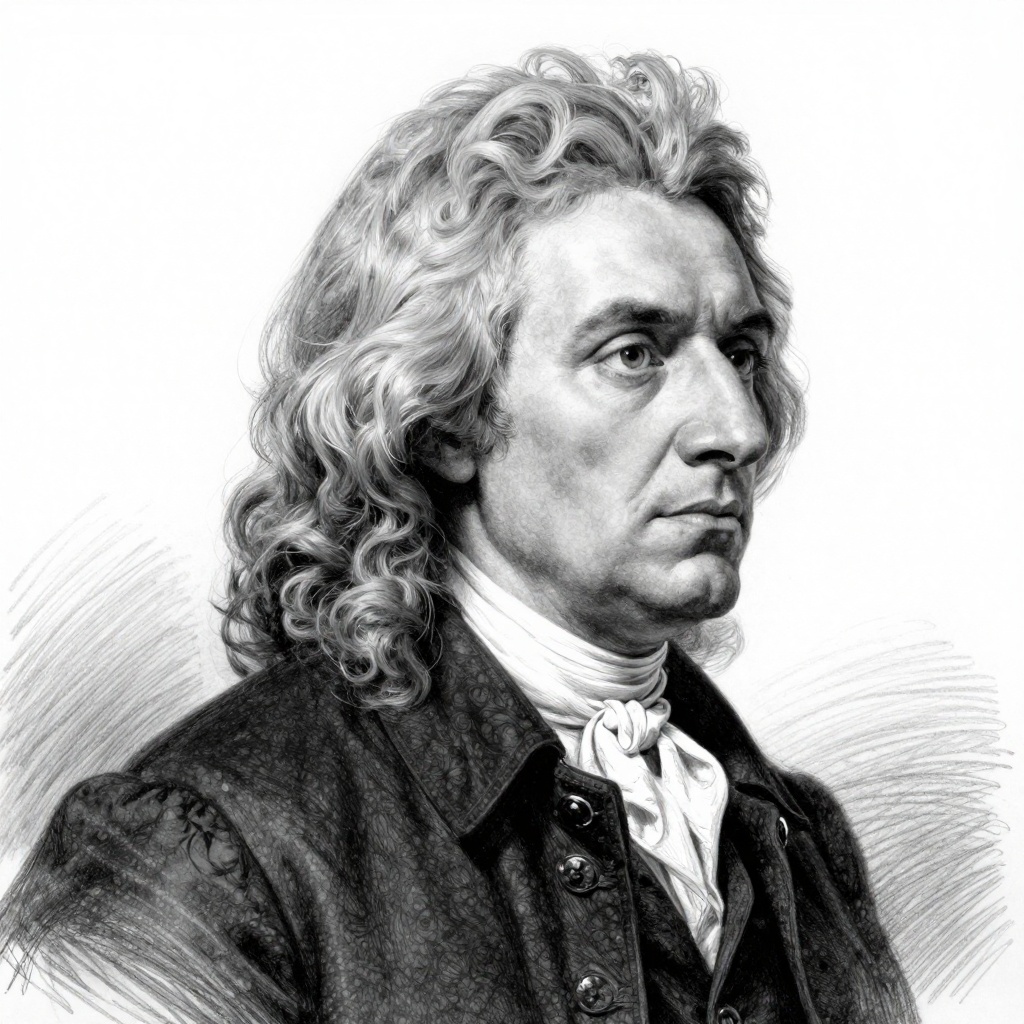
1643–1727·lived 84 years
Isaac Newton (1643–1727) was an English mathematician, physicist, and astronomer, widely recognized for formulating the laws of motion and universal gravitation. His work laid the foundation for classical mechanics and greatly advanced our understanding of the natural world.
Comments