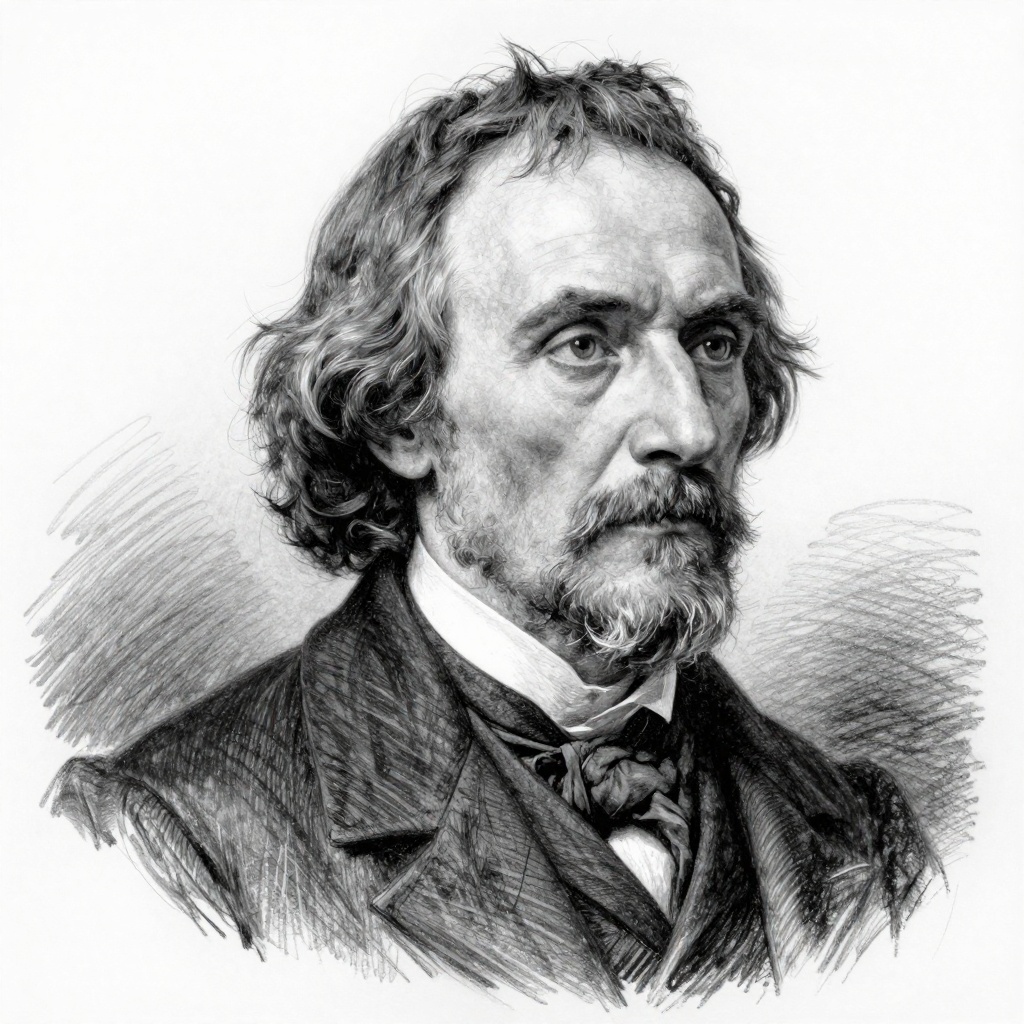
The youth gets together his materials to build a bridge to the moon, or, perchance, a palace or temple on the... — Henry David Thoreau

The youth gets together his materials to build a bridge to the moon, or, perchance, a palace or temple on the earth, and, at length, the middle-aged man concludes to build a woodshed with them.

Author: Henry David Thoreau

Insight: There's something quietly devastating about watching ambition shrink. We all start somewhere with enormous plans—the novel we'll write, the business we'll launch, the way we'll change our corner of the world. But somewhere between twenty-five and forty-five, the materials we gathered don't seem to fit the blueprint anymore. Life gets heavier. Responsibilities multiply. And suddenly that palace looks less important than a functional woodshed. What makes this observation sting is that it's not really about settling down or gaining wisdom. It's about losing something. The middle-aged man building the woodshed isn't necessarily happier or smarter than the youth dreaming of moonbridges—he's just more aware of gravity, literally and figuratively. Bills exist. People depend on you. The wood in your hands is valuable precisely because it's practical. But there's a real loss hiding inside that practicality, and Thoreau won't let us pretend otherwise. The twist is that this doesn't have to be inevitable. The quote works as a warning, not a prophecy. If you recognize the pattern, you might protect something. Not necessarily the palace, but maybe the habit of reaching. Maybe the woodshed doesn't have to be the end of ambition—just a pause, a shelter from which new things could still be imagined.

Source: Walden, 1854

The youth gets together his materials to build a bridge to the moon, or, perchance, a palace or temple on the earth, and, at length, the middle-aged man concludes to build a woodshed with them.

When ambition becomes a woodshed

There's something quietly devastating about watching ambition shrink. We all start somewhere with enormous plans—the novel we'll write, the business we'll launch, the way we'll change our corner of the world. But somewhere between twenty-five and forty-five, the materials we gathered don't seem to fit the blueprint anymore. Life gets heavier. Responsibilities multiply. And suddenly that palace looks less important than a functional woodshed.

What makes this observation sting is that it's not really about settling down or gaining wisdom. It's about losing something. The middle-aged man building the woodshed isn't necessarily happier or smarter than the youth dreaming of moonbridges—he's just more aware of gravity, literally and figuratively. Bills exist. People depend on you. The wood in your hands is valuable precisely because it's practical. But there's a real loss hiding inside that practicality, and Thoreau won't let us pretend otherwise.

The twist is that this doesn't have to be inevitable. The quote works as a warning, not a prophecy. If you recognize the pattern, you might protect something. Not necessarily the palace, but maybe the habit of reaching. Maybe the woodshed doesn't have to be the end of ambition—just a pause, a shelter from which new things could still be imagined.

Comments

Sign in to leave a comment or reply to one.

Sign in

Henry David Thoreau

Henry David Thoreau was an American essayist, poet, and philosopher, known for his transcendentalist writings advocating for individualism, nature appreciation, and civil disobedience. He is best known for his book "Walden, or Life in the Woods," which reflects on simple living in natural surroundings and has inspired generations of environmentalists and activists.

Graph

Related