Quote · Added 1 October 2023
If my wealth goes away, it takes with it nothing but itself.
EpicurusPrincipal Doctrines
Filed underwealth·self·resilience
Quote · Added 1 October 2023
Filed underwealth·self·resilience
There's something liberating about how Epicurus frames losing money or status. Most of us secretly worry that if our financial life collapsed, we'd somehow become less as people. But he's pointing out something surprisingly straightforward: money and possessions are just things. They have no character, no wisdom, no actual part of who you are.
This matters more now than ever, when so much of identity gets tangled up with income and consumption. We perform our net worth constantly through what we own, what we vacation, what we drive. The anxiety about loss isn't really about the money—it's about how we'll appear to others, or worse, who we'll become. Epicurus suggests this is backward thinking. Strip away the wealth and what's left is you, unchanged.
The non-obvious part? This isn't about being noble in poverty or pretending money doesn't matter. Epicurus himself valued modest pleasures and financial security. He's just drawing a clean line: whatever practical problems money solves, it doesn't solve the problem of meaning. Your character, your mind, your capacity to enjoy simple things—those were never dependent on your bank account in the first place. They're the real estate worth protecting.
d. 270
Epicurus (341-270 BC) was an ancient Greek philosopher who founded the school of philosophy known as Epicureanism. He is known for his teachings on achieving a happy and tranquil life through the pursuit of simple pleasures, moderation, and the avoidance of pain and anxiety. Epicurus believed that true happiness could be attained through friendship, freedom, and living a virtuous life.
Also by Epicurus
Nothing is enough to the man for whom enough is too little.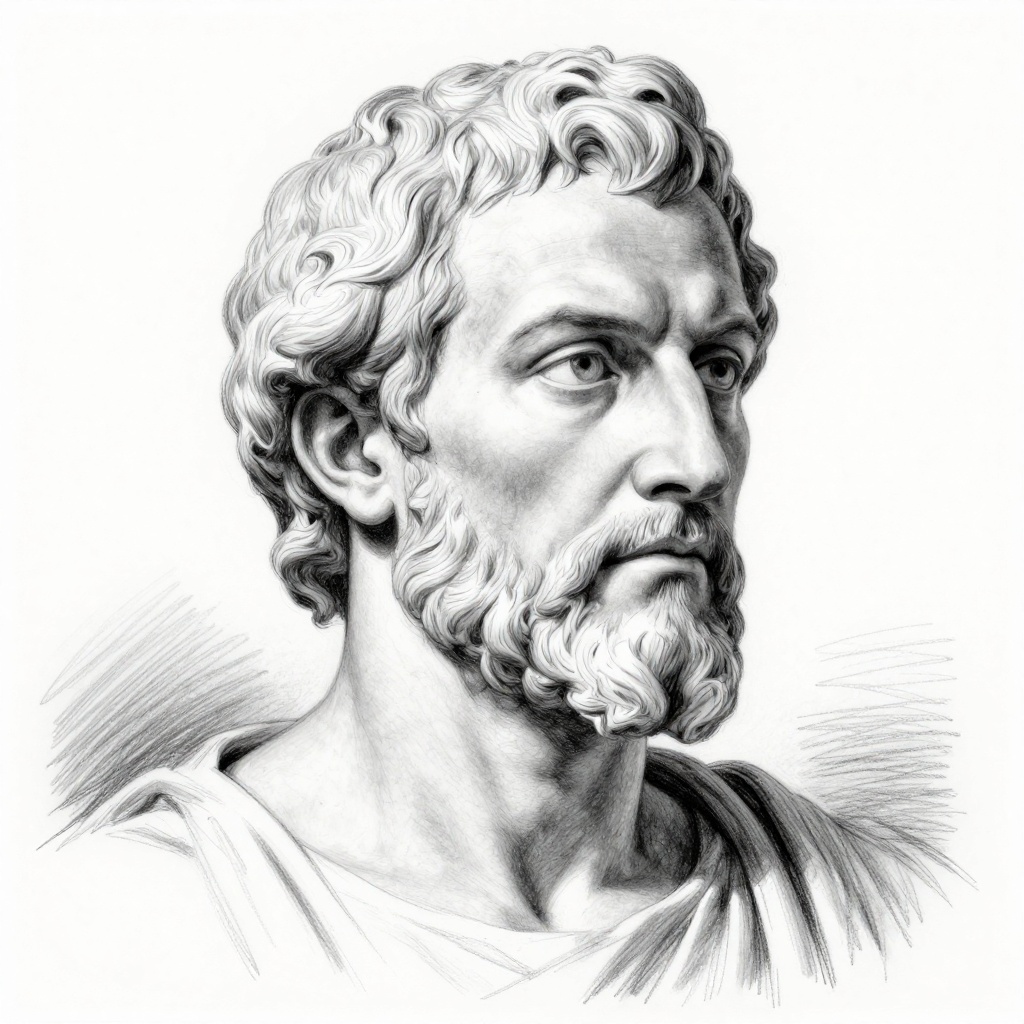
Comments