Quote · Added 14 February 2026
The boundaries which divide Life from Death are at best shadowy and vague. Who shall say where the one ends, and where the other begins?
Edgar Allan PoeThe Premature Burial, 1844
Filed underlife·death·boundaries
Quote · Added 14 February 2026
Filed underlife·death·boundaries
We tend to think of life and death as obvious opposites—one moment you're alive, the next you're not. But Poe's question points to something most of us know intuitively: the boundary is messier than that. A relationship can feel dead long before it officially ends. Your old self dies when you change careers or move away, yet you're still breathing. A plant looks dead until spring comes. We're all carrying around parts of ourselves that have already passed—old dreams, former identities, versions of ourselves we've outgrown.
This matters because we often wait for clear demarcation lines that never come. We want to know exactly when to let something go, when to grieve, when to move on. But life rarely works that way. What's actually alive versus what's already gone is often a judgment call we have to make ourselves, without certainty. The people we've lost linger in our habits and conversations. Projects we've abandoned still haunt us. Maybe the real skill isn't finding the exact boundary—it's learning to exist comfortably in those shadowy spaces where things are neither fully alive nor completely dead, while we figure out what to do next.
1809–1849·lived 40 years
Edgar Allan Poe (1809–1849) was an American writer known for his dark and macabre short stories and poetry. He is considered a master of Gothic fiction and is famous for works such as "The Tell-Tale Heart," "The Raven," and "The Fall of the House of Usher." Poe's writings have had a lasting impact on literature and have influenced the development of the detective fiction genre.
Also by Edgar Allan Poe
Never to suffer would never to have been blessed.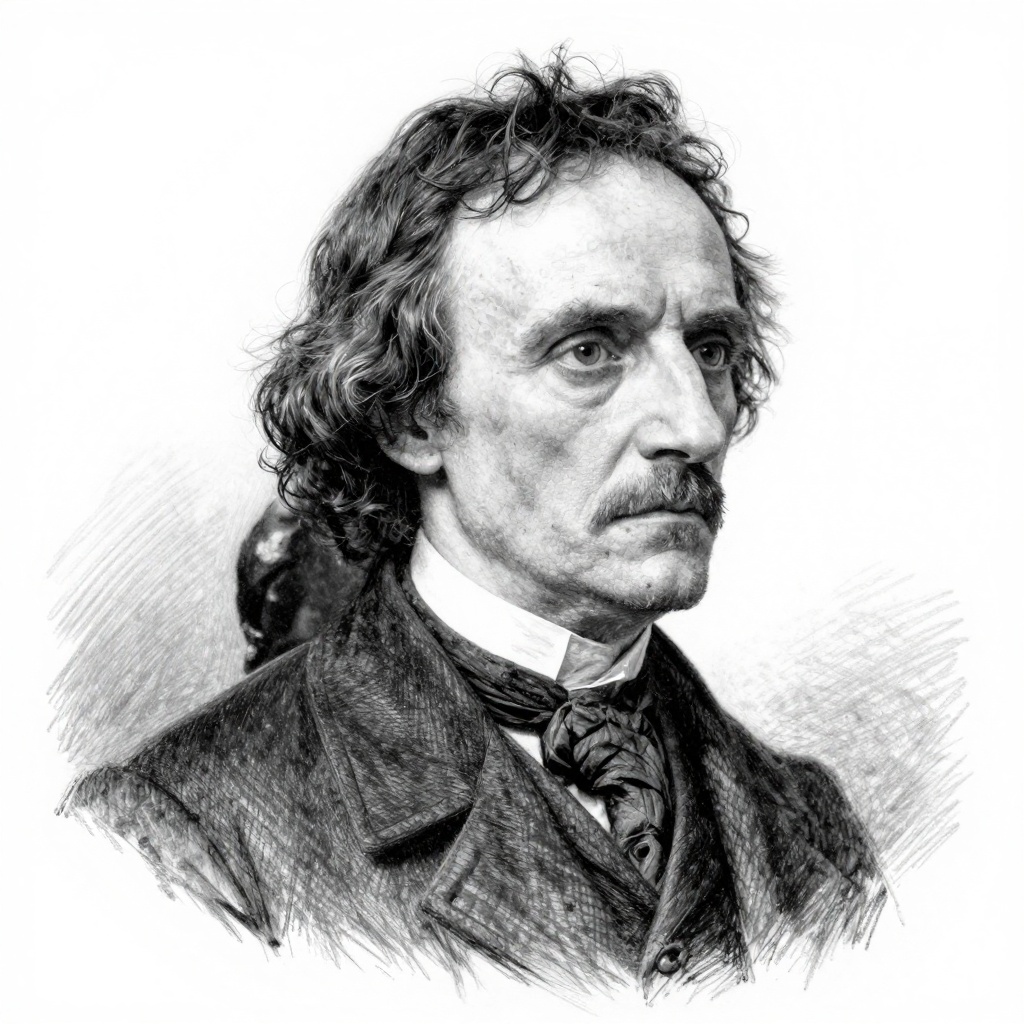
Comments