Quote · Added 8 September 2023
I became insane, with long intervals of horrible sanity.
Edgar Allan PoeLetter to George W. Eveleth, January 4, 1848
Quote · Added 8 September 2023
There's something weirdly honest in how Poe flips the script here. We usually think of sanity as the baseline and madness as the interruption, but he's describing it the other way around—as if losing your grip on reality was somehow the default, and those stretches of clear thinking were the ones that hurt.
Most of us experience some version of this. You're anxious for weeks, trapped in circular thoughts, and then suddenly one morning the fog lifts and you see yourself clearly. That clarity can actually be worse, because now you see exactly how far you've drifted. Or you're in a groove—routines working, life making sense—and then doubt creeps in and ruins the comfortable numbness. The "horrible sanity" isn't just about seeing reality; it's about seeing yourself seeing it, and that double vision is exhausting.
What Poe captures is that mental stability isn't one steady state we achieve and keep. It's more like a rhythm of losing and finding your footing. The key insight is that both the confusion and the clarity have their own kind of pain. Sometimes we're not choosing between sanity and its opposite; we're just cycling through different ways of being broken, looking for which one we can live with.
1809–1849·lived 40 years
Edgar Allan Poe (1809–1849) was an American writer known for his dark and macabre short stories and poetry. He is considered a master of Gothic fiction and is famous for works such as "The Tell-Tale Heart," "The Raven," and "The Fall of the House of Usher." Poe's writings have had a lasting impact on literature and have influenced the development of the detective fiction genre.
Also by Edgar Allan Poe
Never to suffer would never to have been blessed.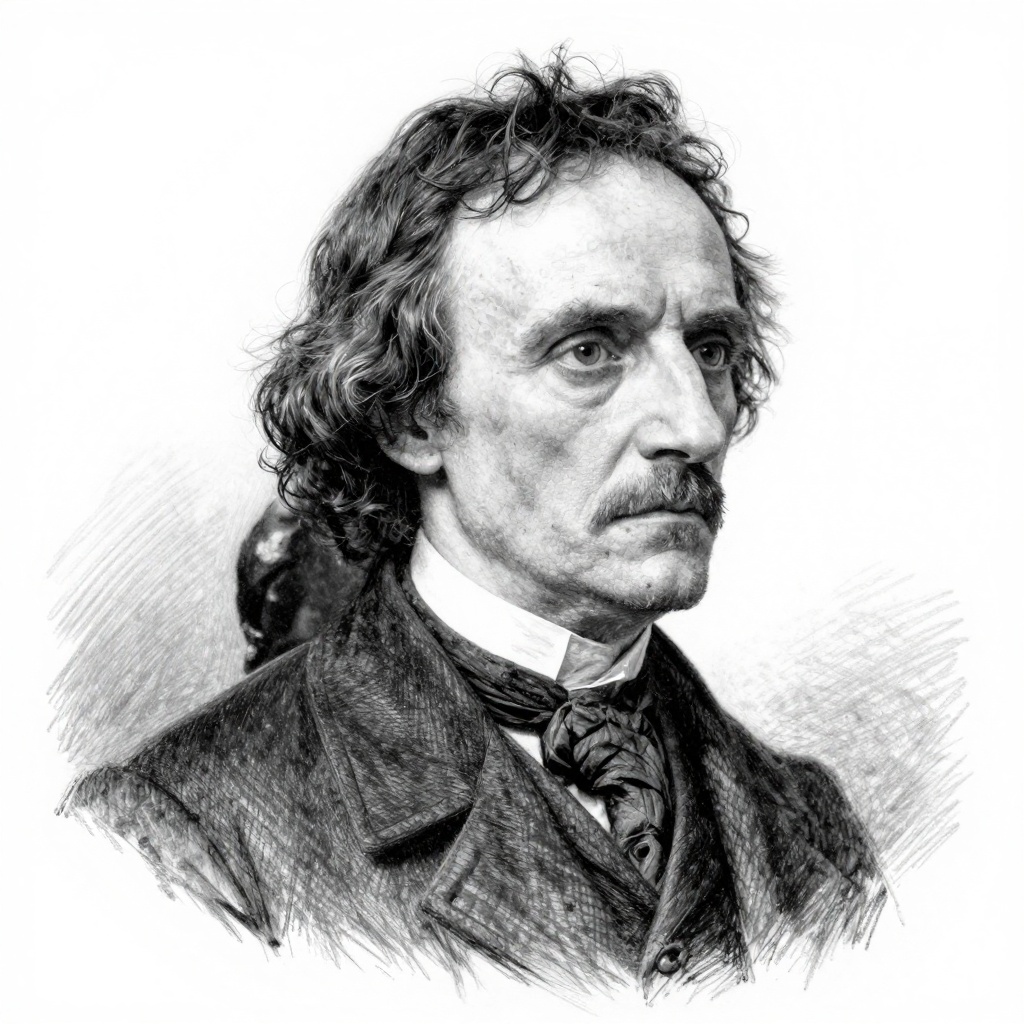
Comments