Quote · Added 14 February 2026
I am not an Athenian or a Greek, but a citizen of the world.
DiogenesDiogenes of Sinope, in various accounts
No ratings yet
Quote · Added 14 February 2026
There's something quietly radical about this statement—especially coming from someone living in ancient Greece, where loyalty to your city-state was basically everything. Diogenes was saying that the accident of where you were born shouldn't define the limits of your thinking or your sense of responsibility. He was pointing at something we still struggle with: the way we reflexively divide ourselves into tribes, then treat those outside the tribe as somehow less real or less deserving of our concern.
What makes this relevant now is how much our instincts still work against it. We care more about news from our own country, we trust people who share our background, we feel closer to people like us. These aren't character flaws—they're natural. But Diogenes is suggesting that wisdom means recognizing this pull and not letting it be the final word. You can love your community and still hold some part of yourself accountable to a wider circle.
The tricky part is that being a "citizen of the world" doesn't mean having no roots or commitments. It means holding a kind of double vision: caring deeply about the particular people and places you're embedded in, while remembering that a person across the world dealing with the same struggles deserves something of the same consideration. It's harder than picking a side, which is probably why Diogenes had to say it out loud.
Diogenes of Sinope was an ancient Greek philosopher and one of the most famous figures of Cynicism, known for his ascetic lifestyle and controversial behavior. He lived in the 4th century BCE and often challenged social norms and conventions, famously carrying a lantern in broad daylight to search for an honest man. Diogenes is best remembered for his wit, his disregard for material wealth, and his philosophical teachings advocating for a simple, self-sufficient life in accordance with nature.
Also by Diogenes
The insult only works if you accept it.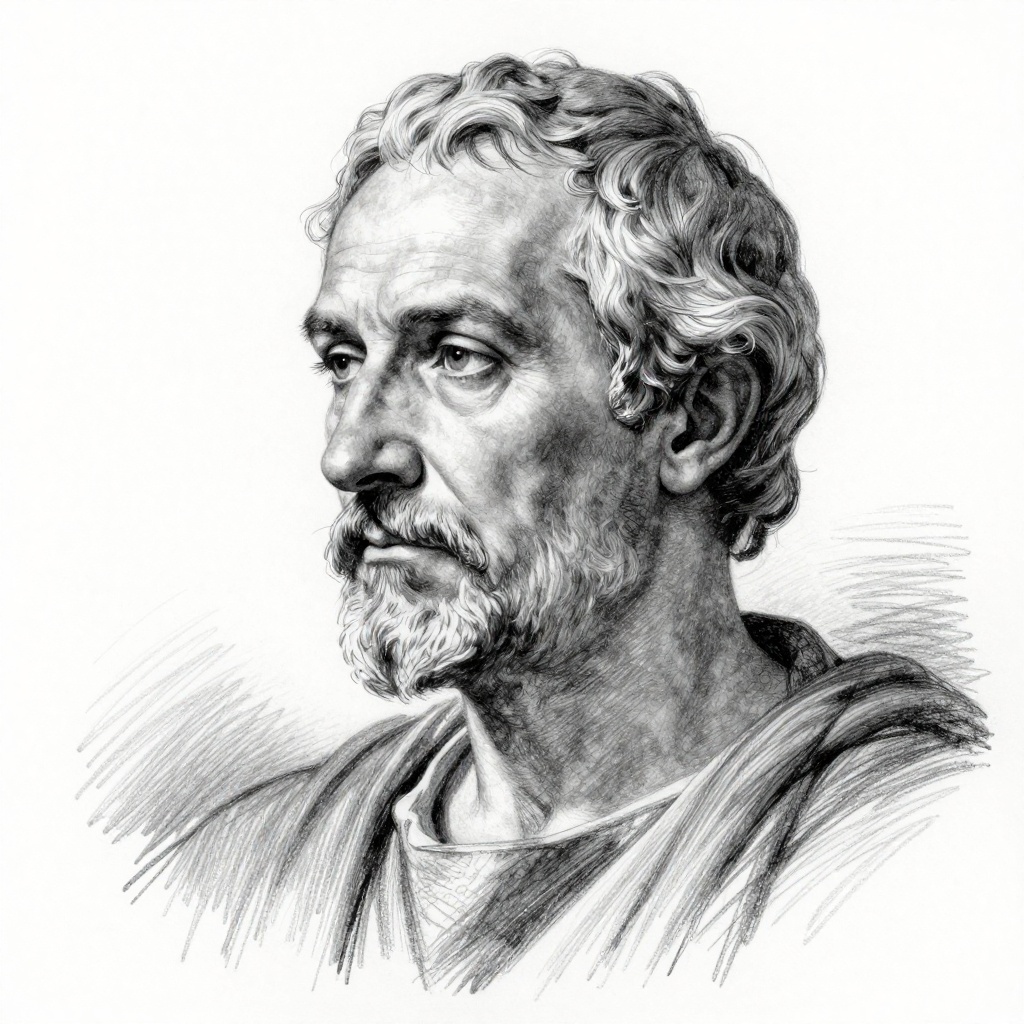
Comments