Quote · Added 11 February 2026
Nothing exists except atoms and empty space; everything else is opinion.
DemocritusQuoted in Aristotle's Metaphysics, 4th century BC
Quote · Added 11 February 2026
We're living in an age of competing opinions dressed up as facts. Someone shows you a headline, a study, a statistic—and you're supposed to feel certain about what's real. But Democritus was onto something that cuts right through our modern confusion: most of what we disagree about fiercely isn't actually physical reality. It's our interpretation of it. The atoms and empty space just are; everything else—whether something is fair, beautiful, valuable, or true in the way that matters to us—requires a story we're telling ourselves.
This doesn't mean nothing matters or that all opinions are equal. It means recognizing where the boundary actually is. Your anxiety about tomorrow isn't made of atoms in a way you can measure objectively, but it's real in how it shapes your day. Your neighbor's political belief isn't written into the fabric of the universe, but it genuinely shapes how they live. The useful move isn't to pretend opinions are facts. It's to stop expecting the world to validate your opinion just because it feels true to you.
The quiet power here is permission to hold your views more lightly while still taking them seriously. You can believe strongly in something while acknowledging it's your interpretation, not the atoms themselves talking.
d. 370
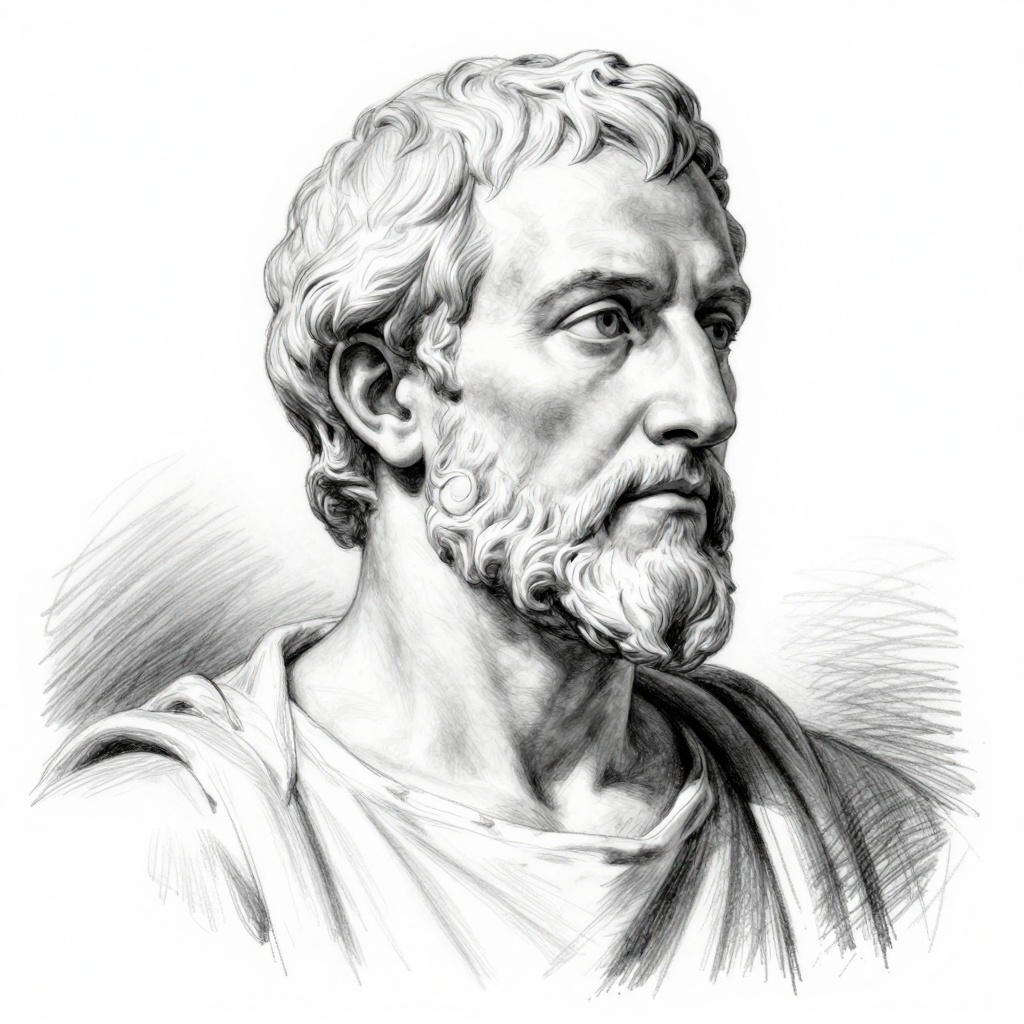
Democritus was an ancient Greek philosopher known for his atomic theory and his belief that all matter is composed of tiny, indivisible particles called atoms. He is considered one of the founders of modern science and is remembered for his contributions to the fields of metaphysics, ethics, and natural philosophy.
Comments