Quote · Added 9 February 2026
The fragrance of flowers spreads only in the direction of the wind. But the goodness of a person spreads in all directions.
No ratings yet
Quote · Added 9 February 2026
There's something quietly revolutionary about this comparison. We accept that flowers need perfect conditions to be appreciated—the right wind, the right proximity, maybe even the right mood from whoever's nearby. But goodness, apparently, doesn't work that way. It travels omnidirectionally, reaching people you'll never meet, rippling through situations you won't even witness.
What makes this especially useful today is how it cuts through our modern excuse-making. We often wait for the "right conditions" to be kind—the right audience, the right recognition, the right moment when it won't cost us too much. But Chanakya's suggesting something harder and stranger: that genuine goodness doesn't need any of that. It spreads regardless, almost like it has its own invisible momentum. A small act of integrity in a private moment, a choice to be generous when nobody's watching—these things somehow get out into the world anyway, affecting people and circumstances in ways you can't control or predict.
The practical payoff? It removes the need to calculate your audience. You don't have to wonder if your kindness will be "worth it" or noticed. The spread is guaranteed. You're just responsible for whether you do it.
d. 283
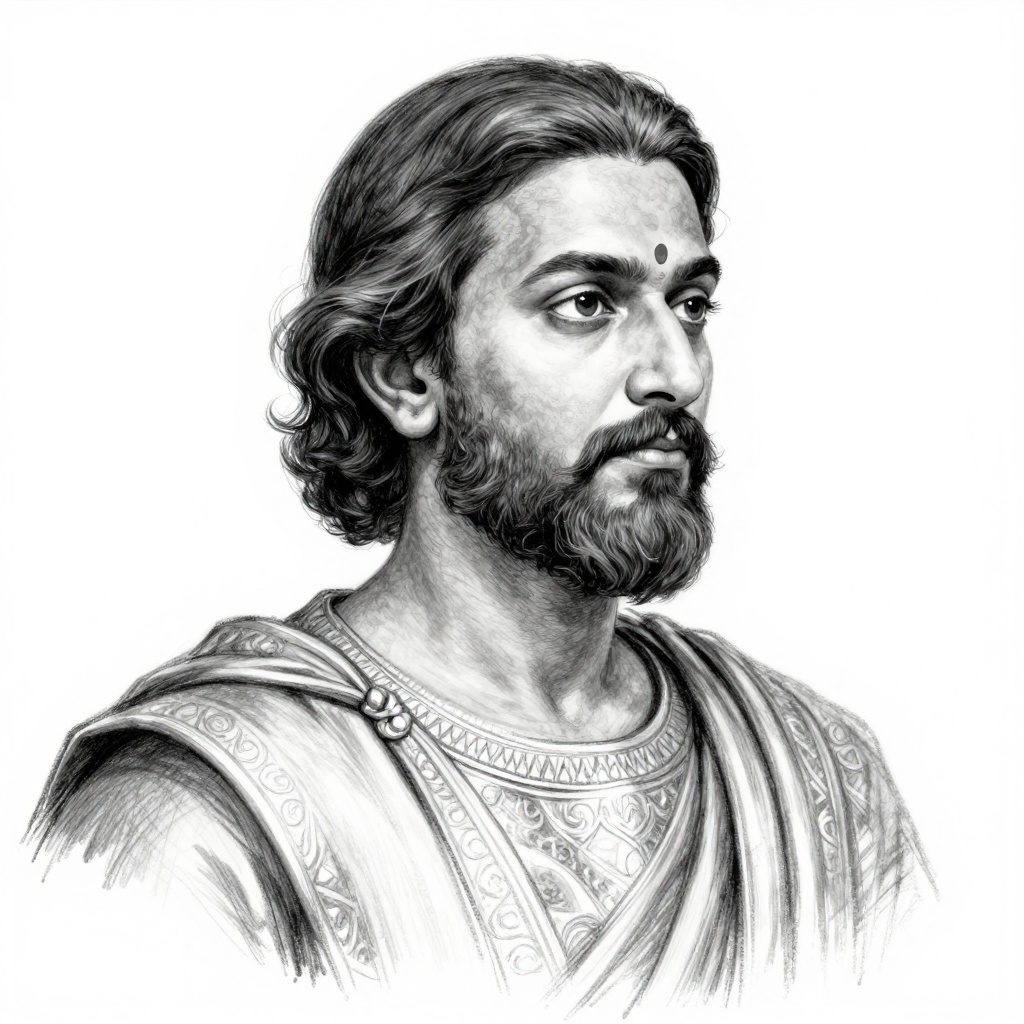
Chanakya, also known as Kautilya or Vishnugupta, was an ancient Indian teacher, economist, philosopher, and royal advisor. He is best known for his authorship of the Arthashastra, an ancient Indian treatise on statecraft, economic policy, and military strategy. Chanakya is renowned for being the chief architect behind the establishment of the Maurya Empire in ancient India.
Comments