Quote · Added 13 February 2026
A place for everything, everything in its place.
Benjamin FranklinThe Autobiography of Benjamin Franklin, 1791
No ratings yet
Filed underorder·organization·clarity
Quote · Added 13 February 2026
Filed underorder·organization·clarity
We treat organization like a luxury, something to aim for when life finally settles down. But Franklin understood it differently—as a basic operating system for getting things done. When you know exactly where something lives, you're not just saving time hunting for it. You're freeing up mental space that was being quietly occupied by low-level anxiety and decision fatigue.
The counterintuitive part? Perfect order isn't actually the goal here. You could organize your entire house and still feel scattered because what matters is the system, not the aesthetics. A messy desk with a logical filing system beats a beautiful one where nothing has a home. It's the predictability that does the work. When you develop habits around placement, you stop making thousands of tiny decisions about where things go, and those decisions compound into wasted energy and lost focus.
This scales beyond physical spaces too. The principle applies to how you structure your day, your digital files, your commitments. Everywhere you've clearly designated what belongs where, you've bought yourself back some bandwidth. Franklin's rule isn't about perfectionism—it's about creating friction-free pathways in your life so your actual energy can go toward things that matter.
1706–1790·lived 84 years
Benjamin Franklin (1706–1790) was an American polymath, writer, printer, politician, and inventor. He is known for his role in founding the United States, as well as his scientific discoveries and inventions, such as the lightning rod and bifocals. Franklin was one of the Founding Fathers of the United States and played a crucial part in drafting the Declaration of Independence and the U.S. Constitution.
Also by Benjamin Franklin
Either write things worth reading, or do things worth the writing.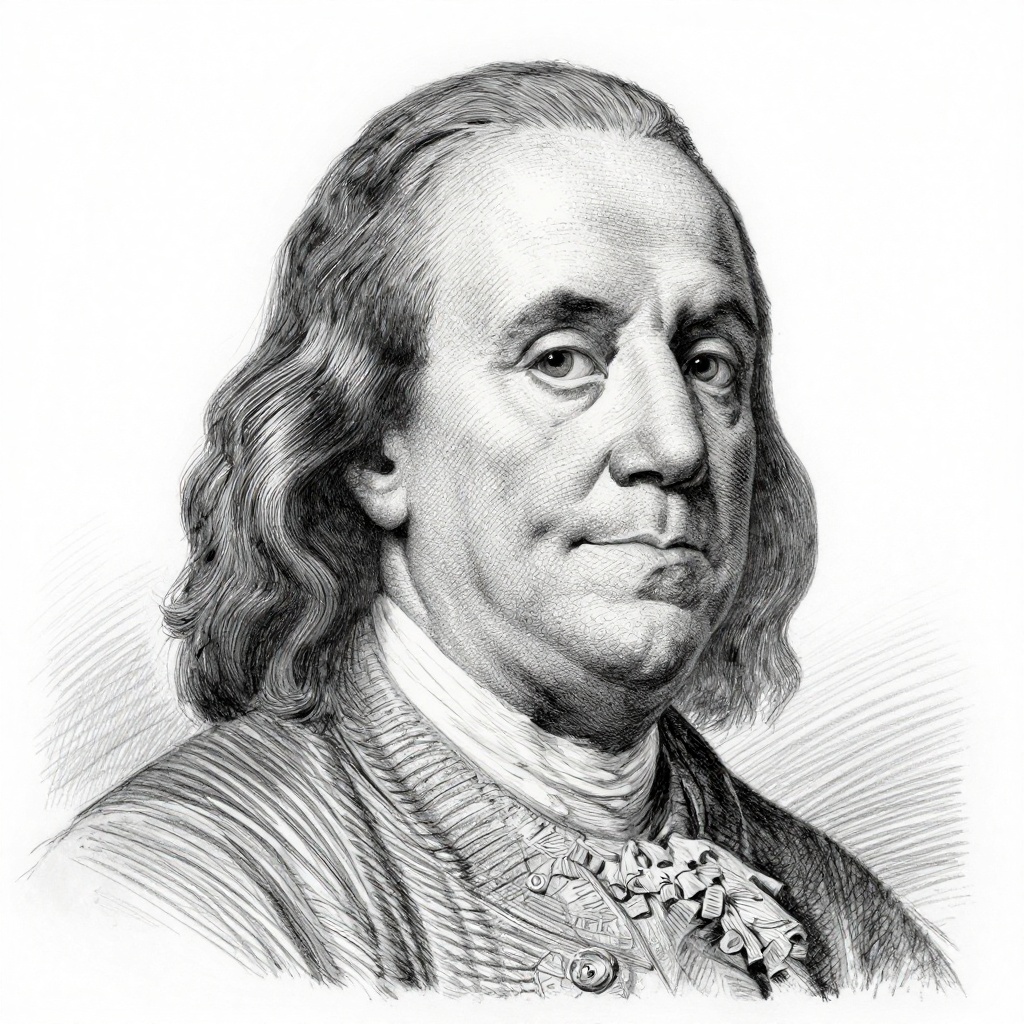
Comments