Quote · Added 14 February 2026
To attain any assured knowledge about the soul is one of the most difficult things in the world.
AristotleOn the Soul, 350 BC
Filed underknowledge·soul·difficulty
Quote · Added 14 February 2026
Filed underknowledge·soul·difficulty
We like to think we know ourselves pretty well. We can describe our personality, list our goals, explain why we do things. But Aristotle's observation cuts deeper—he's pointing out that genuine self-knowledge is almost impossibly hard, not because we lack intelligence, but because we're trying to observe the observer. It's like trying to see your own eyes without a mirror.
The tricky part isn't figuring out what you did or said. It's understanding why you actually do things, what you genuinely want versus what you think you should want, or recognizing patterns in yourself that feel invisible from the inside. People spend years in therapy, meditation, or journaling only to have their motivations surprise them again. You can catch yourself repeating the same relationship mistake, the same career choice, the same avoidance pattern—and still struggle to understand what's really driving it.
What makes this quote feel fresh today is how much we're encouraged to "know ourselves" through quizzes and personality tests, as if self-knowledge were a destination you reach. Aristotle reminds us it's actually an ongoing, humbling struggle—which might be the most honest starting point there is.
d. 322
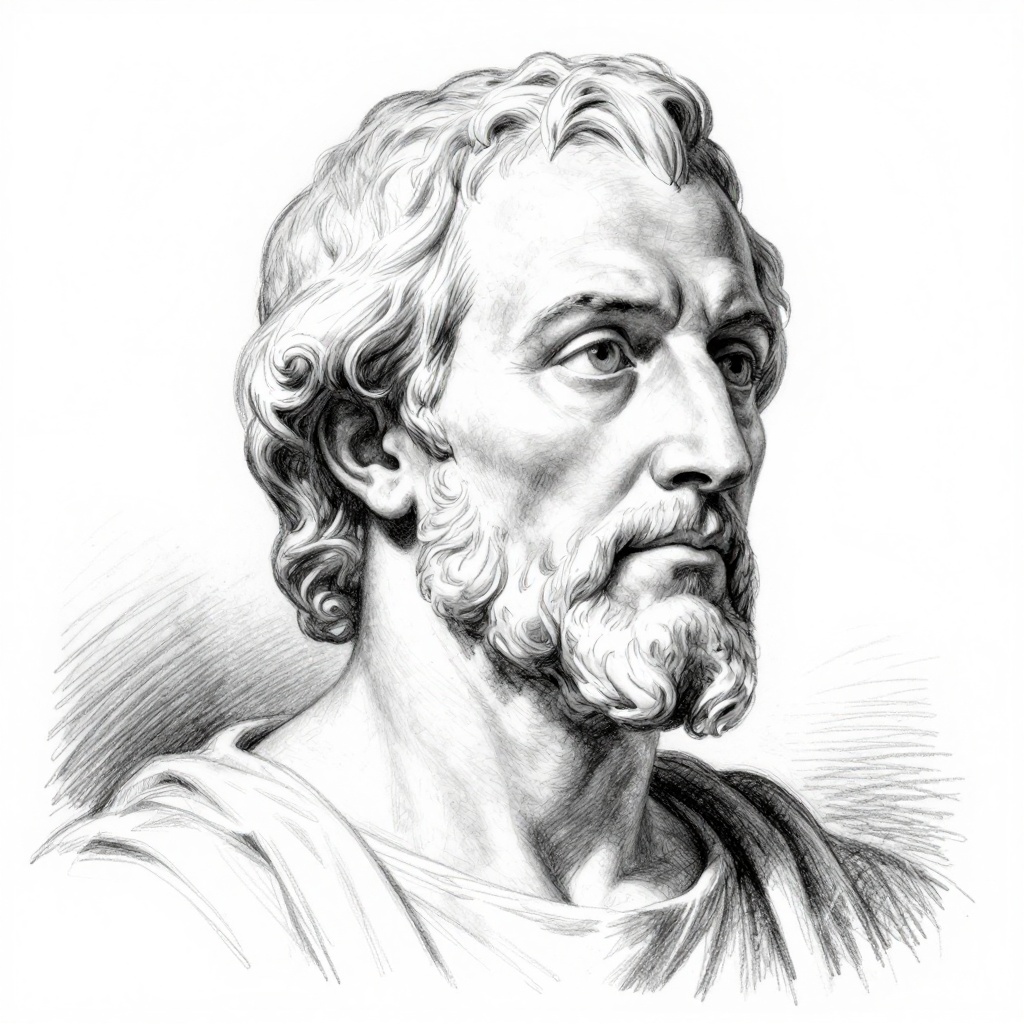
Aristotle was a Greek philosopher and polymath who lived from 384 to 322 BC. He is known for being one of the greatest thinkers in Western philosophy and for his contributions to a wide array of subjects including metaphysics, ethics, politics, biology, and logic. Aristotle was a student of Plato and the teacher of Alexander the Great.
Comments