Quote · Added 21 April 2024
The purpose of knowledge is action, not knowledge.
AristotleNicomachean Ethics, Book 6, Chapter 2, Section 5
Quote · Added 21 April 2024
We live in an age of endless learning. You can find tutorials on anything—how to negotiate better, build habits, fix relationships, become more productive. Yet somehow we stay stuck. We watch the video, feel inspired for a day, then drift back to our old patterns. The problem isn't that we lack information. It's that we've confused understanding with doing.
Aristotle was pointing at something we still get backwards: knowledge is only real when it changes how you actually live. Knowing you should exercise means nothing without the morning run. Understanding emotional intelligence matters only when you pause mid-argument and choose differently. This sounds obvious, but it's radical because it means half of what we learn is wasted energy—the stuff we consume passively and never translate into behavior.
The twist is that action isn't just the endpoint of knowledge; it's what makes knowledge stick in the first place. When you try something, fail, adjust, and try again, that's when real learning happens. The person who experiments and stumbles forward learns more than the person who has read every book on the subject. If your knowledge isn't pushing you to actually do something different, you haven't really learned it yet. You've just rearranged your thoughts.
d. 322
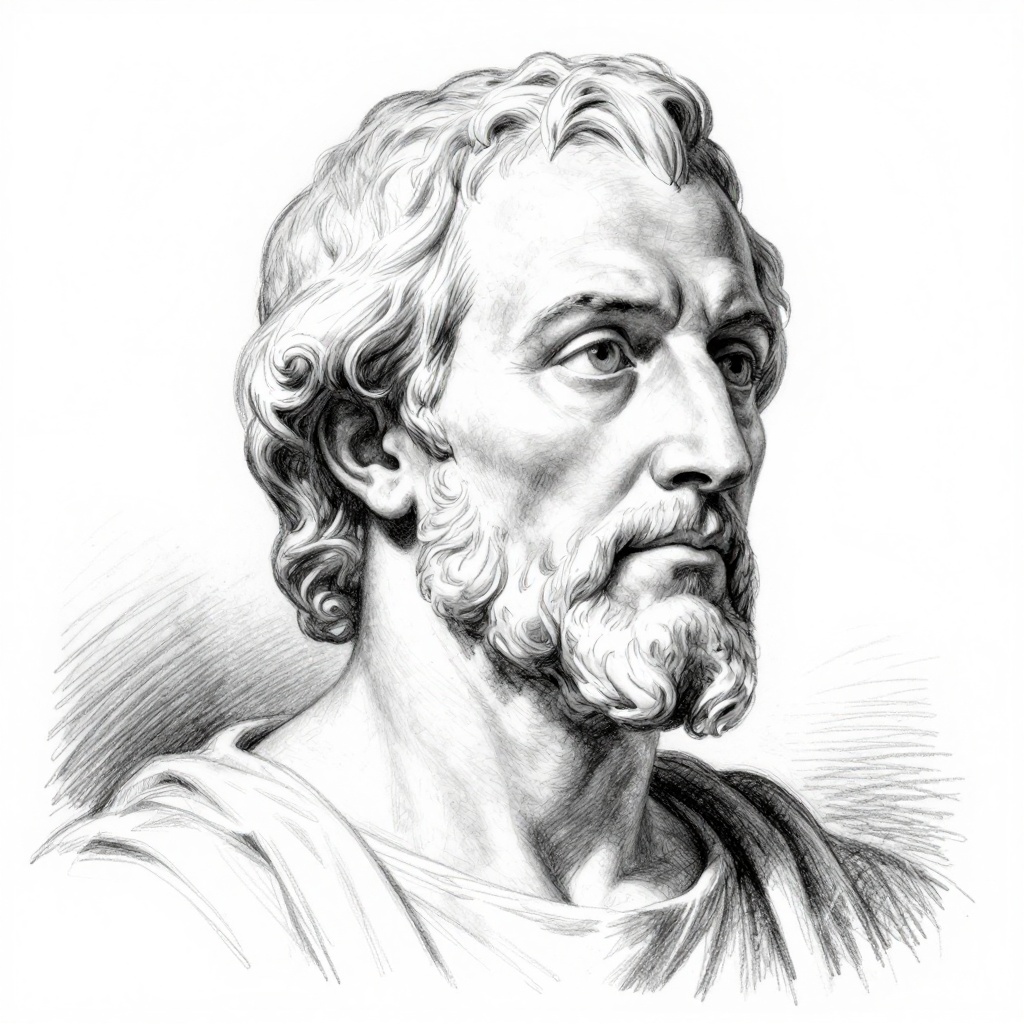
Aristotle was a Greek philosopher and polymath who lived from 384 to 322 BC. He is known for being one of the greatest thinkers in Western philosophy and for his contributions to a wide array of subjects including metaphysics, ethics, politics, biology, and logic. Aristotle was a student of Plato and the teacher of Alexander the Great.
Comments