Quote · Added 14 February 2026
The ideal man bears the accidents of life with dignity and grace, making the best of circumstances.
Filed underman·dignity·resilience
Quote · Added 14 February 2026
Filed underman·dignity·resilience
There's a version of strength that has nothing to do with never failing or never feeling disappointed. It's the quieter thing Aristotle is pointing to here—the ability to get knocked down by something completely outside your control and not let that become your entire story. A layoff, an illness, a relationship ending, plans that vanish overnight. These things happen to everyone. What separates people isn't whether bad luck finds them, but what they do with the wreckage.
The tricky part is that "making the best of circumstances" isn't the same as pretending everything is fine or forcing yourself into toxic positivity. It's actually more realistic than that. It means looking at what you actually have to work with—your time, your skills, the people around you, even your pain—and asking what's genuinely possible from here. Sometimes that's rebuilding. Sometimes it's just choosing how you'll feel about something you can't change. Sometimes it's the small dignity of showing up the same way regardless.
What makes this ideal worth considering now is that we're often taught that real success means avoiding setbacks entirely. But Aristotle knew better. The actual measure isn't whether life is smooth. It's whether you can remain yourself when it isn't.
d. 322
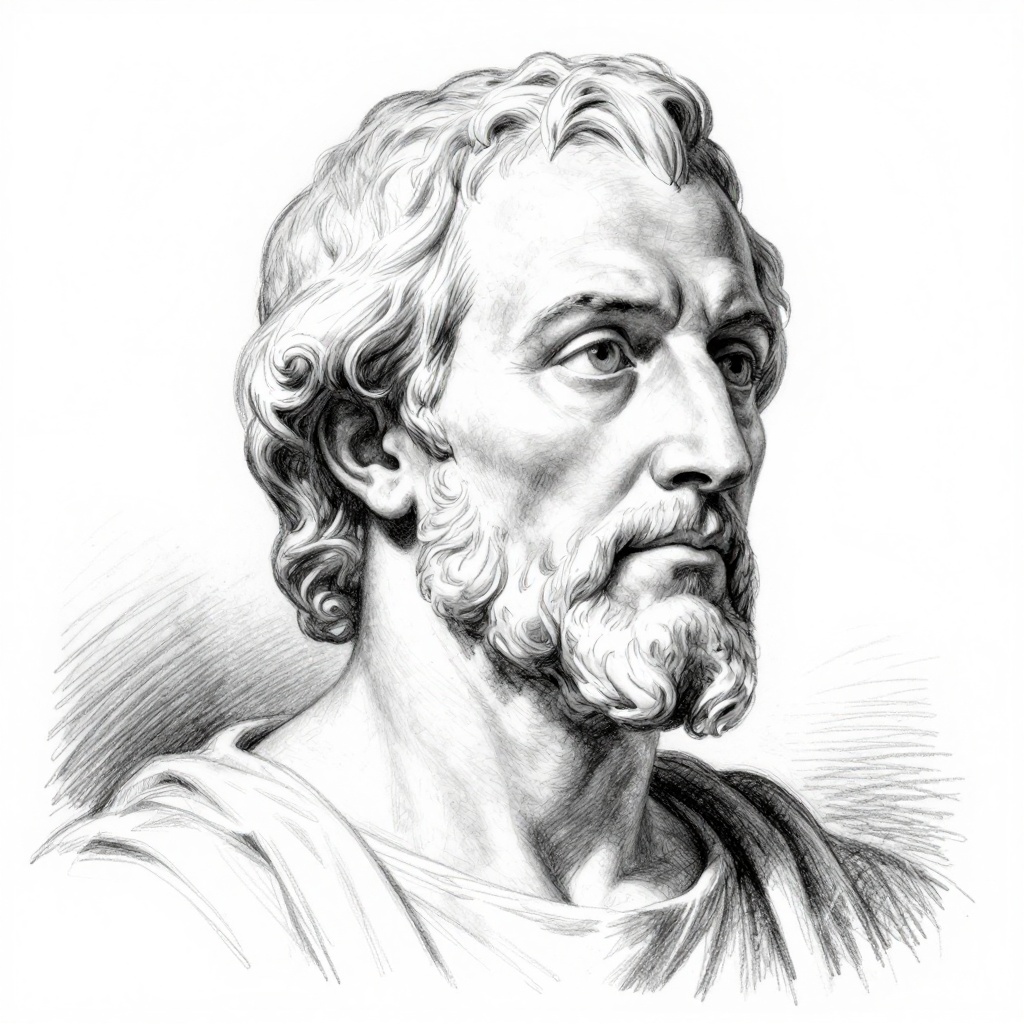
Aristotle was a Greek philosopher and polymath who lived from 384 to 322 BC. He is known for being one of the greatest thinkers in Western philosophy and for his contributions to a wide array of subjects including metaphysics, ethics, politics, biology, and logic. Aristotle was a student of Plato and the teacher of Alexander the Great.
Comments