Quote · Added 14 February 2026
In all things of nature there is something of the marvelous.
AristotleMetaphysics, 981b, 350 BC
Quote · Added 14 February 2026
We live in a world we've mostly stopped noticing. A bird lands on a wire outside your window, and you glance past it. The way light bends through water at exactly the right angle creates a rainbow, and we file it away as "nice weather." Aristotle's insight cuts against this numbness—he's saying that wonder isn't reserved for mountaintops or museums. It's woven into everything, including the ordinary stuff we pass by every single day.
The tricky part is that modern life actually trains us away from this. We categorize, label, and move on. A leaf becomes just "a leaf." But if you actually stop and look at one—the intricate veining, the precise geometry of how it catches light—the marvel is genuinely there. It's not that nature changed. Our attention did.
What's quietly radical about this idea is that it costs nothing and requires no special knowledge. You don't need a science degree or a trip somewhere exotic. The marvelous is right here: in the pattern of frost on a window, the way your hands know how to do familiar tasks without thinking, the fact that tiny seeds somehow contain entire trees. Maybe the real skill isn't finding wonder in nature. It's remembering to look.
d. 322
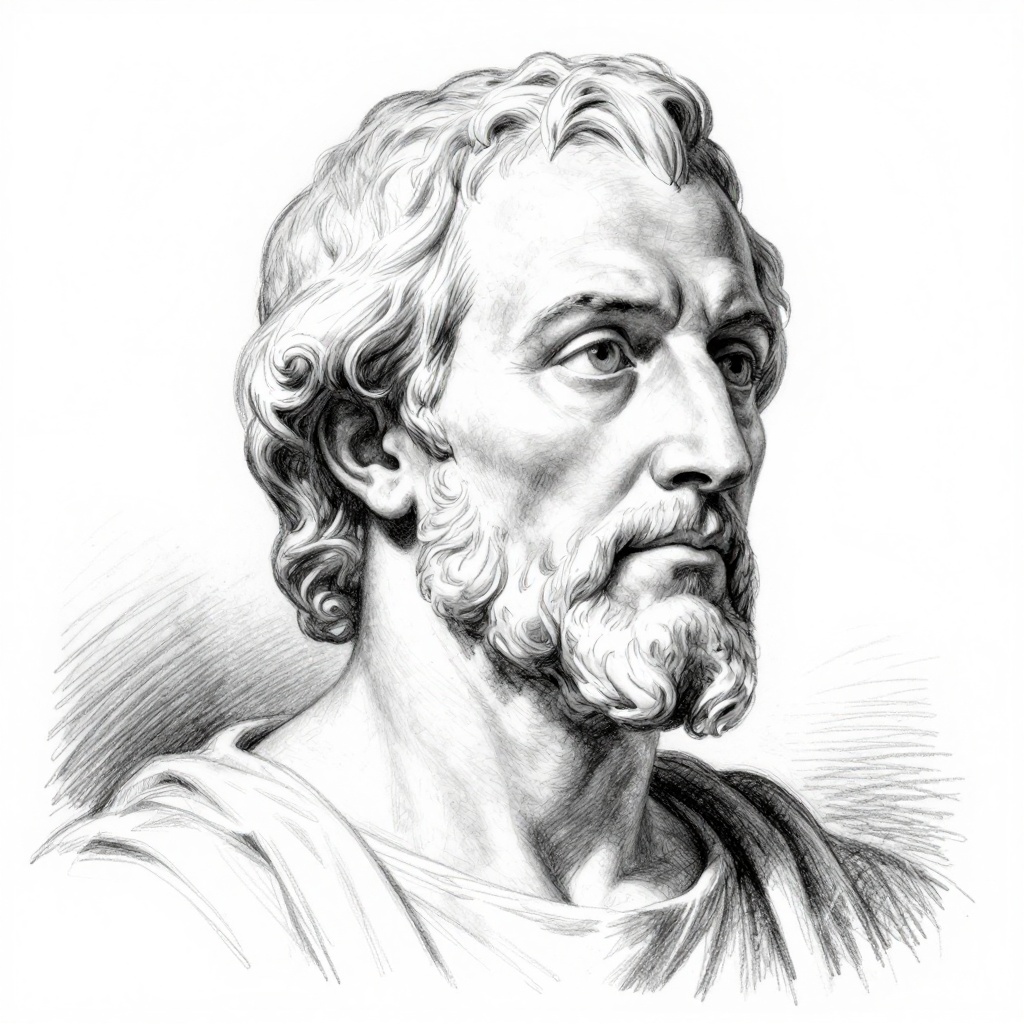
Aristotle was a Greek philosopher and polymath who lived from 384 to 322 BC. He is known for being one of the greatest thinkers in Western philosophy and for his contributions to a wide array of subjects including metaphysics, ethics, politics, biology, and logic. Aristotle was a student of Plato and the teacher of Alexander the Great.
Comments