Quote · Added 14 February 2026
I have gained this from philosophy: that I do without being commanded what others do only from fear of the law.
AristotleNicomachean Ethics, Book V, 350 BC
Filed underphilosophy·freedom·ethics
Quote · Added 14 February 2026
Filed underphilosophy·freedom·ethics
There's a quiet power in doing the right thing because you actually believe it's right—not because you're worried about getting caught or punished. Aristotle is pointing at something we rarely admit: most people's behavior is basically fear-driven. They don't steal because they might go to jail, not because they've thought deeply about why stealing is wrong. They're civil to their coworkers because it affects their job, not because they genuinely value the people around them.
The interesting part is that philosophy—real thinking about how to live—supposedly shifts you out of that fear loop. Once you've genuinely considered why honesty matters, or why cruelty damages something in you, you stop needing the threat. You're not white-knuckling your way through life, gritting your teeth at rules. You're actually aligned with your own values. It becomes who you are, not a performance you're giving because you have to.
This matters now because we often assume people need bigger penalties to behave better. But Aristotle suggests the real shift happens when someone actually thinks through their principles. That's harder than passing stricter laws, which is probably why we do so little of it. Yet it's the only thing that actually creates people who do good things without an audience watching.
d. 322
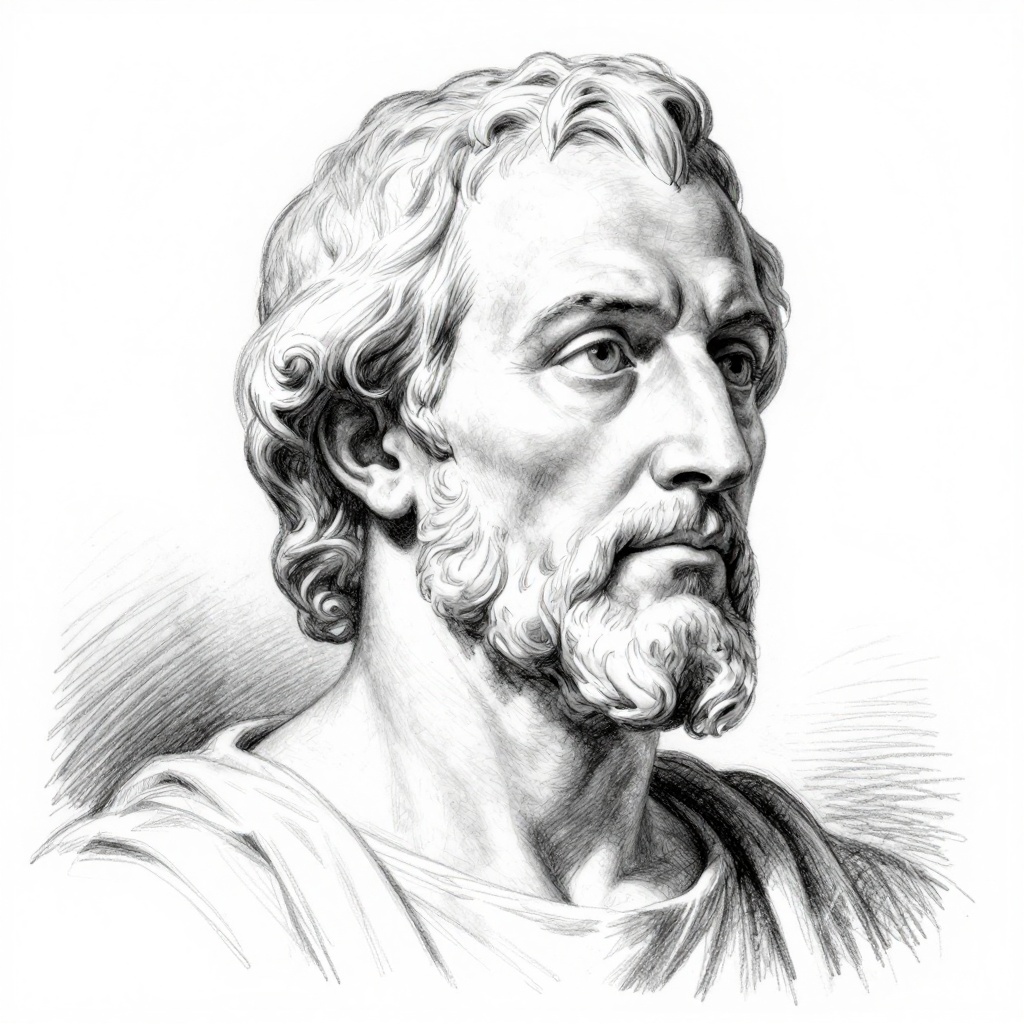
Aristotle was a Greek philosopher and polymath who lived from 384 to 322 BC. He is known for being one of the greatest thinkers in Western philosophy and for his contributions to a wide array of subjects including metaphysics, ethics, politics, biology, and logic. Aristotle was a student of Plato and the teacher of Alexander the Great.
Comments