Quote · Added 21 August 2023
Freedom is obedience to self-formulated rules.
AristotleThe Nicomachean Ethics
Quote · Added 21 August 2023
We usually think of freedom as the opposite of rules—the ability to do whatever we want without constraint. But Aristotle is pointing at something deeper: true freedom isn't the absence of limits, it's having chosen your own. When you decide that you'll show up to the gym three times a week, or that you won't check your phone during dinner, or that you're going to be honest even when it costs you—those self-imposed rules are what actually make you free. The alternative is being yanked around by impulse, by what others expect, by the path of least resistance.
The twist is that this flips our usual complaint. We often feel trapped by our own rules—the ones we've set for ourselves—and fantasize that breaking them would feel liberating. Sometimes it does, briefly. But Aristotle's suggesting that the real trap is having no internal structure at all, just reacting to whatever mood or pressure hits you. A person without self-formulated rules isn't free; they're enslaved to circumstances and their own inconsistency. Freedom is actually the disciplined act of building yourself deliberately, then living according to that design.
d. 322
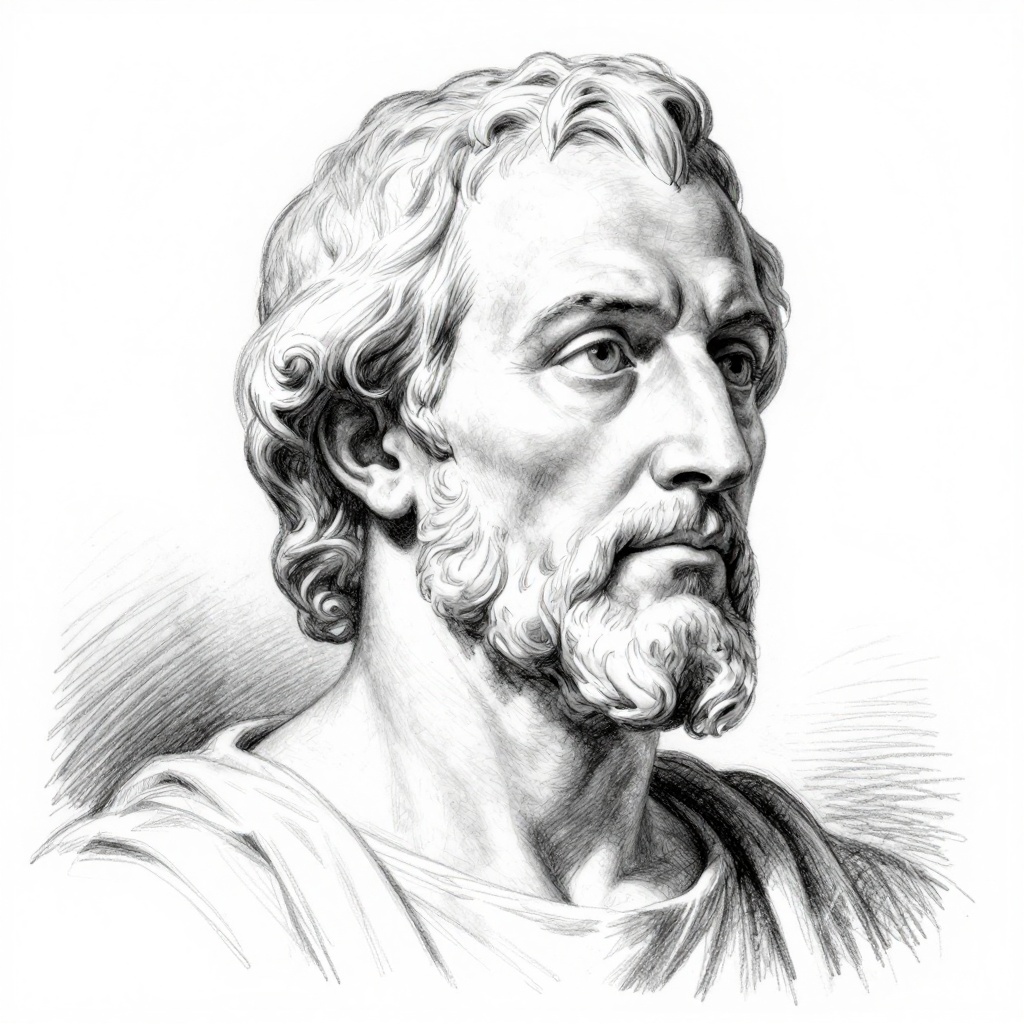
Aristotle was a Greek philosopher and polymath who lived from 384 to 322 BC. He is known for being one of the greatest thinkers in Western philosophy and for his contributions to a wide array of subjects including metaphysics, ethics, politics, biology, and logic. Aristotle was a student of Plato and the teacher of Alexander the Great.
Comments