Quote · Added 14 February 2026
Learn to think continentally.
Alexander HamiltonHamilton on Wry, Inbound Logistics, 2021
Filed underthinking·education·perspective
Quote · Added 14 February 2026
Filed underthinking·education·perspective
Most of us navigate life in small circles—our neighborhood, our industry, our immediate circle of concerns. Hamilton's advice to think continentally sounds abstract until you realize he's really talking about perspective. He meant: stop optimizing for your block when there's a whole system to understand. When you only see locally, you miss patterns. You can't spot what's actually broken or what's actually working.
Today this translates to something we all experience but rarely name—the difference between being stuck in a problem and understanding why the problem exists. A relationship struggle might look like one person's flaw until you see the broader dynamic. A job feels unsatisfying until you understand the whole company's direction. A financial stress feels personal until you see inflation or wage trends. Thinking continentally means zooming out enough to see the real forces at work.
The non-obvious part? This isn't about becoming less personal or caring less about details. It's the opposite. Once you grasp the larger landscape, you actually make better decisions in your small corner of it. You stop fighting symptoms and start addressing roots. You stop blaming yourself for things that are structural. That clarity—that's where real change becomes possible.
1755–1804·lived 49 years
Alexander Hamilton (1755-1804) was an American statesman, political theorist, and one of the Founding Fathers of the United States. He served as the first Secretary of the Treasury and was a key architect of the American financial system, advocating for a strong central government and the establishment of a national bank. Hamilton is also known for his influential contributions to The Federalist Papers, which argued for the ratification of the U.S. Constitution.
Also by Alexander Hamilton
A national debt, if it is not excessive, will be to us a national blessing.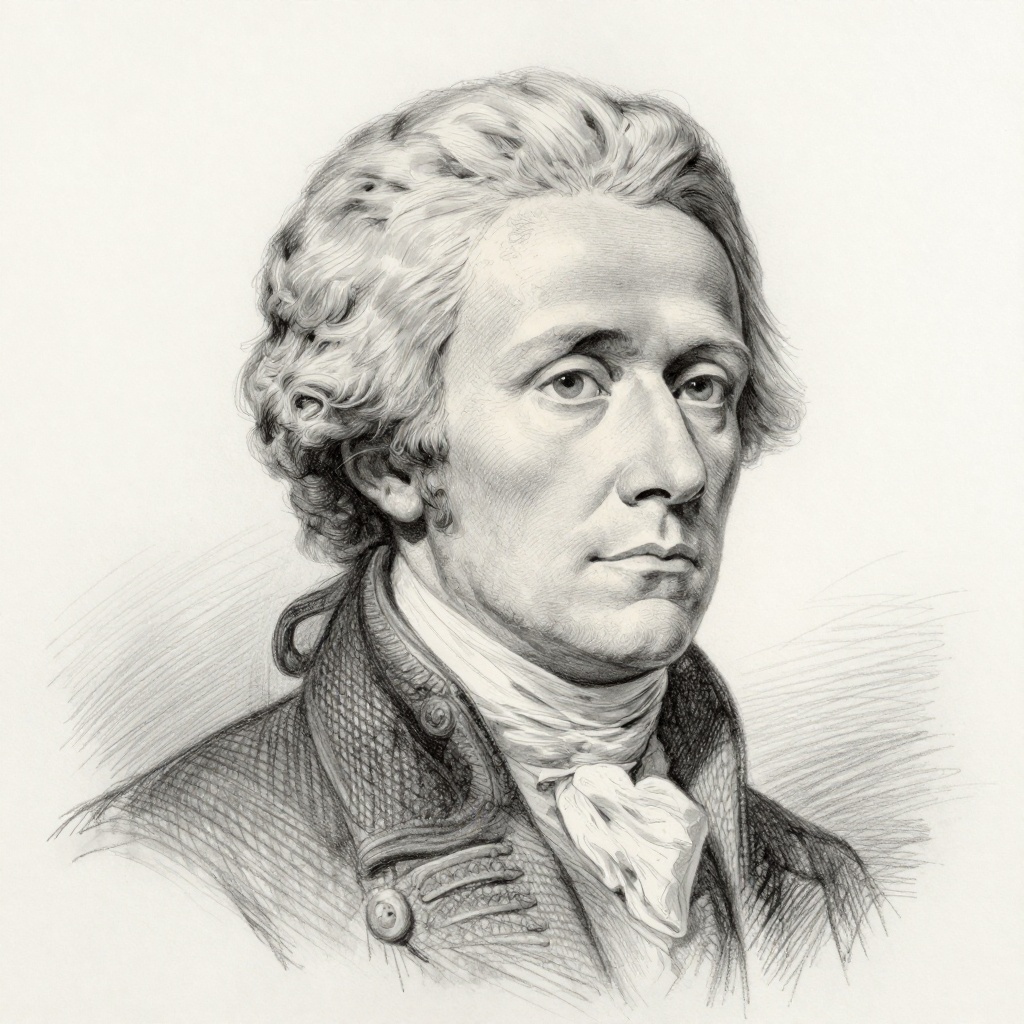
Comments