Quote · Added 13 February 2026
The monotony and solitude of a quiet life stimulates the creative mind.
Albert EinsteinThe World as I See It, 1931
No ratings yet
Filed undermonotony·creativity·solitude
Quote · Added 13 February 2026
Filed undermonotony·creativity·solitude
We live in an age that treats silence like a problem to be solved. There's always a podcast, a notification, someone needing something. But there's a real difference between loneliness and solitude, and Einstein was pointing at something most of us have experienced but rarely talk about: the strange gift of having nothing to react to. When you're not constantly stimulated or performing for others, your mind doesn't just rest—it starts working on its own terms. It makes unexpected connections. It gets bored enough to play.
The irony is that monotony sounds like the enemy of creativity. We imagine inspiration striking like lightning while we're doing something exciting. But Einstein knew that breakthrough thinking requires space, and that space is carved out through routine and quiet. A repetitive day—the same walk, the same desk, the same coffee—becomes a container that lets your mind wander deeper. The creative person isn't necessarily the one packed with stimulation; they're often the one comfortable enough with their own thoughts to let them roam without judgment.
What this means today is that our constant connectivity might actually be costing us more than we realize. The most productive creative work often comes from people who've built in pockets of genuine quiet—not as a luxury, but as part of how they work. It's not about retreating from life; it's about protecting the mental space where real ideas emerge.
1879–1955·lived 76 years
Albert Einstein was a renowned theoretical physicist known for developing the theory of relativity, one of the two pillars of modern physics. He is best known for his mass-energy equivalence formula E=mc^2 and was awarded the Nobel Prize in Physics in 1921 for his explanation of the photoelectric effect.
Also by Albert Einstein
God does not play dice with the universe.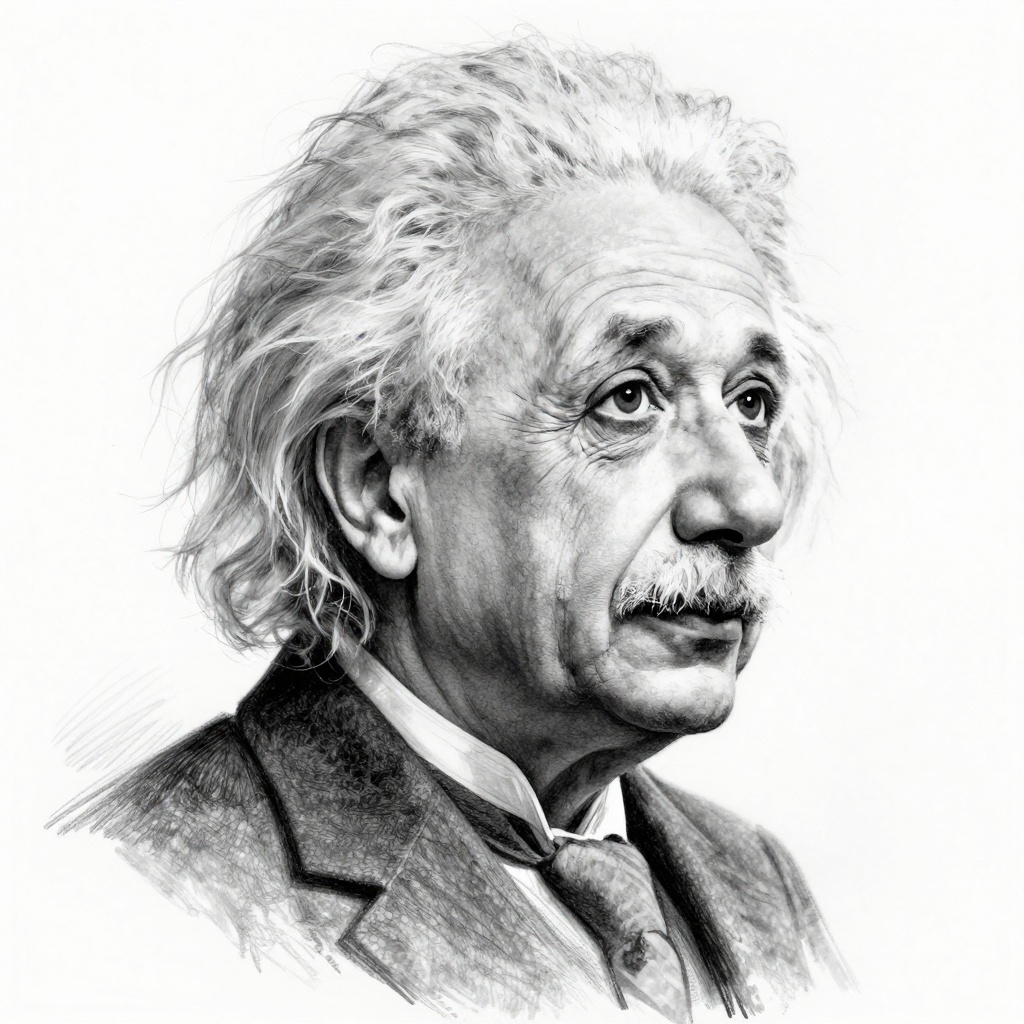
Comments