Quote · Added 15 February 2026
People like us, who believe in physics, know that the distinction between past, present, and future is only a stubbornly persistent illusion.
No ratings yet
Filed undertime·illusion·perception
Quote · Added 15 February 2026
Filed undertime·illusion·perception
We cling to the idea that right now matters most—that the past is fixed and gone, and the future hasn't happened yet. But Einstein's point cuts deeper than just physics. Our brains are wired to experience time as a flow, yet that flowing feeling might be our minds doing something useful rather than revealing how reality actually works. At the deepest level, past events and future events might exist in the same way present events do, just in different locations in the fabric of spacetime.
What makes this unsettling in daily life is that it challenges our sense of control and consequence. We tell ourselves "I can't change the past, but I can shape the future"—and that split gives us hope and responsibility. Yet if time isn't fundamentally different from space, then worrying about whether you "messed up" yesterday or obsessing over what might happen next month are both ways of mentally visiting places that, in some sense, already exist. It doesn't erase regret or hope, but it can quiet the urgency we feel to escape what's behind us.
The real insight isn't that nothing matters. It's that our anxiety about time—this feeling that the present moment is slipping away and we have to catch it—might be partly a trick of perception. That can either paralyze us or liberate us, depending on what we do with it.
1879–1955·lived 76 years
Albert Einstein was a renowned theoretical physicist known for developing the theory of relativity, one of the two pillars of modern physics. He is best known for his mass-energy equivalence formula E=mc^2 and was awarded the Nobel Prize in Physics in 1921 for his explanation of the photoelectric effect.
Also by Albert Einstein
God does not play dice with the universe.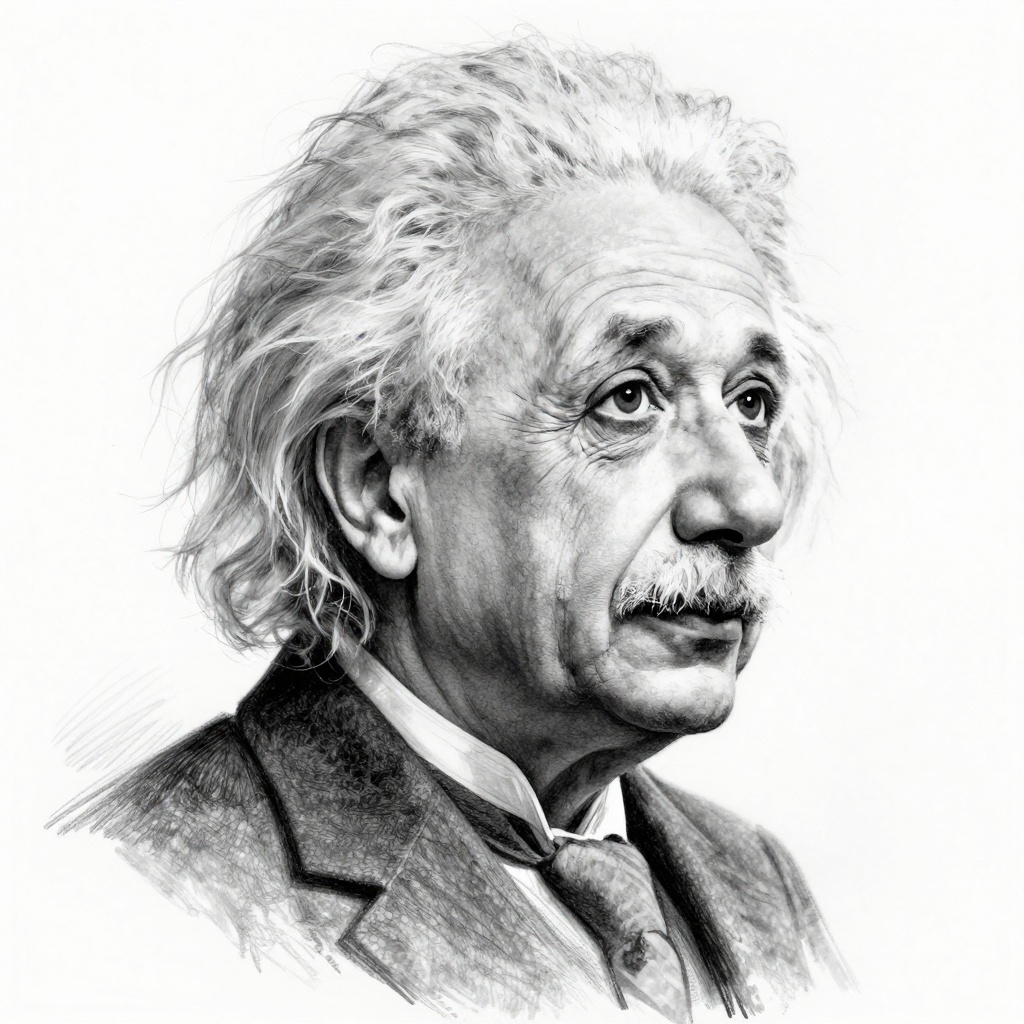
Comments