Quote · Added 9 February 2026
Look deep into nature, and then you will understand everything better.
No ratings yet
Filed undernature·understanding·insight
Quote · Added 9 February 2026
Filed undernature·understanding·insight
There's something almost counterintuitive about this advice, especially now. We're told that understanding comes from analysis—breaking things into smaller pieces, zooming in through microscopes and data sets. Yet Einstein, the physicist who literally reshaped how we see reality, is pointing us outward instead. He's suggesting that sometimes the deepest truths reveal themselves when we step back and pay attention to the natural world as a whole.
What makes this relevant today is that many of us feel stuck in abstract problems—work stress, relationship confusion, creative blocks—and we respond by thinking harder, scrolling more, staying indoors. But nature operates on principles that apply everywhere: growth requires seasons of rest, ecosystems thrive through balance and connection, nothing useful happens without cycles of decay and renewal. When you're overwhelmed, a walk actually reorganizes how your brain processes things. When you're confused about a decision, sometimes watching how a river finds its path tells you something you needed to know.
The quiet power here is that nature doesn't judge or overcomplicate. It just shows you what works through millions of years of honest trial and error. That's worth more than any self-help framework.
1879–1955·lived 76 years
Albert Einstein was a renowned theoretical physicist known for developing the theory of relativity, one of the two pillars of modern physics. He is best known for his mass-energy equivalence formula E=mc^2 and was awarded the Nobel Prize in Physics in 1921 for his explanation of the photoelectric effect.
Also by Albert Einstein
God does not play dice with the universe.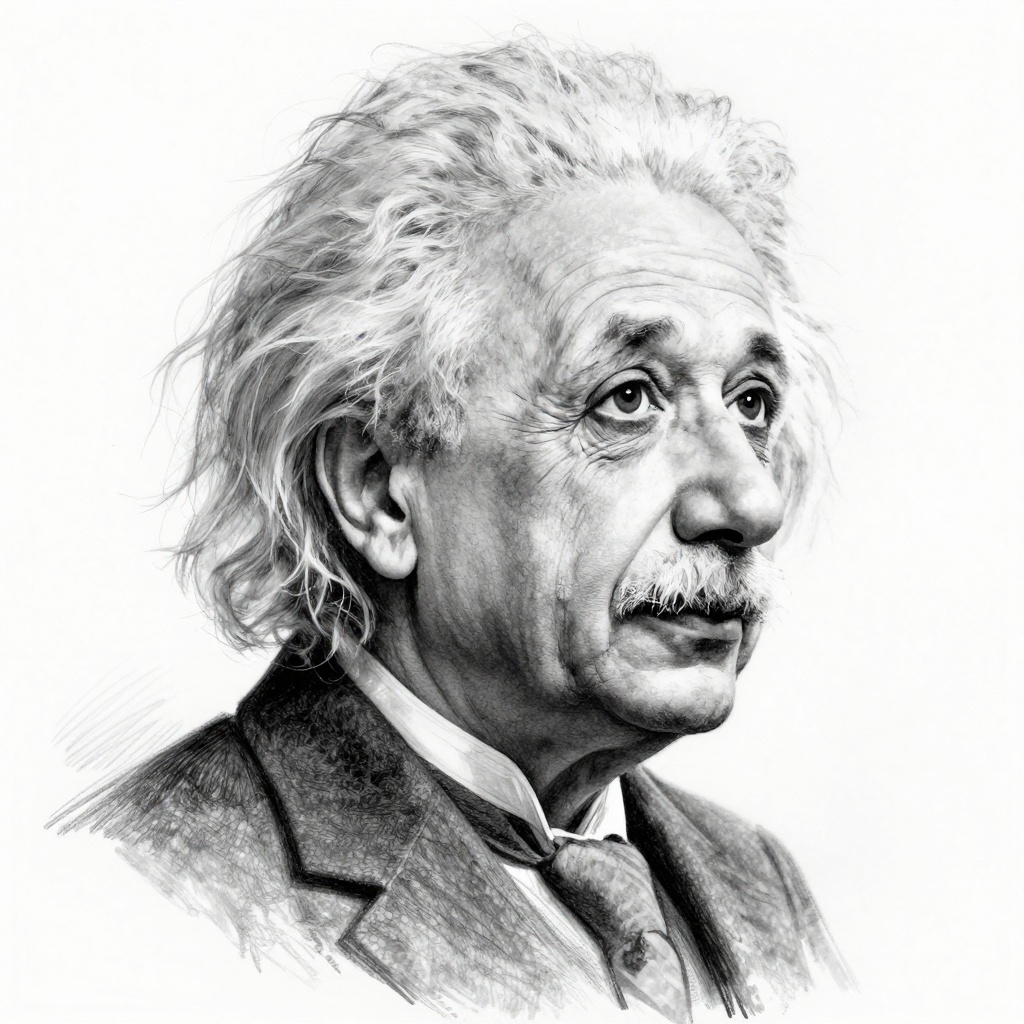
Comments