Quote · Added 17 February 2026
If you want to live a happy life, tie it to a goal, not to people or things.
Albert EinsteinA Centenary Volume, A.P. French, 1980
No ratings yet
Filed undergoal·happiness·fulfillment
Quote · Added 17 February 2026
Filed undergoal·happiness·fulfillment
We spend a lot of energy trying to feel better by acquiring things or by making sure certain people stay in our lives exactly as they are. The problem is that possessions lose their shine, people disappoint us or leave, circumstances shift without our permission. When our happiness depends entirely on these fragile anchors, we're always one change away from misery. It's not that people and things don't matter—they do—but they make terrible foundations for a stable emotional life.
What Einstein points toward is something quieter but more powerful: happiness rooted in direction rather than destination. When your life is tied to a goal—becoming better at something, solving a problem you care about, moving toward a version of yourself you respect—you have something that actually belongs to you. Your effort, your daily choices, your small improvements. External things can be taken away; internal progress can't.
There's a twist here worth noticing. People often read this as "become a workaholic" or "chase ambition ruthlessly." But real goals aren't just about achievement. They're about pursuing something meaningful to you—whether that's mastering a craft, understanding yourself better, or contributing something to others. The goal gives your life coherence. It's the thing you return to when everything else feels shaky. And strangely, when you build your happiness this way, your relationships often improve too. You show up more genuinely.
1879–1955·lived 76 years
Albert Einstein was a renowned theoretical physicist known for developing the theory of relativity, one of the two pillars of modern physics. He is best known for his mass-energy equivalence formula E=mc^2 and was awarded the Nobel Prize in Physics in 1921 for his explanation of the photoelectric effect.
Also by Albert Einstein
God does not play dice with the universe.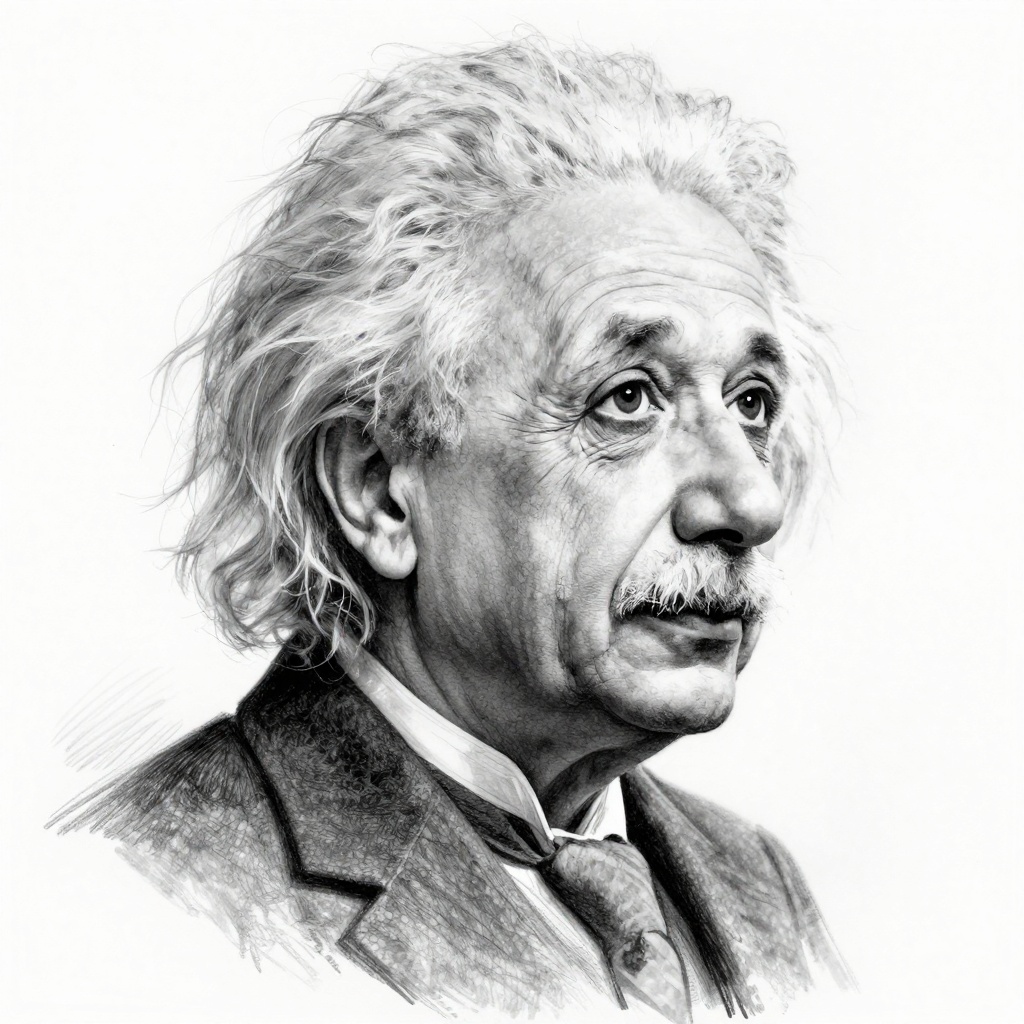
Comments