Quote · Added 15 February 2026
I never think of the future - it comes soon enough.
No ratings yet
Filed underfuture·mindfulness·uncertainty
Quote · Added 15 February 2026
Filed underfuture·mindfulness·uncertainty
There's something quietly radical about Einstein's approach here, especially for someone whose entire career was built on imagining what could be. He wasn't saying ignore consequences or plan nothing. He was pointing out something most of us experience but rarely name: the energy we waste rehearsing futures that haven't arrived yet.
We spend enormous mental real estate on what-ifs and worry spirals. We imagine conversations before they happen, catastrophes that never materialize, opportunities we'll definitely mess up. Meanwhile, the actual present—where we might actually do something useful—passes by mostly unattended. The future will absolutely arrive, with or without our anxious previewing of it. What changes the outcome isn't our pre-game stress but what we're actually doing right now, today.
This hits differently in our age of constant planning apps and anxiety. The quote isn't permission to be reckless. It's permission to stop treating thought-work about hypothetical tomorrows as if it were the same thing as action. Sometimes the most practical thing you can do is focus sharply on today and trust that you'll handle tomorrow when it gets here. Turns out that's usually when you're at your sharpest anyway.
1879–1955·lived 76 years
Albert Einstein was a renowned theoretical physicist known for developing the theory of relativity, one of the two pillars of modern physics. He is best known for his mass-energy equivalence formula E=mc^2 and was awarded the Nobel Prize in Physics in 1921 for his explanation of the photoelectric effect.
Also by Albert Einstein
God does not play dice with the universe.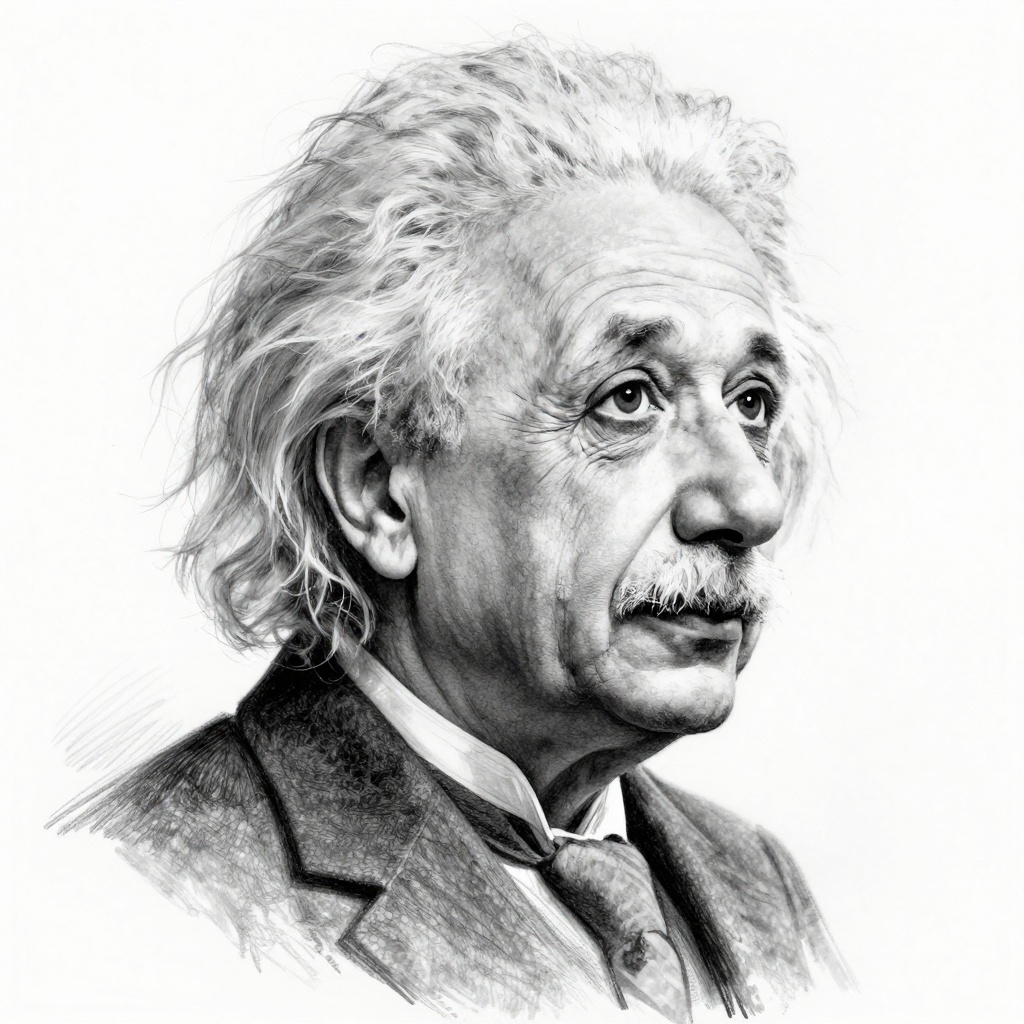
Comments