Quote · Added 13 February 2026
A person who never made a mistake never tried anything new.
No ratings yet
Quote · Added 13 February 2026
We tend to treat mistakes like failures—permanent marks against us. But this quote flips that around: mistakes are actually evidence that you're doing something that matters. Every time you try to learn an instrument badly, start a conversation with a stranger, or attempt a project at work that stretches you, you're automatically signing up for mistakes. That's not the downside of growth; that's the cost of entry.
The tricky part is that our brains are wired to remember mistakes vividly while forgetting all the safe, small days when nothing went wrong. So it feels like trying new things is riskier than it actually is. The person who never messes up usually isn't secretly successful—they're just staying in their lane. They've optimized for comfort instead of discovery.
What's less obvious is that this applies to small, daily experiments too. The mistake isn't just about the big career pivot or public failure. It's in the text you rewrote three times, the approach to a relationship problem that didn't work, the habit you tried to build and abandoned. These quieter mistakes are where most real learning happens. They're the unglamorous work of becoming someone who actually knows things.
1879–1955·lived 76 years
Albert Einstein was a renowned theoretical physicist known for developing the theory of relativity, one of the two pillars of modern physics. He is best known for his mass-energy equivalence formula E=mc^2 and was awarded the Nobel Prize in Physics in 1921 for his explanation of the photoelectric effect.
Also by Albert Einstein
God does not play dice with the universe.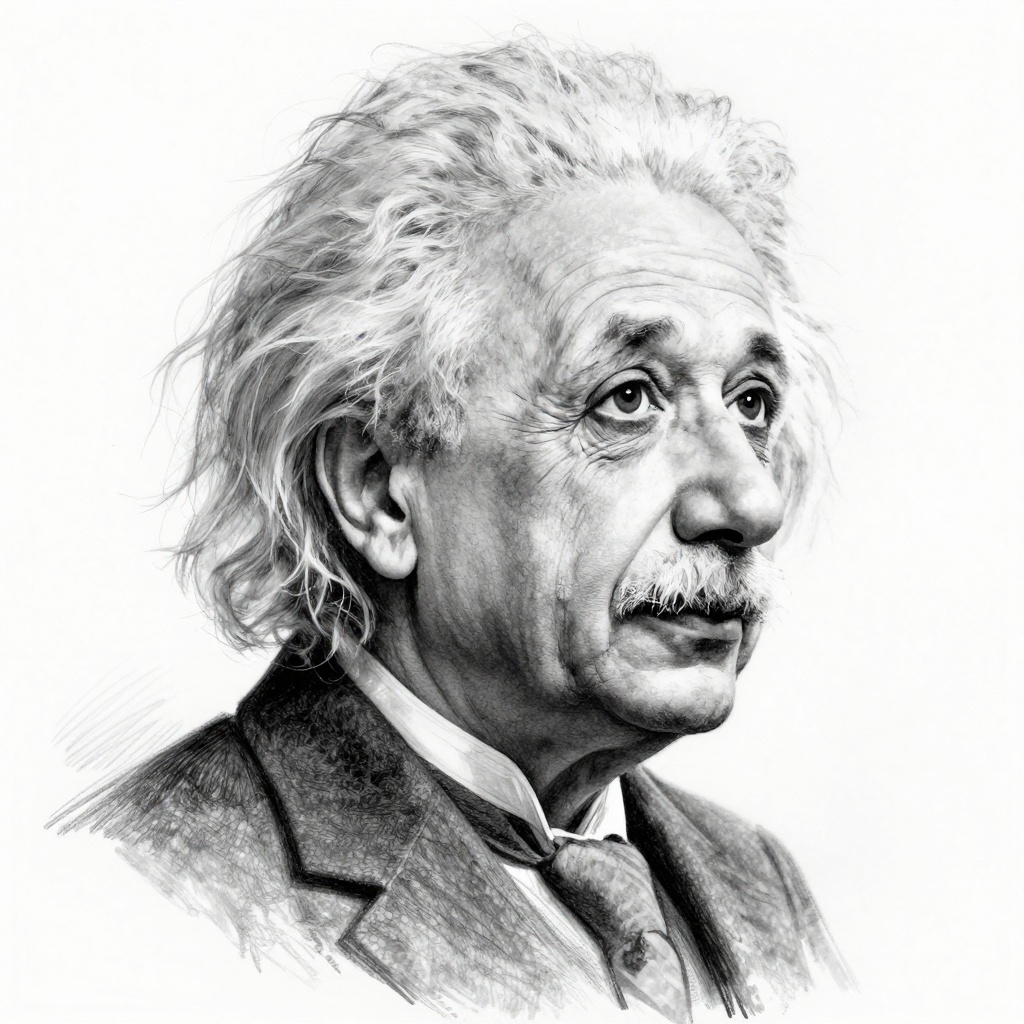
Comments