Quote · Added 17 February 2026
Life consists of what man is thinking about all day.
Filed underlife·thought·consciousness
Quote · Added 17 February 2026
Filed underlife·thought·consciousness
What you think about shapes who you become—not in some mystical way, but through simple repetition. If you spend your days mentally replaying an argument, you're essentially rehearsing anger and defensiveness. If you're constantly imagining worst-case scenarios, you're training your nervous system to stay alert for threats that haven't happened. Your thoughts aren't just a passive reflection of your life; they're actively constructing it, day after day.
This matters because most of us assume we're stuck with our circumstances—our job, our relationships, our mood—as if they're external facts we can't influence. But Emerson is pointing at something more liberating: the one thing you actually have direct control over is where you point your attention. That promotion you're worried you'll never get? The moment you stop thinking about it obsessively, something shifts. Not magically, but practically. You start noticing opportunities. You're less defensive in meetings. You have energy for other things.
The tricky part is that our thoughts often feel automatic, almost involuntary. We don't choose to spiral—it just happens. But the quote implies we have more agency than we think. You can't always control what pops into your head, but you can practice noticing when you're stuck in a thought pattern and gently redirecting. That small practice, repeated, actually becomes who you are.
1803–1882·lived 78 years
Ralph Waldo Emerson (1803–1882) was an American essayist, lecturer, and poet who led the Transcendentalist movement of the mid-19th century. He is known for his philosophical essays, particularly "Nature" and "Self-Reliance," which emphasize individualism, self-reliance, and the importance of nature as a spiritual force.
Also by Ralph Waldo Emerson
Be silly, be honest, be kind.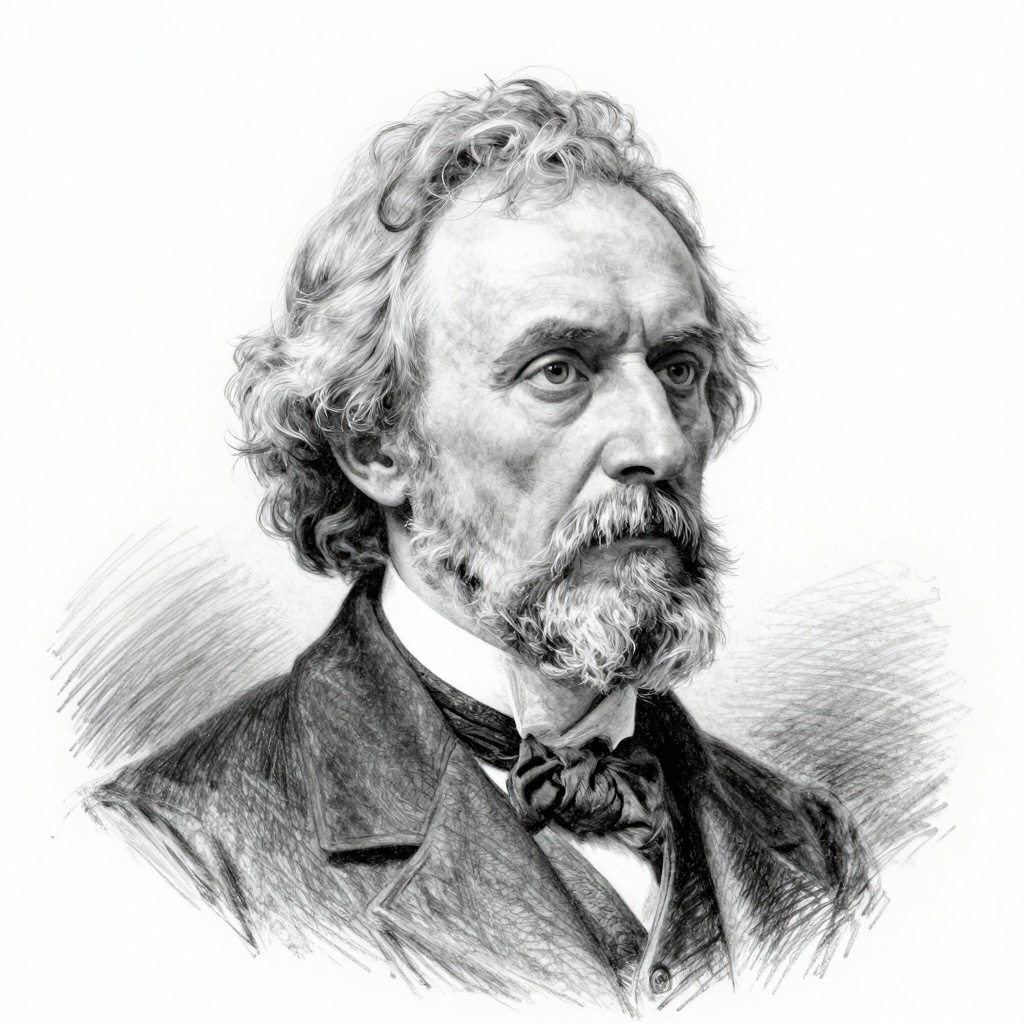
Comments