Quote · Added 14 February 2026
He who is not everyday conquering some fear has not learned the secret of life.
Ralph Waldo EmersonLecture, Courage, Mr Parker's Society, Music Hall, Boston, 1859
Quote · Added 14 February 2026
Most of us think courage means doing something dramatic once—running into a burning building, making a big life announcement. But Emerson's pointing at something quieter and more useful: courage is actually a daily practice, like brushing your teeth. It's the small act of moving toward something that makes your stomach tight, then doing it anyway. Asking a question you're afraid sounds dumb. Starting the conversation you've been avoiding. Trying the thing you might fail at.
The sneaky part is that every time you do this—even in tiny ways—you're rewiring yourself. You're building proof that fear doesn't actually mean don't. This doesn't make fear disappear; it just stops being your final answer on what's possible. People who seem fearless aren't born that way. They've just accumulated hundreds of small moments of "I'm nervous and I'll do it anyway," until the nervous part becomes background noise rather than a stop sign.
The secret Emerson mentions isn't some mystical insight. It's recognizing that a life worth living requires regular collisions with discomfort. Skip that habit, and fear gradually expands to fill every unchallenged space. But meet it every day, even in small doses, and you stay free.
1803–1882·lived 78 years
Ralph Waldo Emerson (1803–1882) was an American essayist, lecturer, and poet who led the Transcendentalist movement of the mid-19th century. He is known for his philosophical essays, particularly "Nature" and "Self-Reliance," which emphasize individualism, self-reliance, and the importance of nature as a spiritual force.
Also by Ralph Waldo Emerson
Be silly, be honest, be kind.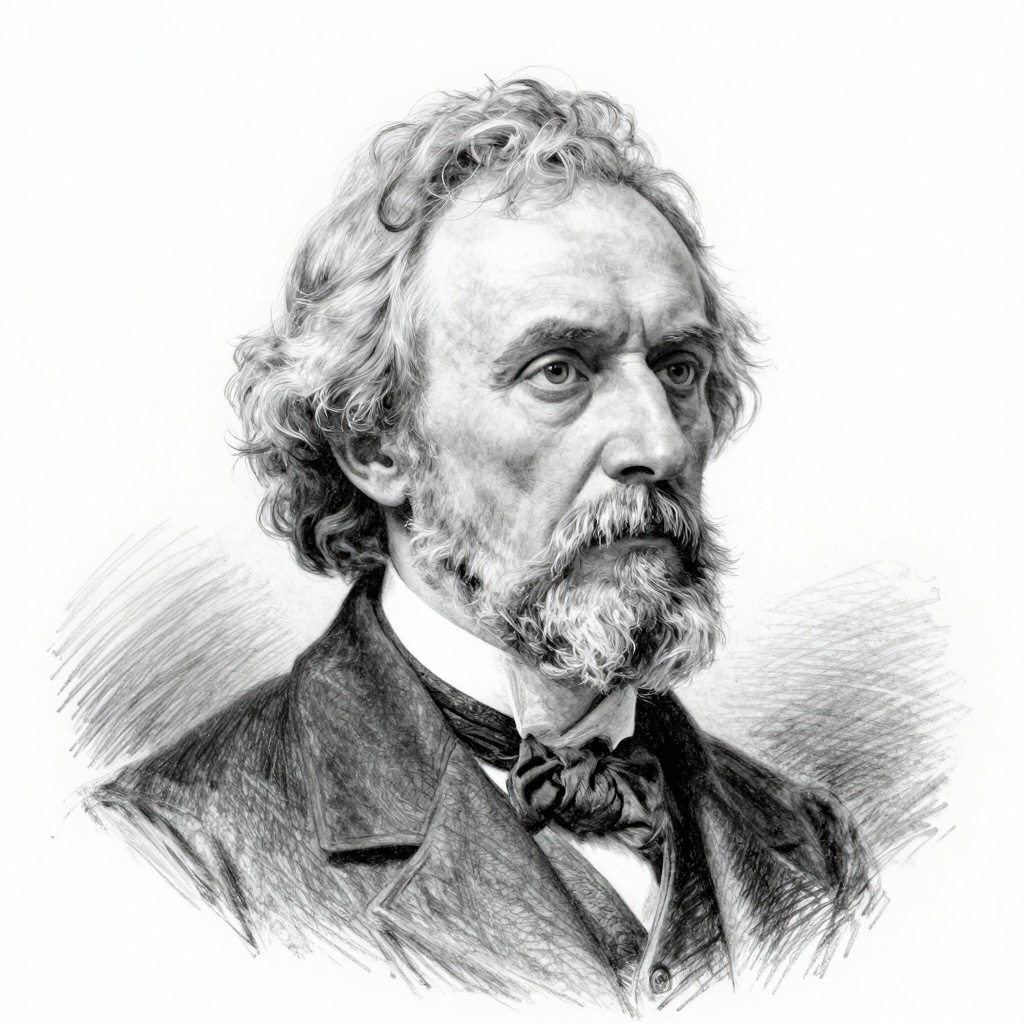
Comments