Quote · Added 8 November 2024
If I had read as many books as other people, I would know as little.
Mark TwainMark Twain's Literary Resources: A Reconstruction of His Library and Reading, Volume One, 2019
Filed underbooks·knowledge·uniqueness
Quote · Added 8 November 2024
Filed underbooks·knowledge·uniqueness
There's something liberating about this backwards compliment Twain throws at himself. He's not actually bragging about reading less—he's making a point about what reading actually does to you. The real skill isn't piling up books like trophies; it's thinking critically about what you're reading. You can consume hundreds of books and still hold the same shallow opinions you started with, because reading without reflection is just mental entertainment.
This matters now more than ever. We're drowning in information, but drowning isn't the same as drinking. Someone might scroll through thousands of articles, listen to dozens of podcasts, and finish several books a year—yet somehow feel less confident, more confused, more aware of how much they don't understand. That's not a failure. That might actually be the point. Deep thinking requires friction. It means sitting with uncomfortable ideas, arguing with an author, and sometimes deciding the popular take is wrong. Those moments of genuine confusion or productive disagreement teach you more than passive consumption ever could.
The counterintuitive angle? The person who reads ten books and genuinely wrestles with them often knows more than the person who rushed through fifty. Quality of engagement beats quantity every time.
1835–1910·lived 74 years
Mark Twain was an American writer and humorist known for his classic novels "Adventures of Huckleberry Finn" and "The Adventures of Tom Sawyer." His works often reflected his wit, satire, and keen observations on American society, solidifying his place as one of the greatest American authors of all time.
Also by Mark Twain
There are no laughs in life unless you take them yourself.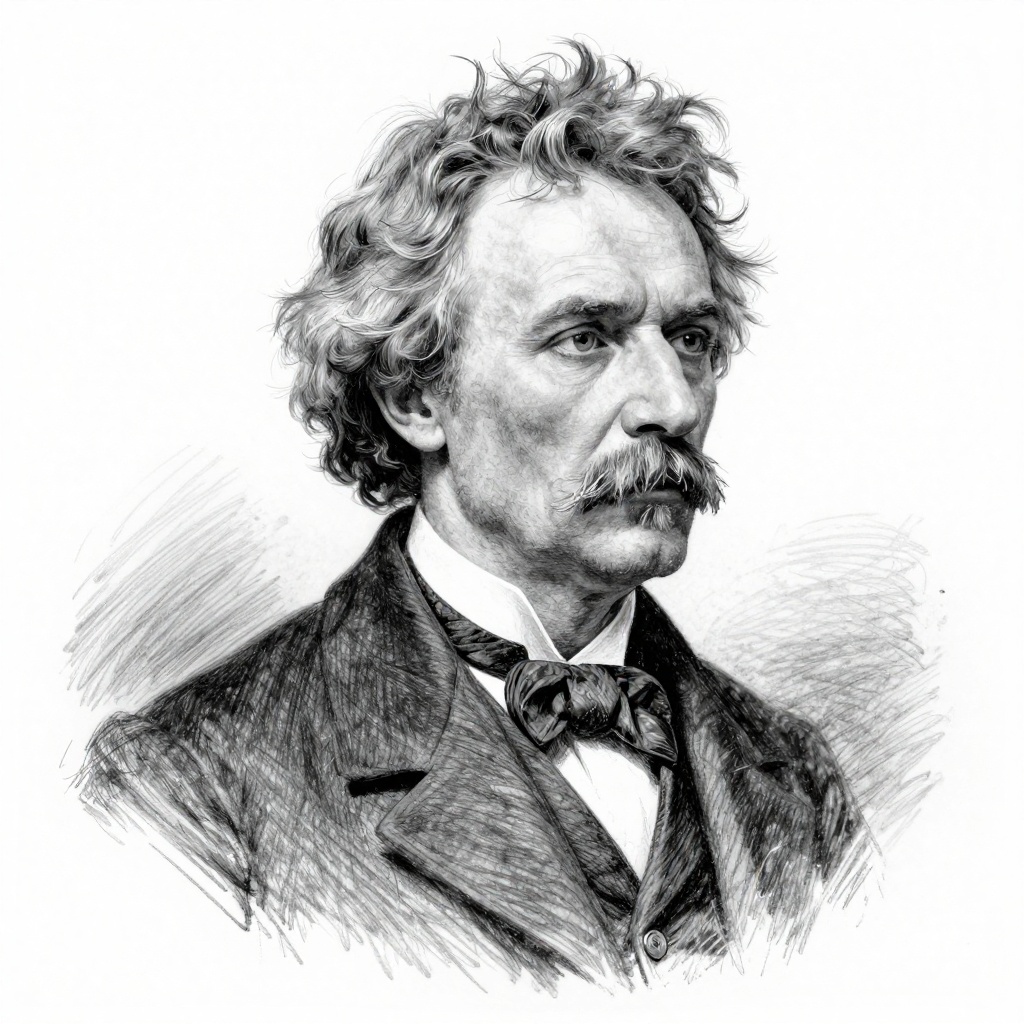
Comments