Quote · Added 14 February 2026
Do the thing you fear most and the death of fear is certain.
Mark TwainThe Wisdom of Mark Twain, p. 45, 2010
Quote · Added 14 February 2026
There's a practical truth buried in this quote that goes beyond motivational poster territory. When you actually do the thing that scares you—whether it's speaking up in a meeting, having a difficult conversation, or trying something you might fail at—something shifts. The fear doesn't vanish in a puff of smoke, but it loses its stranglehold. You realize you survived. The sky didn't fall. Your voice didn't crack permanently. That person didn't hate you.
What makes this insight stick is that it describes a real mechanism, not wishful thinking. Fear thrives in imagination, in the gap between now and the unknown future. The moment you close that gap by actually doing the thing, fear has nothing left to feed on. It's like the difference between worrying about a cold plunge and actually jumping in—the anticipation is often worse than the reality.
The tricky part is that first step. We're endlessly good at finding reasons to wait, to prepare more, to do it tomorrow. But Twain's point suggests the waiting is the real killer. The fear doesn't diminish through thinking or planning—it only dissolves through action. So the question becomes not "Am I ready?" but "How much longer am I willing to let this fear take up space in my life?"
1835–1910·lived 74 years
Mark Twain was an American writer and humorist known for his classic novels "Adventures of Huckleberry Finn" and "The Adventures of Tom Sawyer." His works often reflected his wit, satire, and keen observations on American society, solidifying his place as one of the greatest American authors of all time.
Also by Mark Twain
There are no laughs in life unless you take them yourself.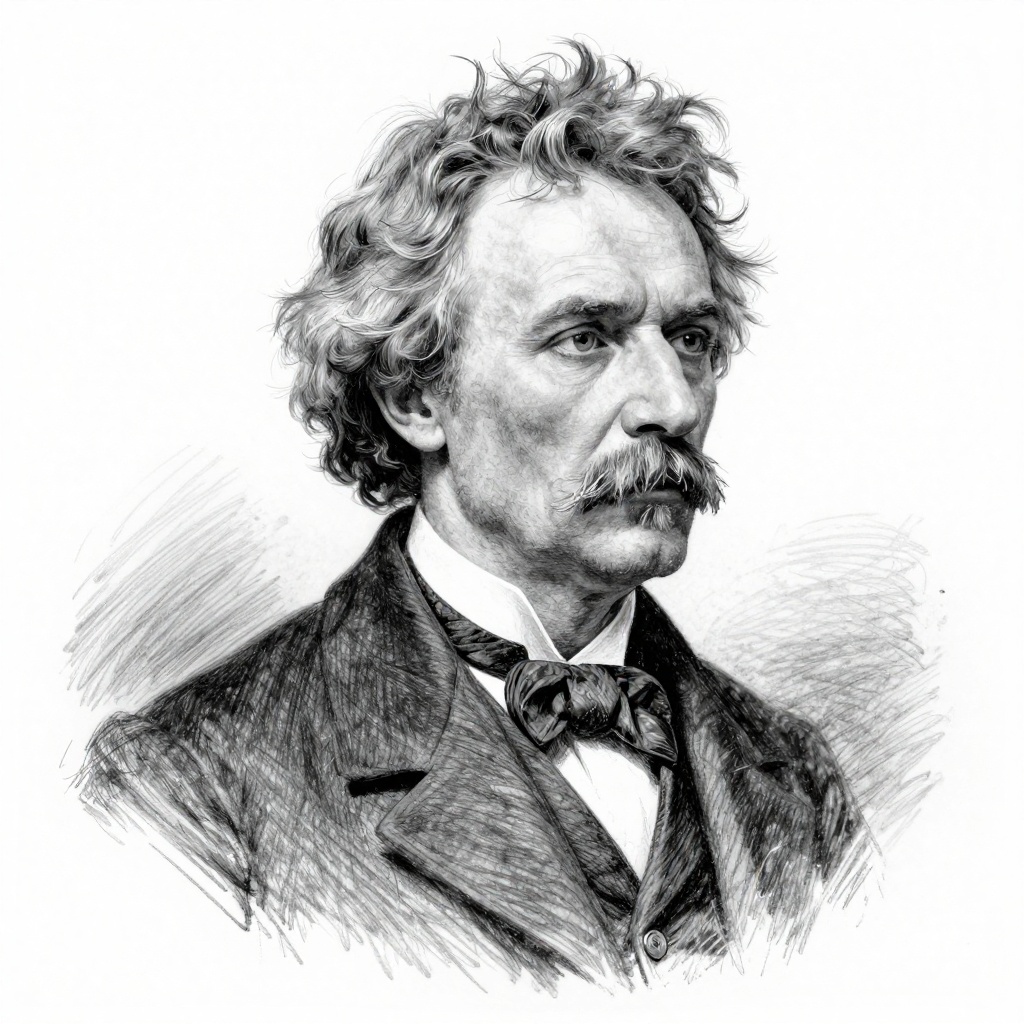
Comments