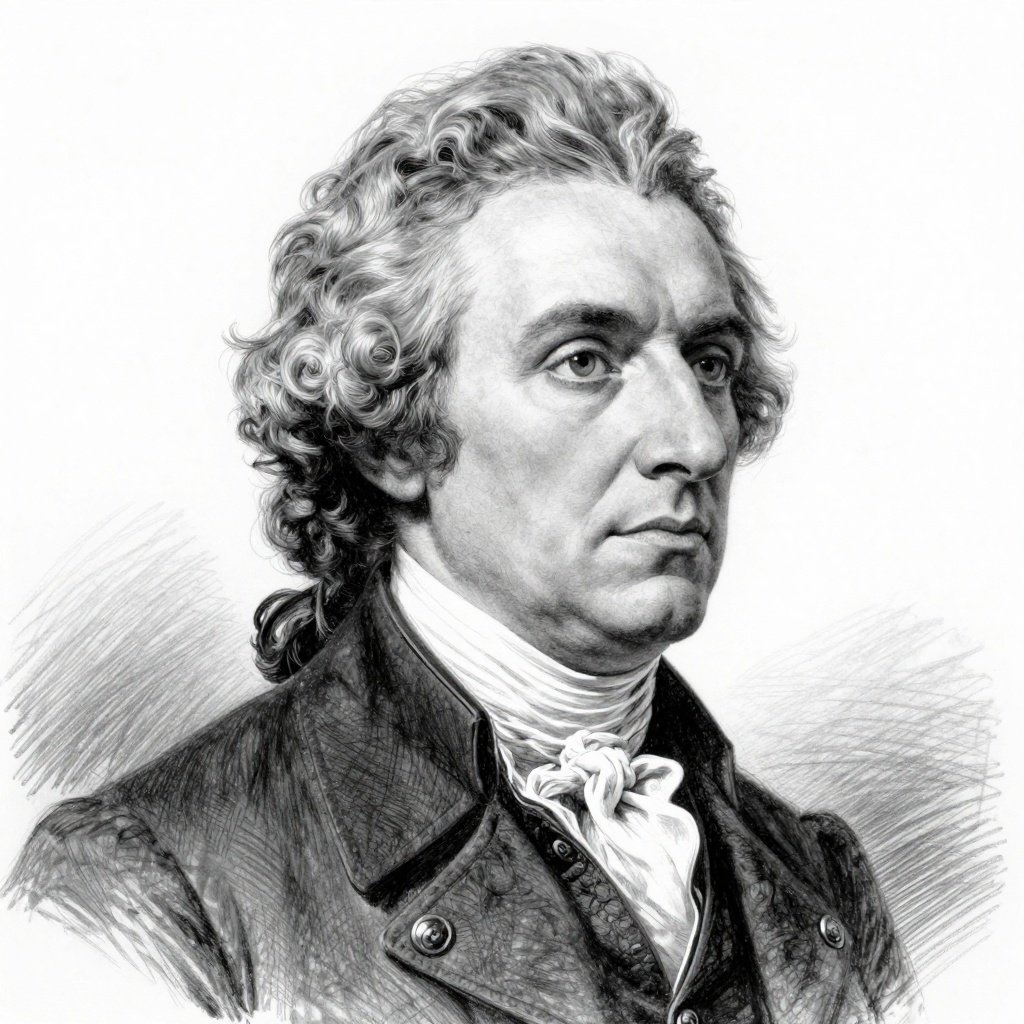
Ambition leads me not only farther than any other man has been before me, but as far as I think it possible fo... — James Cook

Ambition leads me not only farther than any other man has been before me, but as far as I think it possible for man to go.

Author: James Cook

Insight: There's something almost uncomfortable about ambition that reaches beyond what others have done—it demands you believe in a frontier that maybe doesn't exist yet, or at least one nobody's proven is there. Cook's claim isn't just about sailing farther than previous explorers; it's about having an internal compass that points toward a limit only you can sense. Most of us experience ambition more modestly. We want to get better at our work, learn something new, build something that matters. But Cook touches on something real: the difference between following a visible path and trusting an invisible one. You can chase what someone else achieved—that's motivating but bounded. True ambition, in his view, requires you to also imagine what's theoretically possible, even if nobody's done it yet. That's riskier because failure looks different; you can't blame the difficulty on being new. The tricky part is knowing when that internal limit is real wisdom versus when it's just ego talking. Cook thought he could reach the North Pole; he couldn't. But his willingness to reach for an honest ceiling—not someone else's record, but his own sense of what's feasible—is what actually drove discovery forward. That gap between what's been done and what's possible is where ambition either becomes reckless or becomes generative.

The invisible frontier you trust alone

Ambition leads me not only farther than any other man has been before me, but as far as I think it possible for man to go.

There's something almost uncomfortable about ambition that reaches beyond what others have done—it demands you believe in a frontier that maybe doesn't exist yet, or at least one nobody's proven is there. Cook's claim isn't just about sailing farther than previous explorers; it's about having an internal compass that points toward a limit only you can sense.

Most of us experience ambition more modestly. We want to get better at our work, learn something new, build something that matters. But Cook touches on something real: the difference between following a visible path and trusting an invisible one. You can chase what someone else achieved—that's motivating but bounded. True ambition, in his view, requires you to also imagine what's theoretically possible, even if nobody's done it yet. That's riskier because failure looks different; you can't blame the difficulty on being new.

The tricky part is knowing when that internal limit is real wisdom versus when it's just ego talking. Cook thought he could reach the North Pole; he couldn't. But his willingness to reach for an honest ceiling—not someone else's record, but his own sense of what's feasible—is what actually drove discovery forward. That gap between what's been done and what's possible is where ambition either becomes reckless or becomes generative.

AI generated

Comments

Sign in to leave a comment or reply to one.

Sign in

James Cook

James Cook was an English navigator and explorer, born on October 27, 1728, in Marton, Yorkshire. He is best known for his three voyages in the Pacific Ocean, during which he made detailed maps of New Zealand and the eastern coastline of Australia, significantly contributing to the European knowledge of the region. Cook's expeditions also included significant interactions with indigenous peoples and the first European contact with the Hawaiian Islands. He was killed in Hawaii on February 14, 1779.

Graph

Related