Quote · Added 9 January 2024
To doubt everything or to believe everything are two equally convenient solutions; both dispense with the necessity of reflection.
Henri PoincaréScience and Hypothesis, p. 12, 1902
Filed underdoubt·belief·reflection
Quote · Added 9 January 2024
Filed underdoubt·belief·reflection
We live in an age that seems to demand we pick a side instantly. Either you've done your research and know the truth, or you dismiss everything as lies and fake news. Both stances feel efficient—they let us move fast, stay confident, react without that uncomfortable pause of actually thinking.
But Poincaré is pointing at something sneakier than just laziness. Doubting everything sounds intellectually tough, like you're too smart to be fooled. Believing everything sounds open-minded, like you trust people and sources. Yet they're mirror images of the same dodge: neither requires you to do the hardest work, which is discrimination. Deciding what's probably true and what's probably false. Holding conviction without certainty. Living with nuance.
The real discomfort sits in the middle. It means sometimes accepting expert consensus while still asking hard questions. Trusting some sources more than others based on actual evidence. Changing your mind when warranted, but not constantly. This kind of reflection is genuinely exhausting—it can't be automated or outsourced. But it's the only move that actually keeps you honest.
1854–1912·lived 58 years
Henri Poincaré (1854–1912) was a French mathematician, theoretical physicist, and philosopher. He made significant contributions to various fields, including mathematics, celestial mechanics, topology, and the philosophy of science, and is known for his work on the three-body problem, Poincaré conjecture, and Poincaré recurrence theorem.
Also by Henri Poincaré
Someone has said that it requires less mental effort to condemn than to think.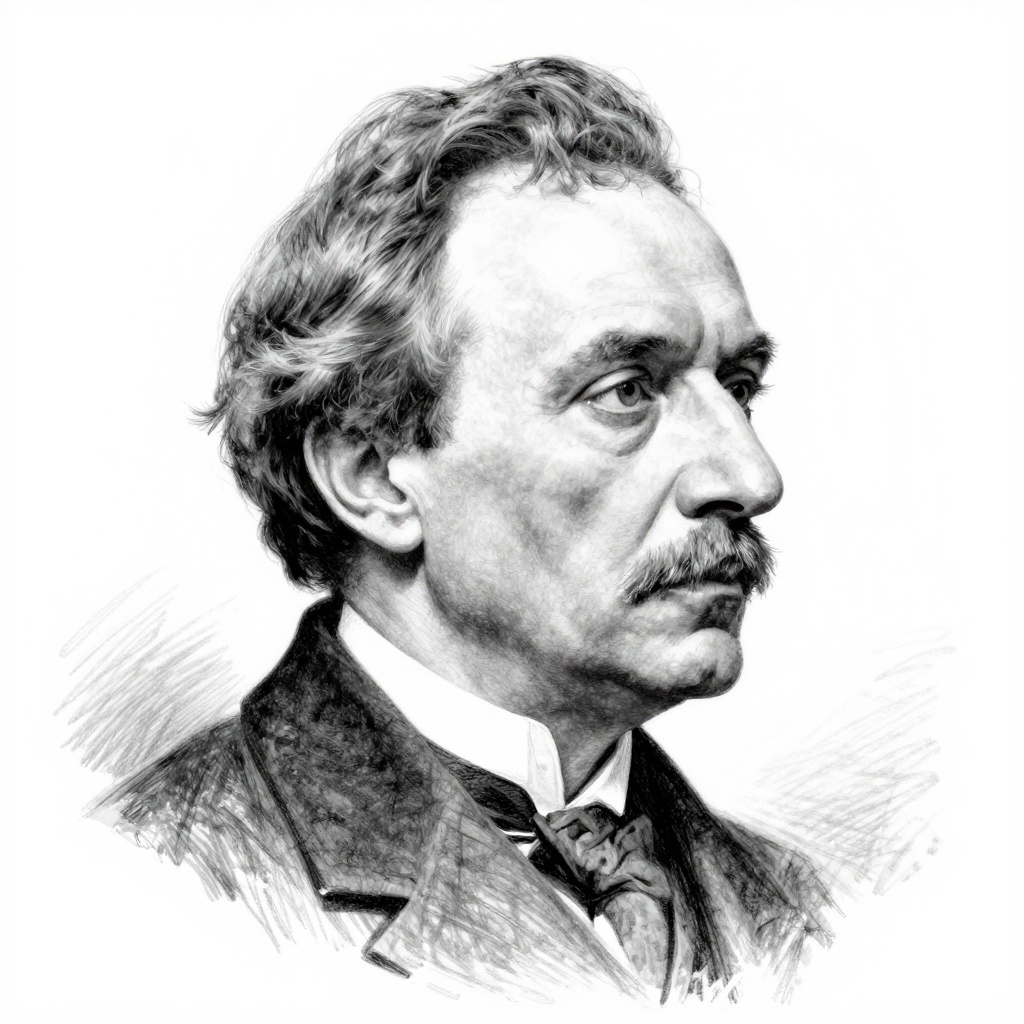
Comments