Quote · Added 14 February 2026
If a man's wit be wandering, let him study the mathematics.
Francis BaconThe Essays of Francis Bacon, Of Studies
Filed undermathematics·wisdom·focus
Quote · Added 14 February 2026
Filed undermathematics·wisdom·focus
When your mind feels scattered—jumping between worries, half-finished thoughts, and random tangents—mathematics might sound like the last thing that would help. But there's something oddly clarifying about a problem that won't let you fake your way through it. A math problem doesn't care about your excuses or your half-attention. It demands precision, step-by-step thinking, and an honesty about what you actually know versus what you're guessing at.
This matters more now than when Bacon wrote it, probably. We're constantly context-switching between notifications, emails, and half-formed ideas. Our minds are trained to wander. But the principle holds: any practice that requires absolute focus and logical rigor—whether it's math, chess, coding, or even detailed writing—acts like a mental anchor. It forces your scattered energy into a single channel. You can't multitask through an equation. You either solve it or you don't.
The surprising part? You don't need to be naturally "good at math" for this to work. The benefit isn't about becoming a mathematician. It's about borrowing the discipline of a system that doesn't allow fuzzy thinking. When your mind is drifting, you need something that grabs it back.
1561–1626·lived 65 years
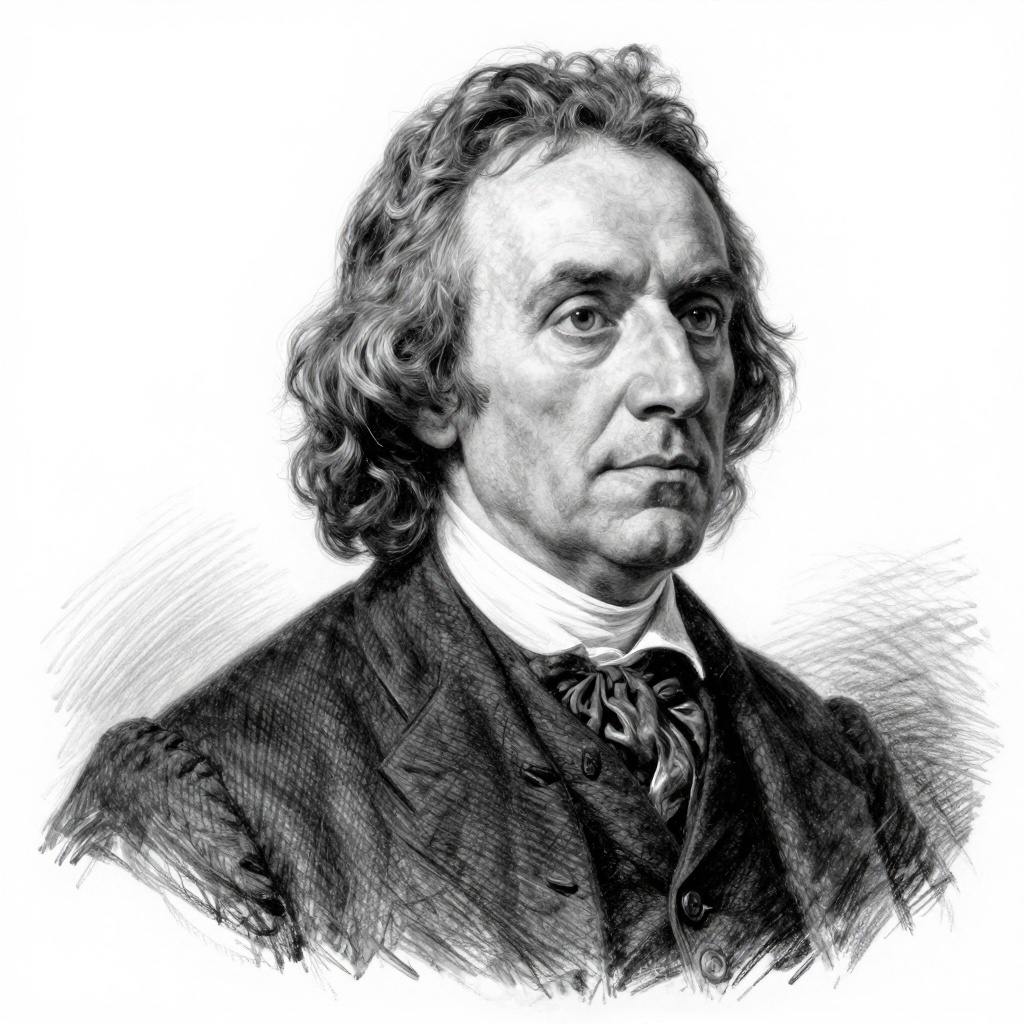
Francis Bacon (1561–1626) was an English philosopher, statesman, scientist, and author. Known as the father of empiricism, Bacon's works laid the groundwork for the scientific method and emphasized the importance of observation and experimentation in the pursuit of knowledge. His contributions to philosophy and science have had a profound impact on the development of modern thought.
Comments