Quote · Added 14 February 2026
If I were two-faced, would I be wearing this one?
Abraham LincolnLincoln v. Douglas, Hauenstein Center for Presidential Studies, 2007
No ratings yet
Quote · Added 14 February 2026
There's something disarming about Lincoln's response to a critic who called him two-faced. Rather than defend himself seriously or get angry, he just points to his actual face. It's funny precisely because it sidesteps the whole argument—if he were dishonest, would he really be walking around looking like that?
But the wit masks something deeper we all recognize. We live in an era of careful curation, where people genuinely do present different versions of themselves depending on context. Your work self looks different from your friend self. Your social media presence differs from how you actually spend Saturday mornings. The question isn't whether we're two-faced—we probably are, to some degree. It's whether that gap between our different selves points to something dishonest or just to being human.
Lincoln's joke works because it reframes the accusation. Maybe the real test of character isn't whether you're consistent across every situation—that's impossible anyway. Maybe it's whether you're willing to show up authentically somewhere, even if it's just one authentic place. He's saying: look at me directly. What you see is what you get. That kind of radical honesty, even if imperfect, is rarer than it should be.
1809–1865·lived 56 years
Abraham Lincoln was the 16th President of the United States, serving from 1861 until his assassination in 1865. He is best known for leading the country through the Civil War, preserving the Union, and issuing the Emancipation Proclamation that led to the abolition of slavery in the United States.
Also by Abraham Lincoln
My best friend is a person who will give me a book I have not read.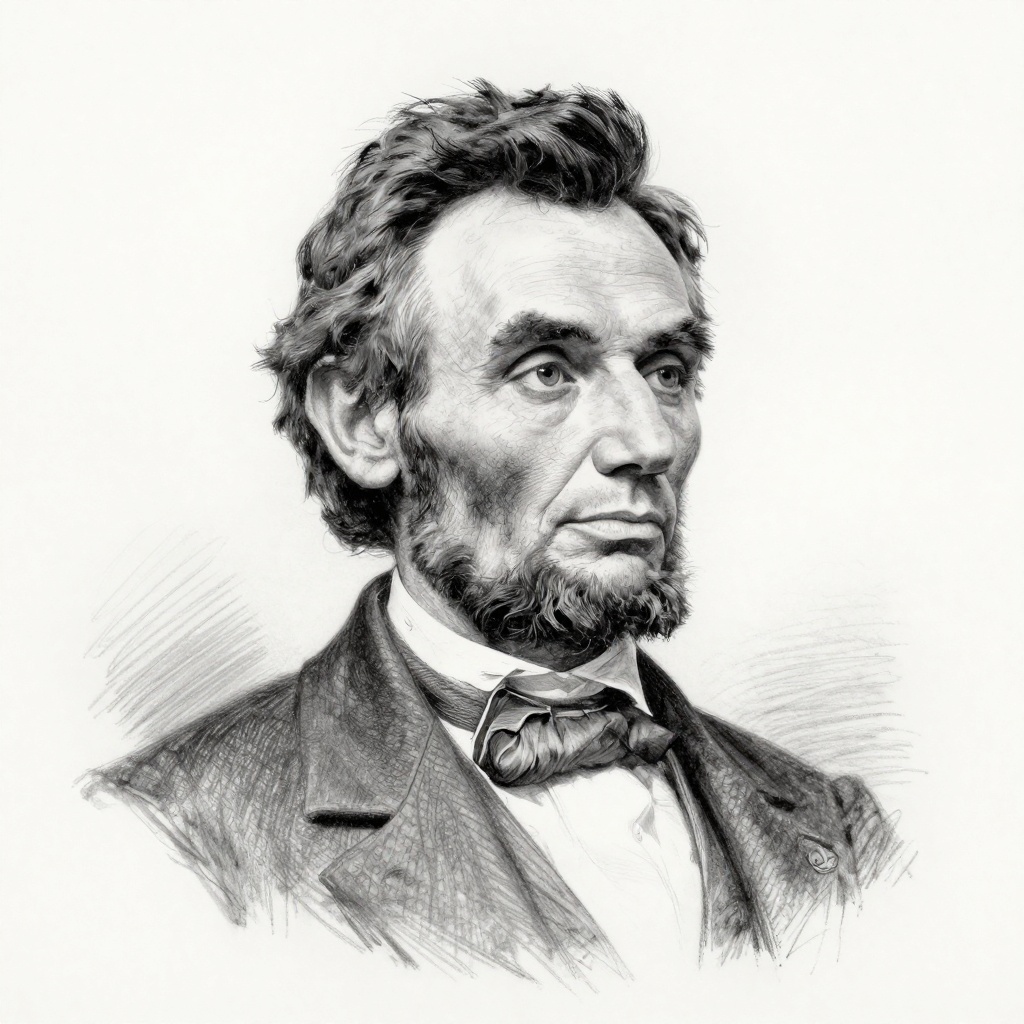
Comments