Quote · Added 14 February 2026
As I would not be a slave, so I would not be a master. This expresses my idea of democracy.
Abraham LincolnDefinition of Democracy, [1 August 1858], The Collected Works of Abraham Lincoln, 1953
No ratings yet
Quote · Added 14 February 2026
We often think of democracy as a system about voting or majority rule, but Lincoln was pointing at something deeper: it's fundamentally about rejecting the relationship itself. Not wanting to be controlled doesn't mean much if you're comfortable controlling others. Real democracy requires that peculiar willingness to limit your own power, even when you could get away with using it.
This matters now because we live in countless small hierarchies—workplaces, families, friend groups, online communities—where power naturally pools. Someone becomes the decision-maker, the gatekeeper, the person everyone defers to. The temptation is real and rarely feels like tyranny from the inside. But Lincoln's formulation catches something we skip over: if you'd hate being on the bottom, you probably shouldn't be engineering the system to keep yourself on top. Democracy isn't just about protecting yourself from abuse; it's about not becoming the abuser.
The tricky part is that this actually requires something harder than voting. It requires you to genuinely believe the other person's judgment matters as much as yours, and to structure things accordingly—whether that's a meeting where everyone actually gets heard, or decisions that get made together instead of handed down. It's friction. But maybe that friction is precisely what Lincoln meant by democracy in the first place.
1809–1865·lived 56 years
Abraham Lincoln was the 16th President of the United States, serving from 1861 until his assassination in 1865. He is best known for leading the country through the Civil War, preserving the Union, and issuing the Emancipation Proclamation that led to the abolition of slavery in the United States.
Also by Abraham Lincoln
My best friend is a person who will give me a book I have not read.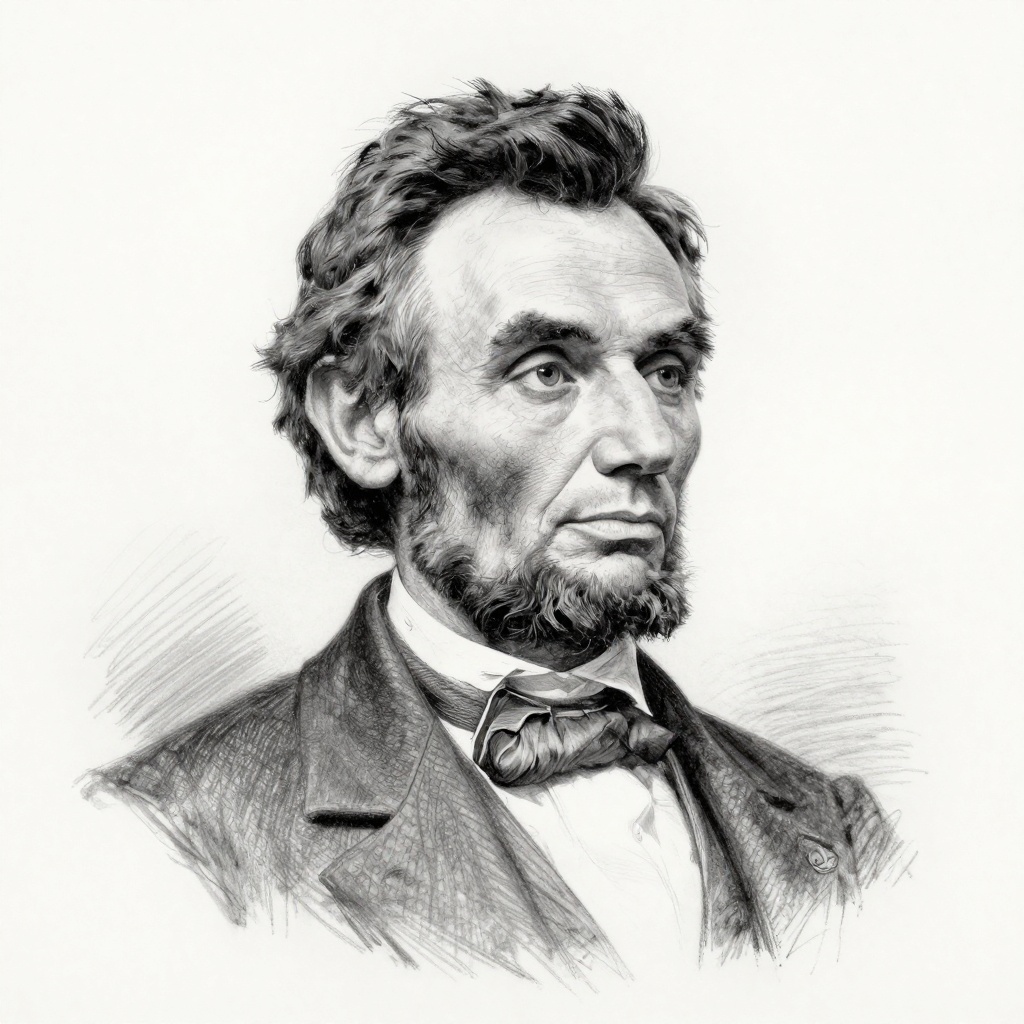
Comments