Quote · Added 25 May 2024
I often think that the night is more alive and more richly coloured than the day.
Vincent van GoghLetter to Theo, June 1889
Filed undernight·beauty·perception
Quote · Added 25 May 2024
Filed undernight·beauty·perception
There's something about darkness that makes us pay attention differently. When the sun vanishes, the world doesn't go quiet—it transforms. The night reveals things daylight hides: the actual colors of artificial light, the texture of shadows, the sound of your own thoughts. Van Gogh wasn't being poetic for no reason. He was noticing something real about perception itself.
We've mostly lost this. Our electric lights have flattened the night into a dim copy of day, and we rush through both like they're the same thing. But if you actually slow down at night—really look at how neon bleeds into dark sky, how streetlights paint unexpected colors on wet pavement, how your mind behaves differently without the sun's constant demands—you recognize what he meant. The night isn't absence. It's a different kind of presence, one that feels more intimate and particular.
Maybe this matters because we need both rhythms. The day asks us to produce, compete, achieve. The night—if we let it—invites us to notice, to wander mentally, to see the world as strange again. That "richer color" isn't really about hue. It's about attention finally landing somewhere long enough to see what's actually there.
1853–1890·lived 37 years
Vincent van Gogh (1853–1890) was a Dutch post-impressionist painter known for his vivid use of color and expressive brushwork. Despite struggling with mental health issues throughout his life, he created over 2,000 artworks, including iconic pieces like "Starry Night" and "Sunflowers," which have had a lasting impact on the world of art.
Also by Vincent van Gogh
Someone has a great fire in his soul and nobody ever comes to warm themselves at it, and p...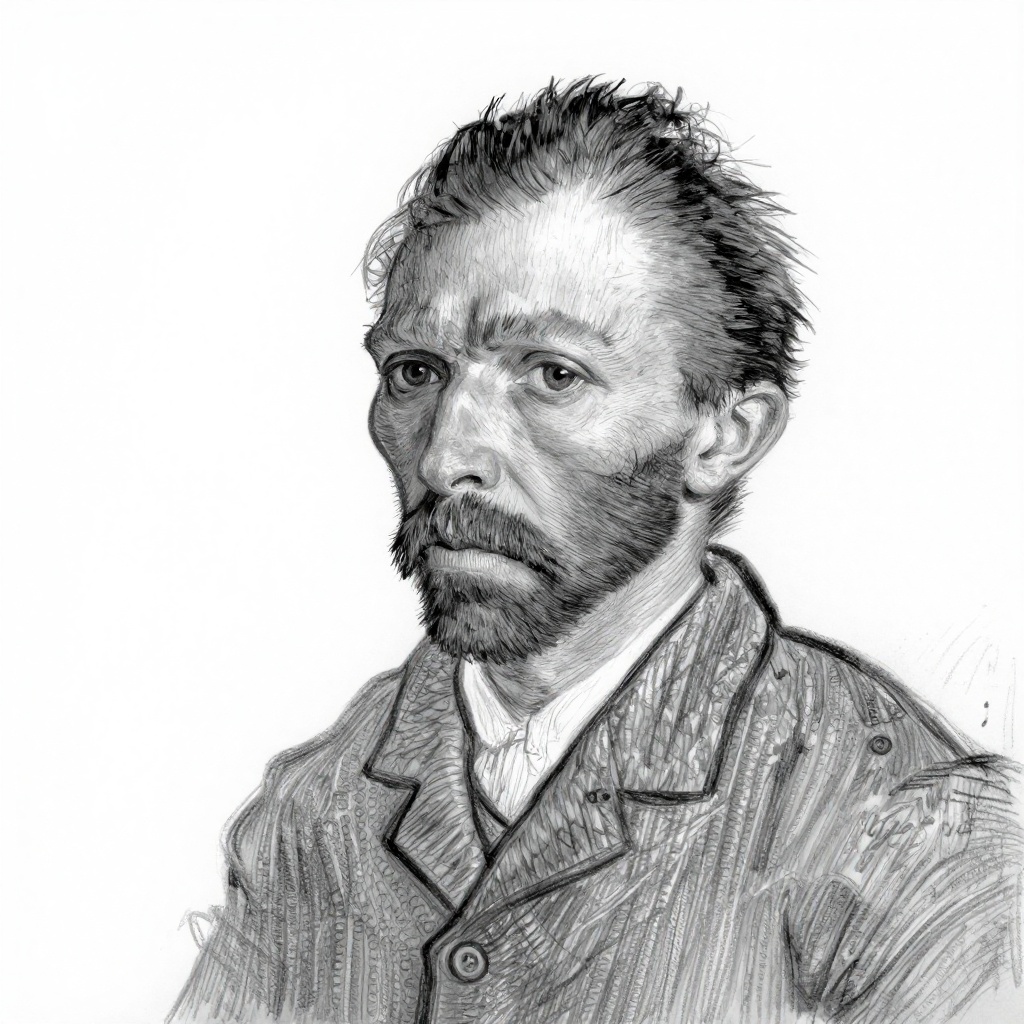
Comments