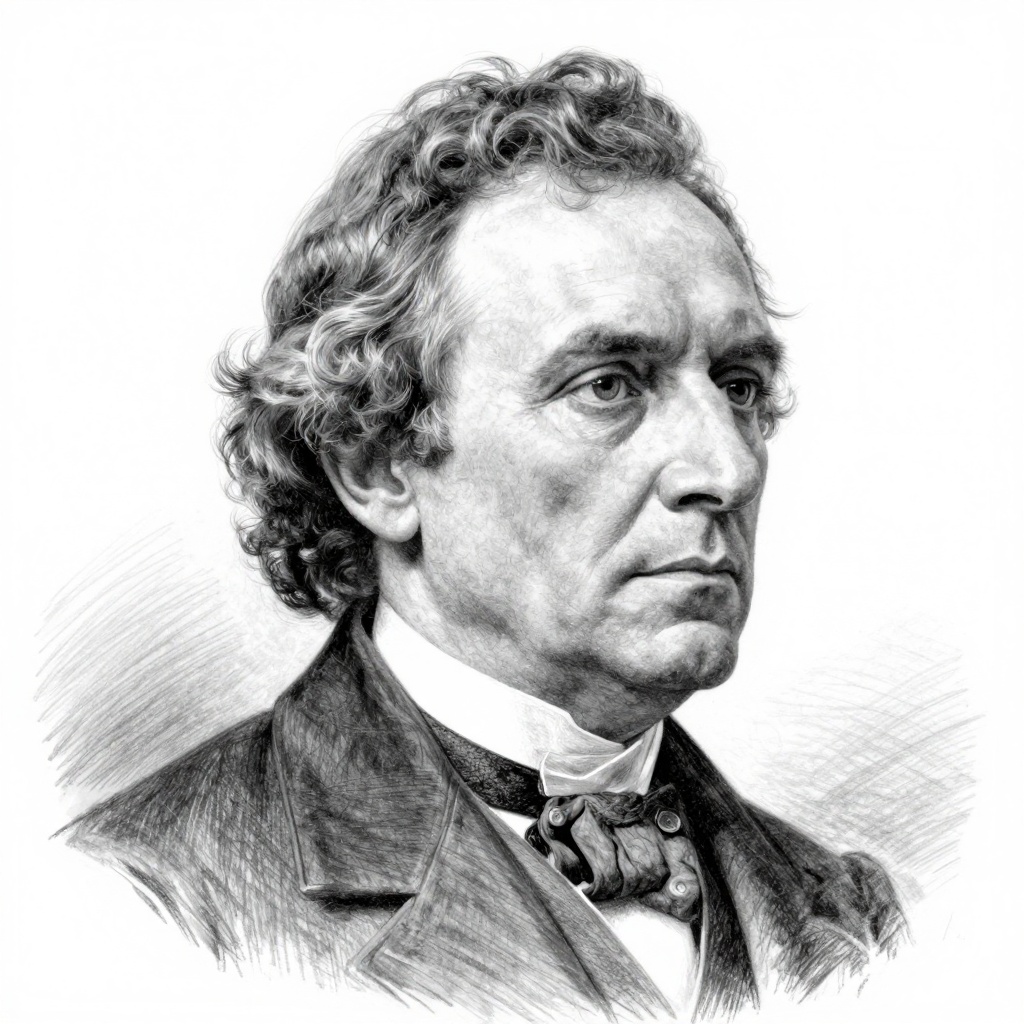
In large commercial cities, the money power is, I fear irresistible. It is not by open corruption that it alwa... — Roger B. Taney

In large commercial cities, the money power is, I fear irresistible. It is not by open corruption that it always, or even most generally, operates.

Author: Roger B. Taney

Insight: We often imagine corruption as something dramatic and obvious—a bribe passed in a parking garage, a quid pro quo shouted in court. But Taney's real concern, written about cities drowning in commerce, was subtler and probably harder to resist. Money shapes outcomes not through explicit deals but through the gravitational pull of incentives. A politician doesn't need to be directly paid off to favor the wealthy; they simply live in a world where wealthy interests have louder megaphones, better lawyers, and deeper networks. Their priorities become the default priority. This still rings true in ways we barely notice. The startup founder who gets early meetings with city planners simply because she's well-connected. The corporation that writes the regulation it will technically follow. The neighborhood that gets investment because property values are already rising there. None of it requires obvious corruption; it's just how power compounds when money is involved. We see it in whose emails get returned, whose problems get solved first, whose concerns make it into the final report. The unsettling part is that this system can run almost on autopilot. Everyone involved can convince themselves they're just being practical, following normal channels, supporting what already works. But the result is the same: the money power gets its way, quietly and persistently, without anyone necessarily being the villain.

Money's quiet way of winning

In large commercial cities, the money power is, I fear irresistible. It is not by open corruption that it always, or even most generally, operates.

We often imagine corruption as something dramatic and obvious—a bribe passed in a parking garage, a quid pro quo shouted in court. But Taney's real concern, written about cities drowning in commerce, was subtler and probably harder to resist. Money shapes outcomes not through explicit deals but through the gravitational pull of incentives. A politician doesn't need to be directly paid off to favor the wealthy; they simply live in a world where wealthy interests have louder megaphones, better lawyers, and deeper networks. Their priorities become the default priority.

This still rings true in ways we barely notice. The startup founder who gets early meetings with city planners simply because she's well-connected. The corporation that writes the regulation it will technically follow. The neighborhood that gets investment because property values are already rising there. None of it requires obvious corruption; it's just how power compounds when money is involved. We see it in whose emails get returned, whose problems get solved first, whose concerns make it into the final report.

The unsettling part is that this system can run almost on autopilot. Everyone involved can convince themselves they're just being practical, following normal channels, supporting what already works. But the result is the same: the money power gets its way, quietly and persistently, without anyone necessarily being the villain.

AI generated

Comments

Sign in to leave a comment or reply to one.

Sign in

Roger B. Taney

Roger B. Taney was an American lawyer and politician who served as the Chief Justice of the United States from 1836 until his death in 1864. He is best known for delivering the controversial majority opinion in the Dred Scott v. Sandford case, which denied citizenship to African American slaves and was a significant factor leading up to the Civil War. Taney's legacy is often criticized for its impact on civil rights and the judicial interpretation of slavery.

Graph

Related