Quote · Added 19 February 2026
Your Highness, I have no need of this hypothesis.
Filed underhypothesis·authority·dismissal
Quote · Added 19 February 2026
Filed underhypothesis·authority·dismissal
There's a famous moment when Napoleon asked Laplace where God fit into his mathematical model of the universe. Laplace famously replied that he had no need of that hypothesis. It's become a shorthand for scientific thinking, but what's genuinely useful about it isn't atheism—it's something more practical and everyday than that.
The real insight is about not needing to invoke magic, mystery, or hand-waving when you can actually explain something. When your friend tells you they failed because of bad luck, or when you blame the universe for your career stalling, you're doing the opposite of what Laplace was doing. You're adding a hypothesis you don't need. The honest answer usually sits in front of you: you didn't prepare, or the timing wasn't right, or someone else's resume was stronger. That's less comforting than cosmic forces, but it's also far more useful because it's something you can actually work with next time.
This matters because we live in an age of optional complexity. We can always add another explanation, another reason, another external factor. The clearer thinking happens when you strip those away and look at what you can actually measure, test, and change. That's Laplace's real gift—not proving God doesn't exist, but showing that clarity comes from refusing to complicate what's already simple.
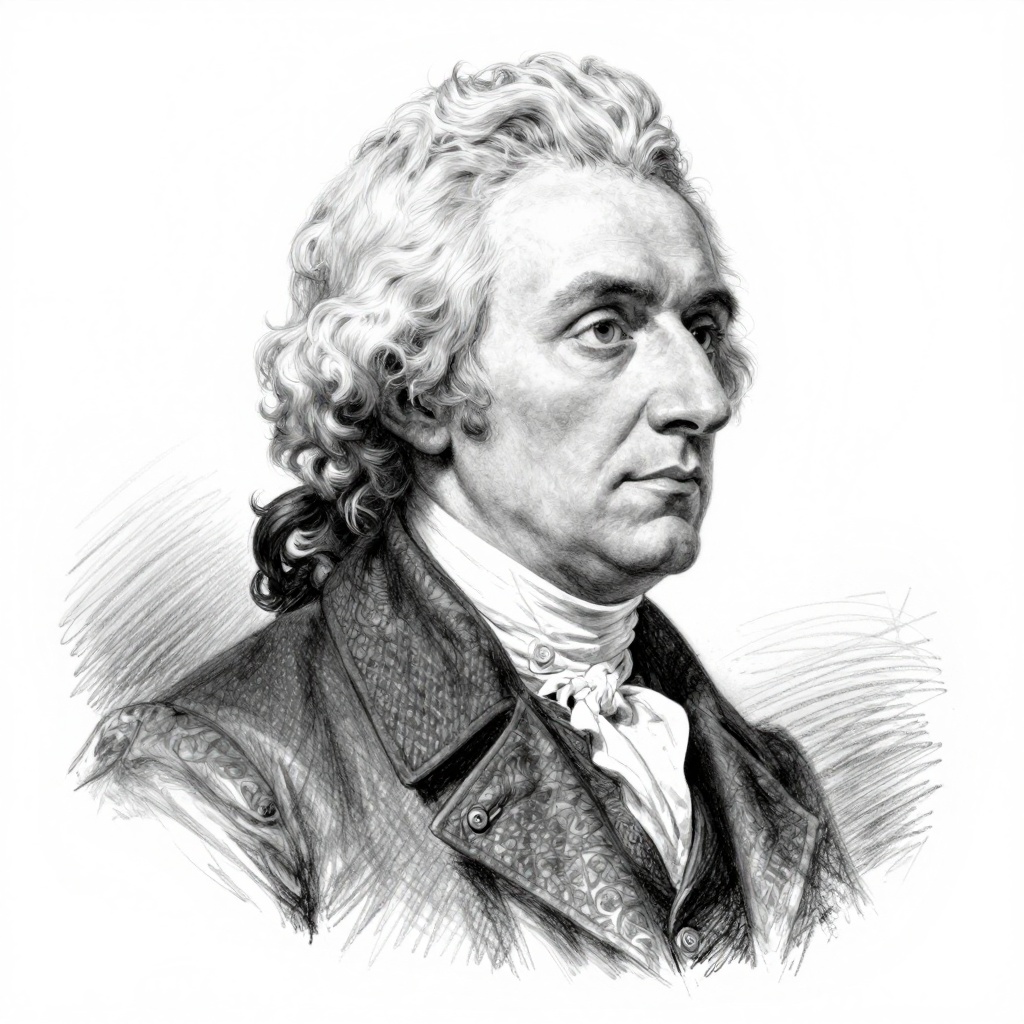
1749–1827·lived 77 years
Pierre-Simon Laplace was a French mathematician, astronomer, and physicist born on March 23, 1749, and he died on March 5, 1827. He is best known for his work in statistical mathematics and celestial mechanics, particularly for formulating Laplace's equation and the Laplace Transform, as well as his contributions to the understanding of planetary motion and the stability of the solar system. His monumental work, "Mécanique Céleste," transformed the field of astronomy and laid the groundwork for future developments in both physics and mathematics.
Comments